


Dr. Xavier Leleu on the BOSTON Trial
What is the background of this study?
Lenalidomide (LEN) is typically a frontline therapy for newly diagnosed multiple myeloma. Patients with multiple myeloma refractory to LEN are less likely to respond to other IMiDs and represent a signification area of unmet medical need. In the BOSTON study in the intention to treat population, selinexor, bortezomib, and dexamethasone (XVd) was associated with significant improvements in median progression-free survival (PFS), overall response rate (ORR), and rates of peripheral neuropathy, with trends in overall survival (OS) favoring XVd.
In this video:
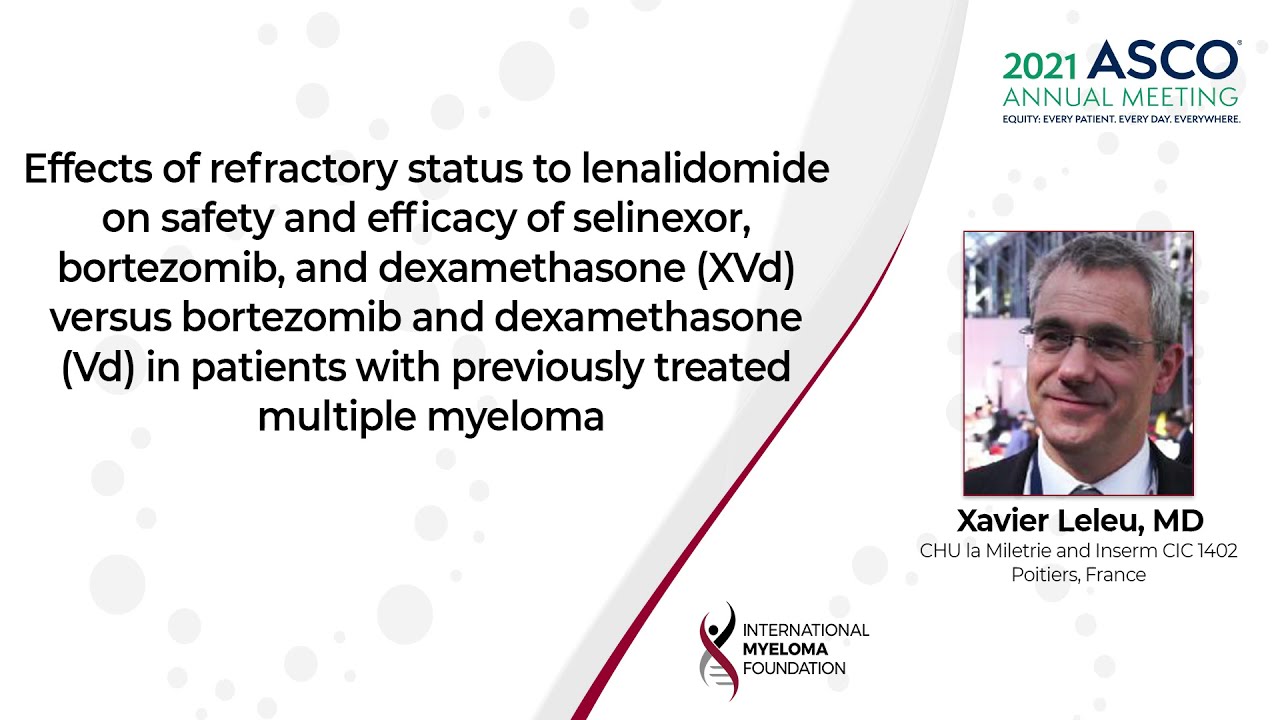
Dr. Xavier Leleu (CHU la Miletrie and Inserm CIC 1402, Poitiers, France) explains that the BOSTON trial (NCT03110562) is a phase III randomized, controlled, open-label study of once weekly XVd vs twice weekly Vd in patients with multiple myeloma and 1-3 prior therapies. A post-hoc analyses was performed on two different subgroups to compare outcomes based on refractory status to LEN and immunomodulatory drug (IMiD) therapy. These post-hoc analyses evaluated if PFS, overall response rate (ORR), time to next treatment (TTNT), and safety was influenced by prior treatment with LEN when comparing XVd with Vd.
Conclusions:
“In patients with previously treated multiple myeloma, PFS, ORR, and TTNT were significantly improved regardless of documented refractory status to any IMiD or to LEN-specifically. These analyses support the use of the XVd combination for patients with disease refractory to LEN and likely to any IMiD.”
Clinical trial information: NCT03110562
