

Remission vs. Cure: Understanding the Difference in Multiple Myeloma
Remission is when the signs and symptoms of multiple myeloma, including the key tests that measure the disease, are reduced or have disappeared. This can occur in different levels, including partial, very good partial response (VGPR), and complete response (or complete remission). Remission is a major goal of treatment and can last for many years.
When it comes to remission vs. a cure for multiple myeloma, medical professionals are looking for a sustained level of complete remission (CR) to support this new definition and understanding. While remission is possible, a “cure” is still a research goal, not a standard outcome.
The evolving definition of a myeloma cure
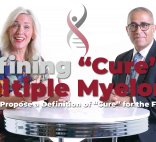
With more research, the medical community is now developing a potential definition of cure. At a 2026 International Myeloma Society meeting, a working definition of cure in multiple myeloma was discussed. It looks something like this:
- Sustained complete remission: Specialists are considering a sustained CR without therapy for over five years as the first major step in this new definition of a cure. It's more than remission — it's about your body staying in remission for five years or more. This shows that myeloma may have gone away.
- Minimal residual disease (MRD) negativity: A highly sensitive test for MRD involves using a high-powered microscope to search for any last remaining myeloma cells within plasma cells. Being MRD-negative means that even with this incredibly detailed search, no myeloma is found in several assessments over five years. This crucial benchmark gives doctors confidence that remission is deep and stable.
- Advanced imaging importance: Multiple myeloma can affect more than the blood and bone marrow, including the bones and other parts of the body. In addition to blood tests, doctors use advanced imaging like PET/CT or MRI scans to get a complete picture. Being negative on these scans means there's no sign of active myeloma anywhere in your body. These results confirm that remission is occurring throughout your body, not just at the cellular level.
The Path to a Cure at the International Myeloma Foundation
At IMF, we are researching and supporting initiatives in search of a cure for multiple myeloma.
The Black Swan Research Initiative®
The Black Swan Research Initiative® (BSRI®) was established in 2012 to answer the questions, “Can multiple myeloma be cured, and how can we do it?” Our solution was to establish a new research project focused on finding a cure and preventing myeloma as a whole.
The IMF BSRI® is funding several research trials in the United States and beyond. They are called “cure trials” because each uses a curative strategy to treat myeloma early and aggressively. As a result, this initiative is at the heart of our pathway to a cure.
Advancements in treatment and testing
As knowledge of myeloma grows, new treatments and immunotherapies are making long-term remission possible and contributing to research in pursuit of a cure, including:
- Chimeric antigen receptor (CAR) T-cell therapy: CAR T-cell therapy is a personalized immunotherapy that collects and modifies your T-cells to find and destroy myeloma cells. This is done by teaching T-cells to recognize specific proteins within a cancer cell and infusing them back into your blood.
- Bispecific antibodies (BsAbs) therapy: BsAb therapy uses engineered proteins to bind to myeloma cells and T-cell proteins, bringing immune cells in proximity to cancer cells, so they can attack and eliminate them. This option is promising for people who have already gone through extensive treatment.
- Antibody-drug conjugates (ADCs): ADCs combine targeted antibodies with potent cancer-killing drugs to deliver the treatment directly inside the cancer cell. The FDA has approved Blenrep® (belantamab mafodotin-blmf) to treat relapsed or refractory myeloma.
- Trispecific antibodies (TsAbs): TsAbs are a next-generation myeloma therapy similar to BsAbs, but they use an extra binding agent to stick to the surface of myeloma cells, enabling greater precision. Adding the extra binding agent has demonstrated a stronger response rate compared to BsAb therapies.
- Monoclonal antibodies (MAbs): MAbs are laboratory-produced proteins that mimic the immune system, targeting the CD38 protein and destroying myeloma cells. These antibodies can be used in combination with other drugs, such as FDA-approved Darzalex Faspro® (daratumumab and hyaluronidase-fihj).
MRD mass spectrometry testing is an emerging monitoring advancement for remission detection following treatment. This resource best supports our initiative and helps us get closer to finding a cure.
Finding Hope and Support While Living With Myeloma
A myeloma diagnosis can bring a wave of questions and concerns, and it's completely normal to feel overwhelmed or isolated. As you navigate a new reality, the IMF offers several resources to support you and your family:
- Support groups: There is a unique power in talking to someone who is walking through a similar situation. Our network of over 150 support groups offers both in-person and virtual opportunities to connect you with other individuals and families. Share stories, ask questions, and find strength in shared experiences.
- InfoLine: Have a specific question you need answered right now? Our InfoLine specialists are here for you. Receive free, confidential, one-on-one support from a team trained to help you understand test results and treatment options or simply listen.
- Ongoing research and publications: Feeling in control starts with having the right information. Our library of handbooks, booklets, and web resources breaks down complex topics into simple terms, empowering you to have informed conversations with your healthcare team.
- Myelo®: Chat with our generative AI assistant that has been trained to answer your myeloma-specific questions and is available 24/7.