Dr. Brian G.M. Durie (1942-2025) was the co-founder of the IMF. He was a Professor of Medicine, Hematologist/Oncologist, and Honoree MD at the University of Brussels.



January 14, 2021
Despite the enormous difficulties of 2020, myeloma patients can take comfort in the fact that the approach to myeloma care continues to evolve rapidly. Important trial data accumulate, and many promising immune and other therapies are emerging.
The key trends in myeloma care in 2021 will enhance outcomes, but patients and doctors will face serious challenges in the aftermath of the COVID-19 pandemic that result from the reduction of in-person doctors’ appointments and the slowdown of clinical trials. One bright spot is that it is easier now to get second opinion consults using Zoom.
The major lesson from recent clinical studies of newly diagnosed patients is that the doctor’s choice of first therapy has the biggest impact on a patient’s overall response and survival. There is no doubt that “putting your best foot forward” is recommended. This can take several different forms, depending on the circumstances:
The main message is that for a standard-risk patient, first remissions of four to five years are routinely expected. This translates into overall survival beyond seven years—a vast improvement over years past! The introduction of powerful, game-changing immune therapies, such as CAR T-cells and/or bispecific antibodies, will undoubtedly substantially extend survival.
At a myeloma patient’s first diagnosis, an optimistic outlook is now part of honest discussions of what to expect. However, a cure remains a work in progress. Through the IMF Black Swan Research Initiative, two clinical trials have been conducted in patients with very early disease (high-risk smoldering multiple myeloma):
Both trials achieve very high levels of MRD negativity (more than 60%) in patients. The key is to see if these MRD negative remissions can be sustained beyond the current three to five years of follow-up time frames.
It is exciting to await these outcomes. In the meantime, the really good news is that the preferred frontline therapy for patients outside of clinical trials is now very similar to the therapies used in these aggressive clinical trials in patients with early disease. We are very close to having the best strategies overall, with realistic hopes of very long survivals.
If high-risk disease features like 17P- or 1q+ are present, there is currently no standard enhanced treatment option. But clinical trials are now being conducted that incorporate Kyprolis (versus Velcade) and immune therapies (CAR T-cells/bispecific antibodies) or alternate novel agents to achieve better outcomes. This is clearly an area of unmet need.
All patients deserve and need as many options as possible when their disease relapses. We have been truly fortunate that so many options are available.
Treating relapse is a decisive effort to achieve an extended next remission. Again, putting your best foot forward is the way to go.
To achieve the best and deepest response, three-drug regimens (triplets) are recommended if feasible.
Personalizing the regimen choice based on prior response is best.
If Revlimid has been used with potential resistance, switching to an alternate IMiD (immunomodulatory drug) like Pomalidomide (as part of the Darzalex + Pomalidomide + dexamethasone regimen, for example) or using an IMiD-free combination like the CANDOR trial regimen (Kyprolis + Darzalex + dexamethasone) are clear options.
In another example, the results of the BOSTON trial provide data to support the use of the Selinexor + Velcade + dexamethasone triplet in the relapsed setting.
Moving forward, CELMoDs are also alternate choices versus IMiDs if resistance has emerged. (Full algorithms of choices have been recently presented, published and discussed.)
If there has been early use of Darzalex or Isatuximab (such as in the frontline setting), this presents a special challenge and is emerging as the major area of unmet need. This is the situation in which the new powerful immune therapies and other novel agents play a key role.
It has been fantastic to see the promising, very high levels of response with all of these new approaches. Remissions extending beyond one year are being seen, even in patients who have received extensive prior therapies. How best to sequence the various options remains a challenge and is often worth joint discussions and consultations between doctors and patients, now using telemedicine.
As we realize how powerful the new treatments are in achieving very deep responses, we are seeing a trend of their increasing use in early disease. Many trials are now underway and/or planned to introduce new agents early to improve the depth of initial response and enhance longer term outcomes by producing truly excellent responses as part of the initial treatment strategies.
More to come on this but, it will clearly take time to develop the best practical regimens that are both highly effective and feasible for the patient in terms of both toxicities and costs.
Since patients achieving MRD negative status do better, it is reasonable to set a goal of achieving MRD negativity in ongoing and upcoming trials. If one treatment produces more MRD negativity (versus another regimen) it can be preferred.
MRD negativity typically occurs within 9 to 12 months of starting a particular therapy. This means that it is possible to compare one therapy with another after a year, without waiting to assess ultimate survival many years into the future. MRD testing thus provides a HUGE time advantage in assessing the relative benefit of one therapy versus another.
To use MRD as a surrogate in this fashion requires approval by the FDA. This approval is the goal of the i2TEAMM, a global consortium of researchers, through which data from over 14,000 patients have been gathered and will be submitted to the FDA for review and hopefully approval this coming year. Stay tuned on progress, as feedback from initial submissions will be received soon.
Unfortunately, we now need to look at everything through the lens of: “How does COVID-19 affect our plans?” A few key points to bear in mind:
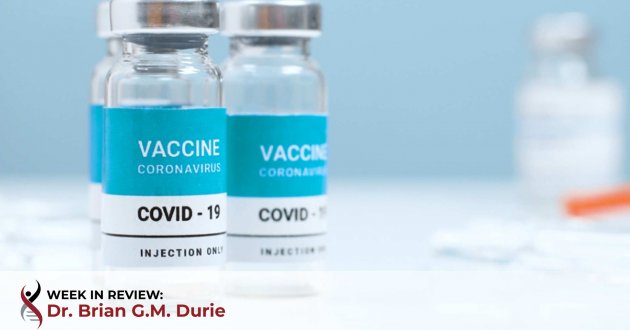
Get vaccinated when you can but continue to stay as protected as possible.
The ultimate key trend for 2021 is hope, which not only “springs eternal” but is both realistic and something that can guide us to ongoing improved outcomes for myeloma patients everywhere.
Stay safe!
Arabic Dutch German Italian Russian Spanish
Dr. Brian G.M. Durie (1942-2025) was the co-founder of the IMF. He was a Professor of Medicine, Hematologist/Oncologist, and Honoree MD at the University of Brussels.