


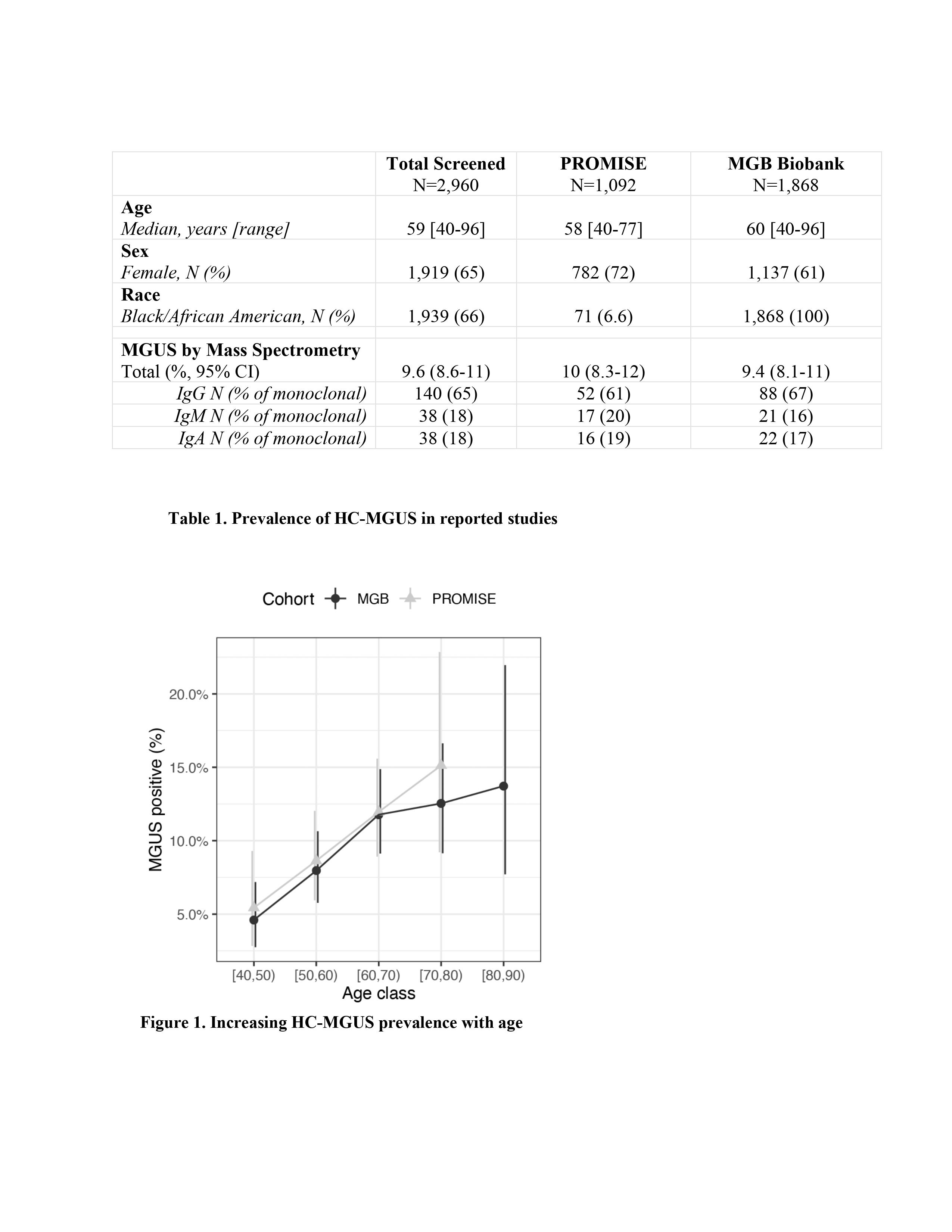
Multiple myeloma (MM) evolves from monoclonal gammopathy of undetermined significance (MGUS), a clinically detectable but asymptomatic premalignant phase seen in ~3% of the general population 50 years of age or older. The prevalence of MGUS has not been described in a population at high risk of developing MM, specifically Black/African American (AA) individuals or first-degree relatives of patients with hematologic malignancies (HM). In 2019, we launched the first nationwide US screening study for individuals at high risk of MM to help better identify what population would benefit most from screening and early intervention for precursor MM stages. We aim to assess the prevalence of MGUS in a population at high risk of MM and characterize clinical variables of individuals who screen positive. Here, we report interim screening data on the first 2,960 participants.
Conclusions
We present the largest dataset on monoclonal gammopathy prevalence and screening in individuals at high risk for MM, and more specifically the largest cohort of Black/AA, using a novel high-sensitivity testing approach. Our results confirm that older adults who are Black/AA or have a first-degree relative with an HM have a high prevalence MGUS and may benefit from precision screening approaches to allow for early detection and clinical intervention. Preliminary data on cancer worry and quality of life indicates that the psychosocial burden of screening in this population is likely minimal.
ASH 2021: Abstract 152