

Dr. Joseph Mikhael:
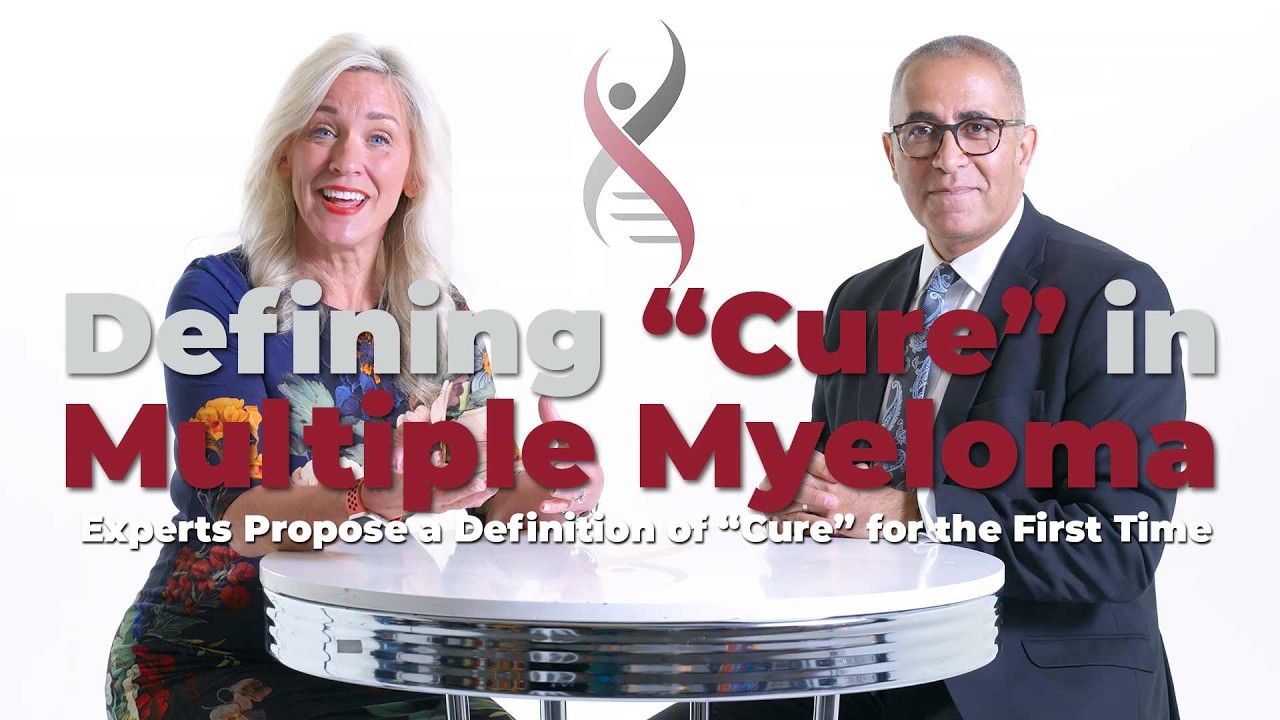
Hey, everybody. Dr. Joe here.
Beth Faiman:
And I'm Beth Faiman with the International Myeloma Foundation, a nonprofit dedicated towards improving the lives of people living with myeloma while working towards prevention and a cure.
Dr. Joseph Mikhael:
We're here today to help you better understand what's changing in myeloma and what it means for patients today and in the future. For the IMF, cure has always been the goal. Can we cure myeloma? Can we prevent myeloma? But for the first time at an International Myeloma Society meeting, the myeloma community came together to define cure because this is no longer just a theoretical conversation.
Beth Faiman:
Yeah, this is something we seriously could not have thought about even a few years ago, the idea of cure in myeloma.
Dr. Joseph Mikhael:
And it's exciting for us, of course, but we balance that excitement with what we know now and what we could do now so that we can provide the best for our patients.
Beth Faiman:
So Dr. Joe, what does the idea of cure and myeloma look like? When doctors say cure, what does that mean?
Dr. Joseph Mikhael:
Well, we want to give it a very specific definition. We talk about cure, most people will say it's when someone gets treated for a while and then they don't have to think about the disease anymore, but we need to bring that into the myeloma sphere. How long does someone need to be treated? How long are they off treatment that they're not thinking about myeloma anymore? And what does the myeloma look like in that timeframe to make sure we define the cure? This is going to be really helpful to us going forward as we design clinical trials and as we do more research that we all have that common goal and the same definition of cure in myeloma.
Beth Faiman:
So when we talk about cure in myeloma, how is that different from long-term remission or long-term disease control?
Dr. Joseph Mikhael:
Coming back to the concept of cure and the proposed definition is that people are actually only treated for a defined period of time. When we think of long-term disease control like high blood pressure or diabetes, people are on continuous treatment. Here we want people to be treated for a period of time and then they go off treatment and they stay in that remission for over five years with no evidence of disease. And that's really what distinguishes cure from just long-term control. There are a lot of patients now who have been in long-term control, for which we're very grateful, but we want to increase the fraction of patients who go off treatment and stay off treatment.
Beth Faiman:
Yeah. Those disease-free intervals and the drug-free intervals are so important for patients and their quality and quantity of life, for sure.
Dr. Joseph Mikhael:
Absolutely.
Beth Faiman:
So when we talk about the possibility of cure for myeloma, is it the same for all patients or just for certain patient groups?
Dr. Joseph Mikhael:
We've been very careful in the terms of this proposed definition that it really should apply to all patients with myeloma. Patients with frontline disease, newly diagnosed, patients with relapsed myeloma. We want to make sure that we have a common definition that can be applied to all patients that reflects the treatment that they've had, the testing that they've had to ensure that they stay in that remission, both with the bone marrow and blood testing, but also with imaging. So we really want it to be a pervasive definition that can apply to all patients.
Beth Faiman:
All encompassing definition.
Dr. Joseph Mikhael:
Absolutely.
Beth Faiman:
How is this proposed cure definition changing the conversations you're having with your patients today?
Dr. Joseph Mikhael:
Well, Beth, I think it's changing it in two particular ways. Number one, it's giving us a sense of hope and purpose that we didn't fully have before. The fact that we can even use the word, we're not pretending that we've cured it yet, but knowing that we're moving towards that is very encouraging to patients and really ends up creating a lot of hope. Secondly, it now involves more testing, specifically for MRD or minimal residual disease. The proposed cure definition includes that patients would have MRD testing at least four times over a five-year timeframe when they're off treatment. So when we have patients now who have gotten into a deep remission and are off treatment, we may be testing them more with MRD testing to ensure that they're staying in that depth of response. And that's already influencing the way we practice today.
Beth Faiman:
Yeah. And the serum, the bone marrow, and the imaging, that all needs to be together included for that cure definition, I think is something to have that conversation with. That's what I'm discussing with our patients. We might be able to stop disease treatment, but we're also having to do more testing to make sure you stay in an excellent remission. So Dr. Joe, looking ahead, how might the change in definition of cure in myeloma change the way that we are treating our patients in the future?
Dr. Joseph Mikhael:
Well, I think the simplest way to answer that is we're going to be treating them with that curative intent, as we call it, meaning where we're anticipating a potential cure. So it's going to involve the terms of that definition of giving people a defined period of time, being able to come off treatment, and then be able to test them to ensure that they've stayed in that remission. Part of what that'll mean for the future is actually designing and conducting clinical trials with that curative intent in mind, clinical trials that don't have treatment ongoing forever, clinical trials that define treatment for a period of time with the goal of the MRD negativity or minimal residual disease negativity and imaging negativity so that patients can get to that depth of cure and stay in it.
Beth Faiman:
Well, that's all we have time for today, but we'll continue to share important updates and important information that impact people living with multiple myeloma.
Dr. Joseph Mikhael:
So be sure to subscribe to the International Myeloma Foundation's YouTube channel for the latest research and practical insights.
Beth Faiman:
And if you want to find us, you can do so at myeloma.org. Are you interested in more videos like this one? Watch these videos on the latest and greatest research that came out of the American Society of Hematology meeting.