


The IMF team explains how to submit questions in the Q&A box, that the replay and slides will be posted on myeloma.org under IMF videos, and asks attendees to complete the survey.

Myeloma care has advanced quickly, and specialists do not always agree on how best to use new options. This Virtual Myeloma Community Workshop from the International Myeloma Foundation (IMF) brought together four experts to look at three open questions in myeloma care and the latest evidence behind each, followed by a panel Q&A.
Panel
- Joseph Mikhael, MD, MEd, FRCPC, FACP, FASCO, IMF Medical Advisor
- Joshua Richter, MD, FACP, Tisch Cancer Institute, Mount Sinai Hospital
- Doris K. Hansen, MD, H. Lee Moffitt Cancer Center and Research Institute
- Beth Faiman, PhD, MSN, APN-BC, AOCN®, BMTCN®, FAAN, FAPO, Cleveland Clinic Taussig Cancer Institute
Should all high-risk smoldering myeloma patients be treated?
Early treatment works. In the AQUILA phase 3 trial (390 patients), 5-year progression-free survival was 63.1% with daratumumab, compared with 40.8% with active monitoring. About 41% of patients on observation stayed progression-free, and genomic findings show that clinical high-risk smoldering myeloma is not one biologic entity. Early studies of CAR T-cell therapy and bispecific antibodies in this setting are also reporting deep responses. The question is no longer whether early treatment works, but whether every high-risk patient needs immediate treatment.
Is transplant still the standard of care for all eligible patients?
Autologous stem cell transplant (ASCT) improves disease control, but deep responses with modern quadruplet regimens are changing the picture. In the DETERMINATION trial, median progression-free survival was 67.5 months with upfront ASCT versus 46.2 months without, with no demonstrated overall survival advantage. The MIDAS trial found similar MRD-negativity rates after ASCT (86%) and after Isa-KRd (84%) in the MRD-negative group. In the PERSEUS trial, where both arms received ASCT, 4-year progression-free survival was 84.3% with D-VRd versus 67.7% with VRd. Early data on frontline immunotherapy are also promising. The takeaway: not every transplant-eligible patient needs an upfront transplant, and the timing of ASCT remains a clinical decision.
Should most patients have maintenance therapy for only 2 years?
The evidence does not support a fixed 2-year stopping point for everyone.
- Myeloma XI: Median progression-free survival was 66 months with lenalidomide maintenance versus 33 months with observation, showing benefit well beyond 2 years.
- AURIGA: Adding daratumumab to lenalidomide improved 30-month progression-free survival (82.7% vs 66.4%) in MRD-positive patients.
- ENDURANCE: In standard-risk patients, 7-year overall survival was similar with continuous and fixed 2-year lenalidomide (68.6% vs 69.0%), with fewer grade 3 or higher non-blood-related side effects in the 2-year group (31.5% vs 48.2%).
- DRAMMATIC (SWOG S1803): This ongoing trial is testing whether MRD-negative patients can safely stop at 2 years. Results are not yet available.
Workshop chapters Topics Covered in This Workshop
0:00
Welcome and housekeeping
2:13
Meet the panel
Panelists are Dr. Joseph Mikhael (Dr. Joe), IMF medical advisor; Dr. Joshua Richter of Mount Sinai; Dr. Doris Hansen of Moffitt Cancer Center; and Beth Faiman, PhD, NP, of Cleveland Clinic.
2:54
Opening: the three questions
Dr. Joe explains that these controversies are areas where more information is needed, not fights, and that with so many good options in myeloma no one should be judged for their choice. He previews the three questions (treat high-risk smoldering myeloma, transplant for all eligible patients, maintenance for only two years), the debate format, a break after question two, and the Q&A.
6:41
Question 1: Should all high-risk smoldering myeloma be treated?
Dr. Joe reviews MGUS, smoldering, and active myeloma using his cliff analogy, notes that the definition of myeloma was changed about 12 to 13 years ago, and describes the trial that led to FDA approval of single-agent daratumumab for high-risk smoldering myeloma.
18:13
Panel discussion and recap of Question 1
Dr. Joe summarizes both sides. Treating with a gentle drug such as daratumumab carries little risk, but current measures show how far someone is from the cliff, not how fast they are running.
28:41
Question 2: Is transplant still the standard of care for all eligible patients?
Dr. Joe notes that transplant plus a quadruplet is now predicted to give most patients more than a decade before first relapse, but that he would not be "buying transplant stock" right now. He raises the changing definition of transplant eligibility and the wait for data on CAR T and bispecifics.
45:35
Panel discussion: how practice has changed
Dr. Hansen lists phase 3 trials comparing transplant with CAR T in newly diagnosed patients (CARTITUDE-6 and others, as captioned) and says her transplant volume has dropped. She says decisions depend on age, comorbidities, disease risk, MRD status, and fitness. Dr. Joe and Dr. Richter add their own views.
1:01:16
Question 3: Should most patients have maintenance therapy for only two years?
Dr. Joe introduces the question after the ENDURANCE trial, which compared two years of maintenance with maintenance until progression in standard-risk patients who did not go to transplant and found no survival difference. He repeats that giving people nothing is the best therapy when it is safe, and that patients should be neither overtreated nor undertreated.
1:16:32
Panel discussion: what maintenance does
Dr. Joe explains that maintenance deepens response and keeps the immune system alert, using a teacher-and-coffee analogy. He notes that ENDURANCE did not include high-risk patients and encourages patients to ask their team about risk, MRD testing, and how long to continue.
1:22:10
Q&A: Bone health after transplant
A patient who had a transplant in 2016 and takes about 2,100 mg of calcium daily asks about kidney stones, bone breakage, and DEXA scans. Beth says active myeloma weakens bone most, that bone-modifying therapy needs rethinking for patients in good remission, and that she orders more DEXA scans now. She advises discussing this with the health care team.
1:23:17
Q&A: CAR T for smoldering myeloma that is not high-risk
Dr. Joe says clinicians are cautious about giving a powerful, risky therapy to people who are not close to the cliff, so CAR T trials have focused on high-risk smoldering myeloma. He notes that definitions are still changing.
1:24:14
Q&A: Eligibility for frontline therapy after a smoldering trial
Dr. Richter says standard-of-care therapy and transplant remain available after a smoldering trial, but eligibility for newly diagnosed myeloma trials may be lost because most do not allow prior treatment.
1:24:50
Q&A: Treating relapse based on MRD
Dr. Hansen says treatment is usually started when M spike or light chains rise, because that is how most FDA approvals are written. After CAR T, rising MRD could prompt off-label maintenance, and she notes studies by Dr. Costa on treating high or rising MRD earlier.
1:26:03
Q&A: Is FISH outdated?
Dr. Hansen points to whole genome sequencing as the next step but says it is not yet routine in practice. Dr. Joe says his institution can sequence a myeloma in 72 hours, that Medicare does not routinely cover it yet, and that FISH is still important because it catches most high-risk features.
1:27:55
Q&A: How long does a CAR T remission last?
Dr. Joe says patients who receive Carvykti earlier in the disease course are expected to average more than three years of remission, noting that averages hide wide variation. He describes one patient who relapsed four months after CAR T and another living well 4.5 years out.
1:28:50
Q&A: Solitary plasmacytoma
Dr. Joe says a solitary plasmacytoma is no longer thought of as MGUS. As testing improves, more disease is usually found elsewhere, though some people with a truly isolated site may benefit from radiation.
1:29:38
Q&A: Smoldering myeloma and a rising clone percentage
A patient asks whether a rising clone percentage matters. Dr. Joe compares myeloma to a crime scene where no single clue tells the whole story, and says he places more weight on consistently rising light chains, M spike, and marrow plasma cells.
1:30:45
Q&A: How is high-risk smoldering defined?
Dr. Joe says there are about ten definitions, and AQUILA used a broad one. A simple version is the 20-2-20 rule: at least two of an M spike of 2 or higher, a free light chain ratio of 20 or higher, or more than 20% marrow plasma cells.
1:32:09
Q&A: CAR T as first-line therapy and in vivo CAR T
Dr. Joe says CAR T is approved at the earliest at first relapse, outside clinical trials. Dr. Hansen says in vivo CAR T, which makes CAR T cells inside the body, is in phase 1, with a single-target version showing responses in essentially all patients at day 30 and beyond, and promising dual-target data presented at the IMS meeting.
1:33:35
Q&A: Translocation 11;14 in a fit 76-year-old
Dr. Joe describes t(11;14) as the tortoise that wins the race: slower, less often MRD negative, but often long-lasting. He advises not requiring MRD negativity, asking whether the M spike is still dropping, and considering collecting stem cells. Beth adds that venetoclax is an option for t(11;14).
1:36:02
Q&A: When will CAR T be available for high-risk smoldering?
Dr. Hansen says a registrational trial has not yet read out, so FDA approval and NCCN listing will take time, even as trials explore new endpoints.
1:37:06
Q&A: High-risk smoldering vs. high-risk myeloma
Dr. Joe explains that high-risk smoldering means a high chance of becoming active myeloma, while high-risk myeloma refers to genetic and genomic features of the disease itself. The two terms mean very different things.
1:38:13
Q&A: Best genomic test
Dr. Joe says whole genome sequencing is the best test but is not fully available, and it is more accurate on bone marrow than blood.
1:38:38
Q&A: The REVIVE trial
Dr. Hansen describes REVIVE as a University of Miami study in high-risk smoldering myeloma giving fixed-duration teclistamab-daratumumab or talquetamab-daratumumab. She is a proponent of trials and says the aim is to treat early, manage toxicity, and use fixed duration. Dr. Joe also says which genomic factors signal an imminent "fall off the cliff" is not yet known.
1:40:12
Q&A: Is MRD-negative status after five years smoldering?
Dr. Joe says no: once someone has had active myeloma they do not go back to smoldering. At five years MRD negative the conversation is about remission and possibly cure.
1:40:56
Q&A: MGRS
Dr. Joe explains that monoclonal gammopathy of renal significance (MGRS) is a small clone affecting the kidney. The goal of treatment is to prevent dialysis, optimal therapy is not known, and options can include the quadruplet or daratumumab-based regimens, to be decided with the team.
1:42:15
Q&A: Falling GFR and kidney function
Beth explains that GFR is the rate at which the kidneys filter toxins, and that the kidney may be affected by myeloma or something else. Dr. Joe adds that a kidney biopsy is often needed to rule out other causes such as amyloidosis, in collaboration with a nephrologist.
1:43:54
Q&A: Lower doses before transplant
Dr. Joe says patients generally need the full quadruplet at a good dose at first and can taper later. He uses "Rambo or Bambi" to describe the question of whether last bit of disease matters, and says to discuss side effects and the need for transplant with the team.
1:45:35
Q&A: Bone pain as a warning sign
Beth says bone pain is the number one presenting symptom of myeloma but has many other causes, including vitamin D deficiency. She advises ruling out other causes and discussing imaging, such as low-dose whole-body CT, PET, or MRI, with the team.
1:47:02
Q&A: Transplant with autoimmune disease and low-level MRD
Dr. Richter explains that MRD results measure one cancer cell per million or more, so finding 11 cells may be near the lower limit of detection. He says transplant is a personal decision and that transplant, bispecifics, and CAR T are being studied in autoimmune diseases such as lupus.
1:49:12
Q&A: Options if you skip transplant
Dr. Hansen says declining transplant is okay and that patients will still have many options at first relapse, including CAR T, bispecific combinations, and CELMoD combinations. She does not anticipate insurance issues when the FDA label is met.
1:50:32
Q&A: Extramedullary disease
Dr. Richter explains extramedullary disease as myeloma outside the bone marrow, which is harder to treat. He describes the REDIRECT-1 study combining two bispecifics (teclistamab and talquetamab), which showed high response rates, and says mezigdomide is anticipated to be approved before May 13 of next year (as stated in the session).
1:52:40
Q&A: Is there an algorithm to cure myeloma?
Dr. Joe says the word cure is exciting, but there is no "mission accomplished." The working definition is five years MRD negative, tested at least four times, off treatment, with clean imaging, which is used mainly to compare outcomes in trials.
1:54:02
Q&A: Diet and myeloma outcomes
Beth says a dietary study named NUTRIVEN (spelling and investigator as captioned) is looking at diet, but there are no practice-changing studies yet. She advises a healthy, varied diet with more fiber and less fried food, and eating what brings joy during treatment. Dr. Joe adds that exercise has growing evidence.
1:55:47
Q&A: Lower melphalan dose with poor kidney function
Dr. Hansen says the chemotherapy dose is adjusted to kidney function to avoid toxicity, and patients should trust their provider. Dr. Joe adds that there is no evidence that those given lower-dose melphalan for kidney reasons do worse.
1:57:10
Closing remarks and upcoming IMF events
Jen thanks the panel and says the replay and slides will be on myeloma.org and emailed within a couple of days. She promotes the survey, a Facebook Live on Monday, December 14, around ASH, and a program on Tuesday, January 12, on making sense of myeloma research from ASH, and thanks the sponsors.
Speakers:

Beth Faiman, PhD, MSN, APN-BC, AOCN®, BMTCN®, FAAN, FAPO
Cleveland Clinic Taussig Cancer Institute, Cleveland, OH

Doris Hansen, MD
H. Lee Moffitt Cancer Center and Research Institute, Tampa, FL

Joseph Mikhael, MD, MEd, FRCPC, FACP, FASCO
IMF Medical Advisor
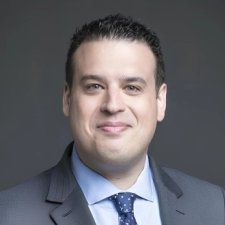
Joshua Richter, MD, FACP
Tisch Cancer Institute, Mount Sinai Hospital, New York, NY
Additional Resources:
Download the IMF's Multiple Myeloma Informational Booklets:
Download IMF publications
What Is a Clinical Trial?
*Of note, Venetoclax has already been approved to treat acute myeloid leukemia, chronic lymphocytic leukemia (CLL) or small lymphocytic lymphoma (SLL) in adults and is now being evaluated to treat other types of cancers, including multiple myeloma. It is part of a class of medications called B-cell lymphoma-2 (BCL-2) inhibitors that work by blocking the action of BCL-2 (a protein in the body that regulates cell death). Trials using Venetoclax were discussed in this webinar. You can learn about these three trials at the following links:
- CANOVA Clinical Trial Fact Sheet
clinicaltrials.gov Identifier: NCT03539744 - Phase II Relapsed or Refractory Venetoclax Trial
clinicaltrials.gov Identifier: NCT02899052 - Phase I/II Trial Using a Venetoclax Combination With or Without Bortezomib
clinicaltrials.gov Identifier: NCT03314181
Workshop Sponsors:
With Support From: Abbvie, Amgen, BMS, GSK, Johnson & Johnson, Johnson & Johnson w Legend, Karyopharm, Kite, and Pfizer
(The IMF is not responsible for content provided by the links below and you may be subject to the Privacy Policy and Terms & Conditions of the destination site(s).)


Recorded Live at the Los Angeles Patient and Family Seminar