


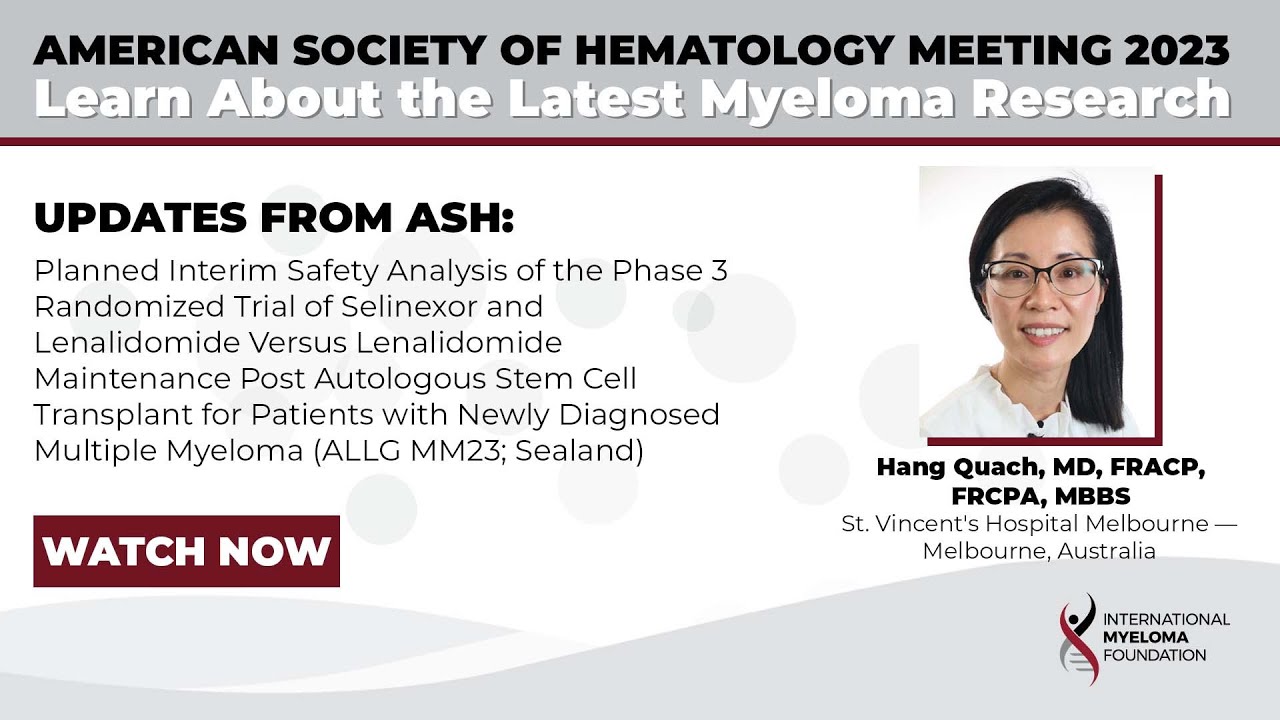
Interim Safety Analysis of Selinexor and Lenalidomide Combo in Phase III Trial for Newly Diagnosed Multiple Myeloma (SeaLAND Study)
Dr. Quach discusses a phase III study that compares a combination of selinexor and lenalidomide to lenalidomide alone for transplant-eligible, newly diagnosed multiple myeloma patients.
Abstract Title:
Planned Interim Safety Analysis of the Phase 3 Randomized Trial of Selinexor and Lenalidomide Versus Lenalidomide Maintenance Post Autologous Stem Cell Transplant for Patients with Newly Diagnosed Multiple Myeloma (ALLG MM23; Sealand) Presented at ASH 2023
What is the purpose of this trial?
The goal of this study is to explore a novel approach to treating multiple myeloma (MM). In myeloma, a molecule called Exportin 1 (XPO1) is too active, leading to poor outcomes and resistance to certain drugs. Xpovio® (selinexor, or S) is a medicine that targets XPO1, and it is already approved to treat myeloma in combination with other drugs. In this study, researchers test whether a lower dose of Selinexor, when combined with a low dose of lenalidomide (R), can work together to improve progression-free survival (PFS). Researchers are comparing this combination to using lenalidomide alone after autologous stem cell transplant (ASCT) in patients with newly diagnosed myeloma who are eligible for transplant. The results reported here are part of a planned analysis to see how well this new combination is working after at least 30 patients have been followed for at least 6 months in a large study called SeaLAND.
In this video:
Hang Quach, MD, FRACP, FRCPA, MBBS1, (University of Melbourne —Melbourne, Australia) reports the results of a study that looks at a new combination of lower dose of Xpovio (selinexor) with low dose of Revlimid® (lenalidomide) in transplant-eligible, newly diagnosed multiple myeloma patients.
Conclusion:
From the abstract: “A dose of S 40 mg weekly was generally tolerable when combined with R 10-15 mg days 1-21 in a 28-day cycle, as maintenance therapy post ASCT. The safety profile was consistent with each of S and R individually. Recruitment in the ALLG MM23 (SeaLAND) study is ongoing and updated safety and treatment data will be presented at the meeting.”
Trial Information: Abstract #2023
Doctor Bio:
Hang Quach, MD, FRACP, FRCPA, MBBS1, is a distinguished hematologist with a focus on clinical and research aspects of hematological malignancies, specializing in multiple myeloma, lymphoma, and myeloid disorders. As a consultant clinical and laboratory hematologist at St. Vincent's Hospital, she also holds the position of Professor of Hematology at the University of Melbourne. Prof Quach is at the forefront of Clinical Hematology and Clinical Hematology Research at St. Vincent's Hospital Melbourne, where her expertise lies in the intricate field of hematological malignancies.
Her career is marked by a robust commitment to clinical and translational research, with a specific emphasis on advancing novel therapeutics for blood cancers. Prof Quach's objective is not only to broaden treatment options for patients but also to ensure that Australians have access to the most effective treatments. Her translational research is dedicated to understanding myeloma immunology and the cancer-microenvironment. Having secured over $14 million in research funding through competitive grants, industry collaborations, and philanthropy, she has become a prominent figure in myeloma research with numerous publications in the field.
Prof Quach holds pivotal roles, serving as the co-chair of the myeloma working group at the Australasian Leukaemia Lymphoma Group (ALLG) and deputy-chair of the Myeloma Scientific Advisory Group (MSAG) for Myeloma Australia. In the latter role, she leads the development and biennial update of the Australian National Treatment Guideline for Multiple Myeloma. Passionate about elevating the standard of care for blood cancer patients in Australia, she actively participates in steering committees for various national and international healthcare bodies, demonstrating her commitment to advancing healthcare practices on a broader scale.

