



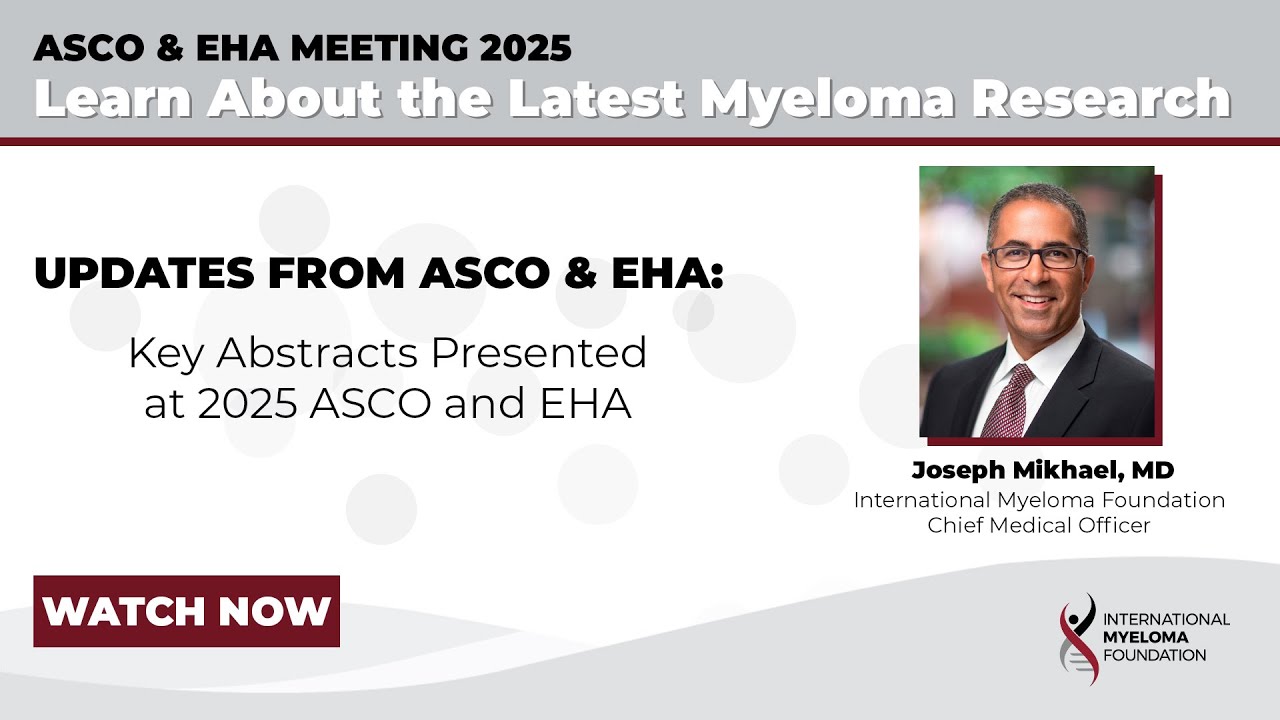
Dr. Joseph Mikhael's presentation reveals a transformative period in multiple myeloma treatment, with June 2025 marking unprecedented breakthroughs across the disease spectrum. The research demonstrates a paradigm shift toward precision medicine, where MRD (minimal residual disease) negativity is becoming the gold standard for treatment decisions, potentially eliminating the need for transplants in some patients. Most remarkably, CAR-T cell therapy has achieved what was previously unthinkable in myeloma - one-third of patients remaining disease-free five years after a single infusion, prompting discussions about potential cure definitions. The development of trispecific antibodies and innovative delivery methods like on-body injectors signals a future of more effective, convenient treatments with fewer side effects, while new standardized high-risk definitions will enable more targeted therapeutic approaches for aggressive disease variants.
Key Clinical Breakthroughs:
Revolutionary Long-term Outcomes
- CAR-T cell therapy milestone: 33% of patients disease-free at 5 years post-single infusion
- MRD negativity paradigm: Over 50% of patients maintained MRD negativity for 2 years
- High-risk survival improvement: Over 66% of high-risk patients alive at 6 years with intensive treatment
Treatment Strategy Evolution
- Transplant reconsideration: MRD-negative patients may not require transplant (Midas trial)
- Dual maintenance therapy: Adding daratumab to lenalidomide showing superior outcomes
- Precision treatment approach: Treatment intensity now guided by MRD status
Next-Generation Therapeutics
- Trispecific antibodies: Third targeting arm reduces side effects while maintaining efficacy
- Innovative delivery systems: On-body injector for 12-13 minute home infusions
- Combination breakthroughs: 80% response rate combining bispecific antibodies in challenging cases
Emerging Technologies and Methods:
Advanced Drug Delivery
- On-body injector (OBI) for isatuximab with 30-gauge needle
- Monthly dosing schedules reducing treatment burden
- Potential for home-based therapy administration
Novel Therapeutic Targets
- BCMA and GPRC5D dual targeting in trispecific antibodies
- BCMA and CD38 combination targeting
- Belantamab mafodotin with different mechanism of action
Improved Safety Profiles
- Anito cell CAR-T showing >90% response rates with minimal neurological effects
- Trispecific antibodies demonstrating fewer side effects than combination therapies
- Enhanced tolerability enabling more aggressive treatment approaches
Disease Management Standardization:
New High-Risk Definition
- Five standardized risk categories established
- Unified criteria for clinical trial design
- Improved patient stratification for treatment intensity
Smoldering Myeloma Advances
- Better identification of high-risk smoldering patients
- Daratumab showing progression delay benefits
- Ongoing optimization of early intervention strategies
Clinical Implications and Future Directions:
Immediate Practice Changes
- MRD negativity as primary treatment endpoint
- Consideration of transplant-free approaches for MRD-negative patients
- Enhanced focus on dual maintenance therapy protocols
Research Priorities
- Long-term follow-up of MRD-guided treatment decisions
- Optimization of trispecific antibody dosing and scheduling
- Definition and validation of cure criteria in multiple myeloma
Patient Care Evolution
- Shift toward personalized treatment intensity based on molecular markers
- Improved quality of life through home-based treatment options
- Enhanced survival outcomes across all disease stages
Strategic Significance:
This year represents a watershed moment in multiple myeloma treatment, moving from palliative care toward potential cure discussions. The integration of advanced biomarkers (MRD), innovative drug delivery systems, and next-generation therapeutics creates a comprehensive treatment ecosystem that addresses efficacy, safety, and patient convenience simultaneously. The standardization of high-risk definitions and treatment protocols will accelerate clinical research and improve global treatment consistency, ultimately benefiting the estimated 20-25% of patients with aggressive disease variants.

