


My number one peaceful place is the gym. When I go there, I spend a lot of time in prayer, and I come out feeling like I can do anything in the world. I love the gym.
When I was 38 years old, my toes suddenly went numb for no reason. I went to my primary care physician multiple times, and eventually she discovered I had monoclonal gammopathy—a high protein in my blood. They treated me as though I was an active myeloma patient.
I lost my ability to work as a dental hygienist. I had been at the same practice for 18 years, and I loved my patients. But I had to stop because I was too sick.
In 2016, my doctor recommended a clinical trial. At the time, I was supposed to get married the following year. I left the doctor’s office with my fiancé, and he turned to me and said, “We have to get married tomorrow.”
I said, “What? Tomorrow? I need a dress.”
He said, “Well, I can’t take care of you if we don’t live together.”
That night, we made a decision. We went to my minister’s house and explained that I needed treatment and we needed to be married. The minister’s wife grabbed the calendar and said, “Okay, you’re doing it next week.”
And it was beautiful. We went on our honeymoon, came back, and I started treatment.
Before the clinical trial, I had been on other drugs that made me very ill, but I faced it alone. This time, I had my soulmate—my best friend—with me. He made everything feel lighter.
I asked how long the trial would last, and they said two years. That upset me. Then I found out I’d have to go on dexamethasone. I was devastated because the last time I was on that drug, I gained 100 pounds. I begged, “Do I have to take dexamethasone?” My doctor said, “Joan, everyone has to take it.”
I told my husband, “Dexamethasone is going to make me big, moody, and angry.” He said, “It’s okay, you don’t have to go through this by yourself, my spiky.” He always takes care of me—he made sure I had what I needed and even arranged for people to check on me so I was never truly alone.
At one point, I was in a wheelchair, very depressed. My house was dusty and dirty, and I couldn’t clean it. Members of my church came over and cleaned my home while I sat and wept. When they left, they handed me an envelope. On my table was a stack of bills, and inside the envelope was a card with the exact amount of money I needed.
In my community—the Black and Brown community—people are often hesitant to join clinical trials because of historical reasons, fear, and mistrust. But I decided this was a way to give back and stand up for my community. I wanted to make sure the data collected represented us. My thought was: this trial may not help me, but it could help others.
Being part of a clinical trial also meant I received more attention, more exams, and more testing. I was cared for differently—more closely—than in standard treatment.
Fear should never stop you, and someone else’s bad experience shouldn’t stop you from getting the treatment you need.
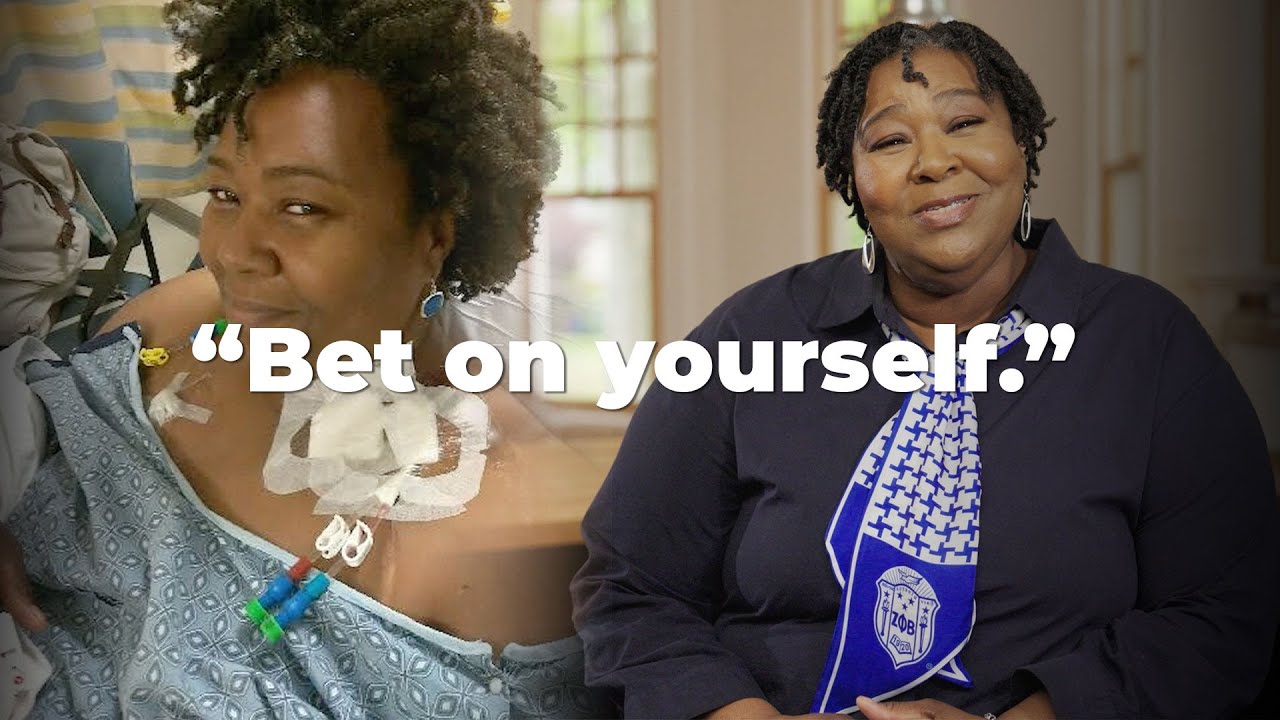
We must remember that God is in the midst of it all. Here I am, 20 years later, still living to tell my story—hoping to inspire others to never give up.

