


Dr. Martin Kaiser on the OPTIMUM/MUKnine Trial
What is the background of this study?
Patients with ultra high-risk (UHiR) newly diagnosed multiple myeloma (NDMM) and patients with plasma cell leukemia (PCL) continue to have dismal outcomes and are underrepresented in clinical trials. Recently, improved responses with anti-CD38 monoclonal antibody combination therapy have been reported for NDMM patients. We report here outcomes for NDMM UHiR and PCL patients treated in the OPTIMUM/MUKnine (NCT03188172) trial with daratumumab, cyclophosphamide, bortezomib, lenalidomide, dexamethasone (Dara-CVRd) induction, augmented high-dose melphalan (HDMEL) and ASCT. With final analysis follow-up surpassed in Feb 2021, we report here early protocol defined endpoints from induction to day 100 post ASCT.
In this video:
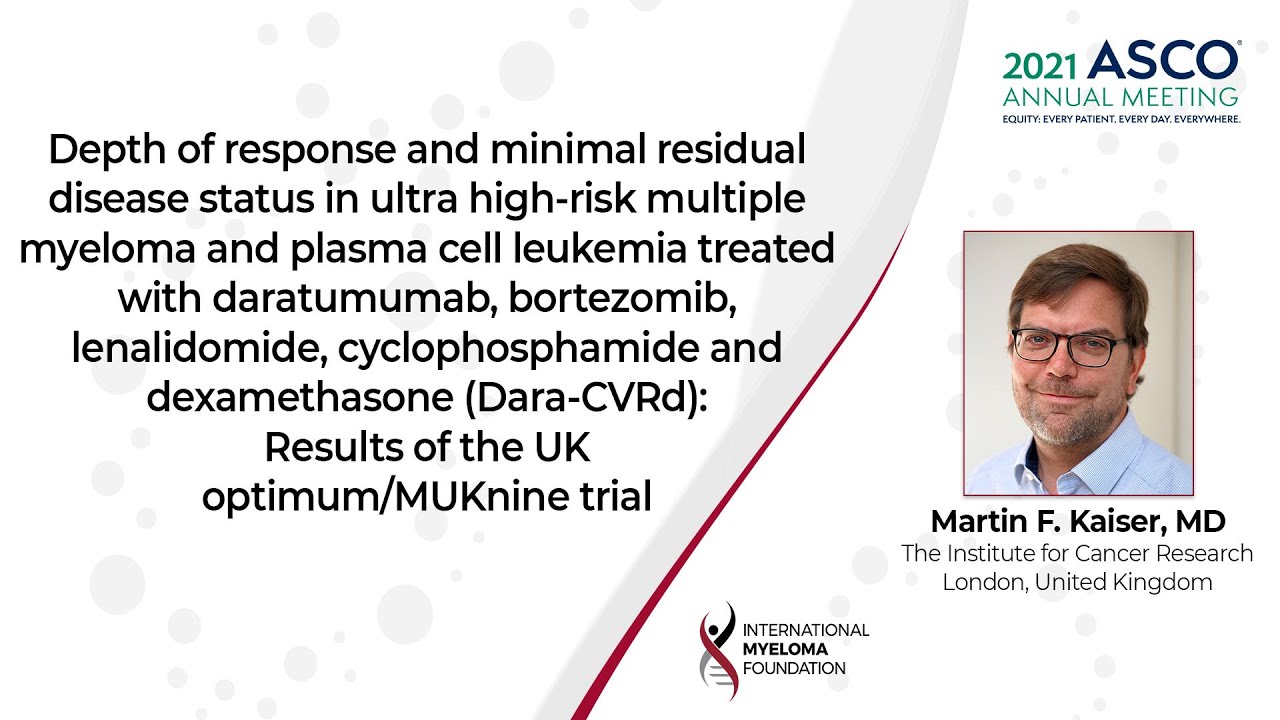
Dr. Martin F. Kaiser (Institute of Cancer Research, London, United Kingdom) discusses the results of the UK optimum/MUKnine trial which studied the Depth of response and minimal residual disease status in ultra high-risk multiple myeloma and plasma cell leukemia treated with daratumumab, bortezomib, lenalidomide, cyclophosphamide and dexamethasone (Dara-CVRd).
Conclusions:
This is to our knowledge the first report on a trial for UHiR NDMM and PCL investigating Dara-CVRd induction and augmented ASCT. Response rates were high in this difficult-to-treat patient population, with toxicity comparable to other induction regimens. However, some early progressions highlight the need for innovative approaches to UHiR NDMM.
Clinical trial information: NCT03188172

