


International Myeloma Working Group Summit
The 2025 IMWG annual meeting took place in-person from June 9-11, 2025, in Milan, Italy.
Emerging from the IMF Scientific Advisory Board (est. 1995), the International Myeloma Working Group’s (IMWG) mission is to identify and implement the most promising research to prevent the onset of active disease, to improve treatment, and to achieve a cure. In 2002, the IMF assembled the IMWG, with the group publishing its first consensus guidelines in 2003. The IMF hosted its first IMWG Annual Summit in 2010 in Barcelona, Spain.
The IMWG is comprised of more than 300 global experts in myeloma research and clinical care. IMWG members conduct collaborative basic, clinical, and translational research to improve outcomes for myeloma patients while providing scientifically validated, critically appraised consensus guidelines that are followed around the world. The IMWG’s work has greatly advanced the understanding of myeloma and its treatments, as well as patient care and outcomes.
Supporting important work of the IMWG and its members is a critical element of the IMF’s mission in expanding collaborative myeloma research and helping educate the global myeloma patient community. The IMWG has become the most prestigious organization for myeloma researchers from around the world — gathering the world’s top myeloma experts who work on imperative projects throughout the year. The annual IMWG Summit is a highly anticipated and important yearly event in fulfilling the IMF’s patient-centric mission.
The annual IMWG Summit is both a unique and an extraordinary experience, with the collective primary goal of moving the field of myeloma forward for the utmost benefit of patients. It is different from other medical meetings in general, and from other myeloma meetings in particular.
To date, the IMWG has published more than 60 consensus guidelines and research reports. These are highly regarded in the field and include fundamental papers such as the diagnostic criteria, response criteria, and staging systems.
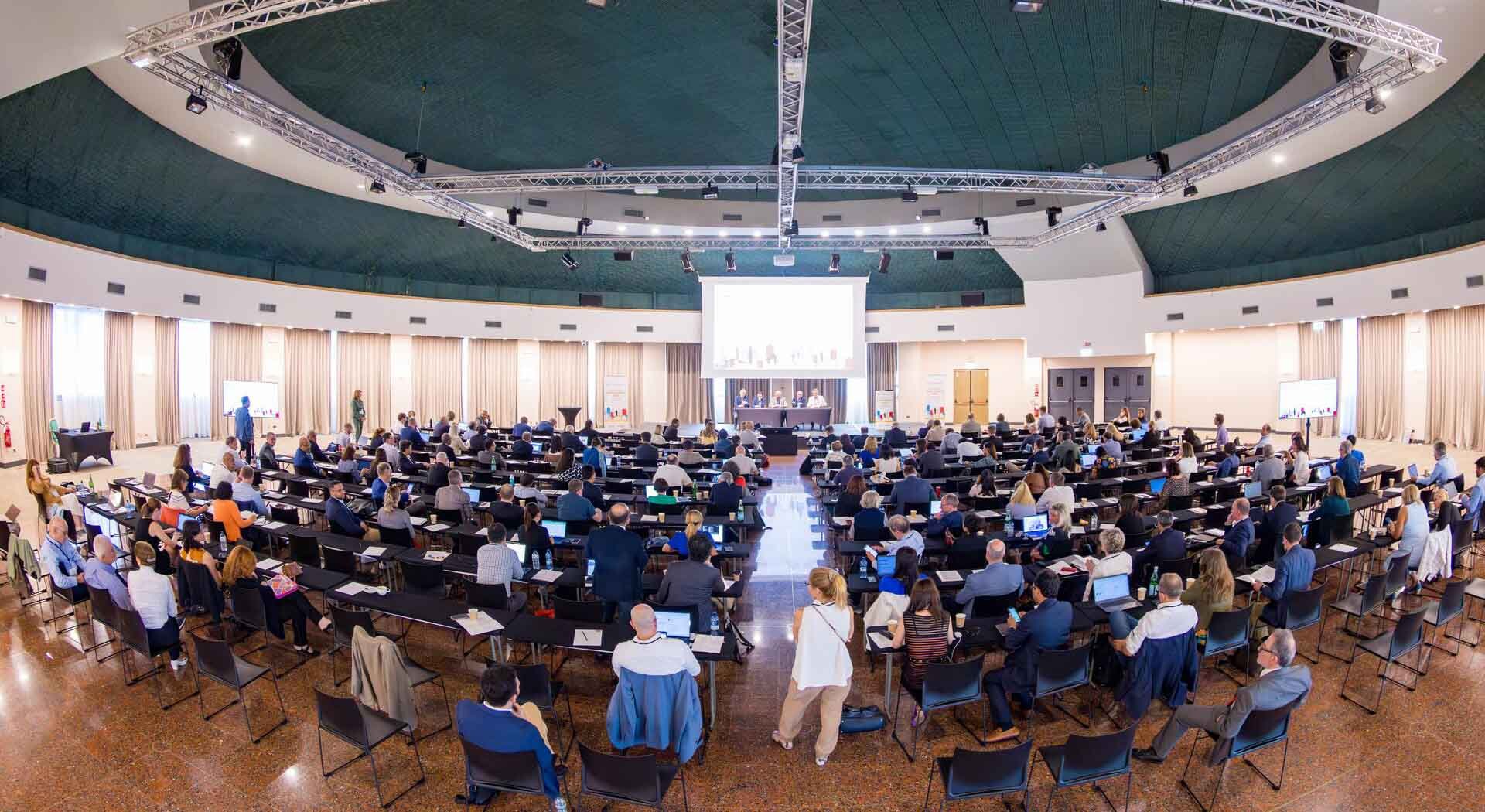
The 2025 IMWG Summit was held from June 9-11 in Milan, Italy. 140 physicians and researchers from 41 countries gathered for intensive brainstorming and planning. The annual summit provides a vital forum for members to share insights, address key clinical and scientific challenges, and shape the future of myeloma research.
This year’s sessions were co-chaired by IMF Chairperson of the Board Dr. S. Vincent Rajkumar, and IMF Scientific Advisory Board Members: Dr. Philippe Moreau (University Hospital of Nantes — Nantes, France), Dr. Nikhil Munshi (Dana-Farber Cancer Institute — Boston, MA), and Dr. Jesus San Miguel (University of Navarra — Pamplona, Spain).
The IMWG Summit included both a variety of presentations on a multitude of topics and numerous brainstorming discussions. Each presentation was followed by panel discussions and in-depth conversations with other experts in the audience. The major scientific presentations are summarized below.
The first session focused on monoclonal gammopathy of undetermined significance (MGUS) and smomoldering multiple myeloma (SMM), with Dr. Rajkumar as the session chair.
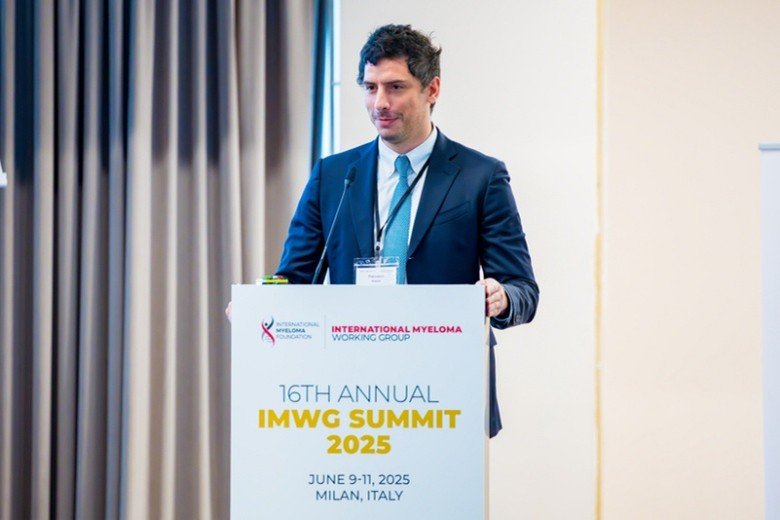
Dr. Francesco Maura (Memorial Sloan Kettering Cancer Center — New York, NY) started off by presenting on the Progression of MGUS to Multiple Myeloma. He delivered an impactful and widely discussed presentation on the progression of MGUS to multiple myeloma, focusing on the dynamic interplay between genomic evolution and immune surveillance. Drawing on data from large-scale studies such as CoMMpass, he highlighted how key genomic alterations—APOBEC mutagenesis, RAS mutations, MYC dysregulation, and specific copy number changes—are often already present in patients diagnosed with MGUS or SMM. Dr. Maura introduced a novel classification framework that combines genomic risk with the functional status of immune control—offering a biologically grounded approach to stratifying SMM and guiding the timing and intensity of therapeutic intervention.
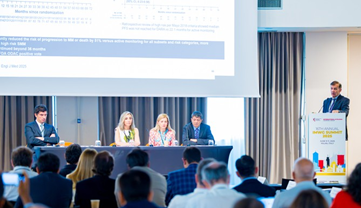
Dr. Meletios A. Dimopoulos (Department of Clinical Therapeutics, National and Kapodistrian University of Athens School of Medicine — Athens, Greece) presented on Risk Stratification and Management of SMM, emphasizing the urgent need for a standardized risk certification system in smoldering multiple myeloma to identify high-risk patients, guide personalized treatment decisions, inform clinical trial design, provide appropriate patient counseling and planning, and improve resource allocation. He noted that an optimal model should be highly predictive, simple and practical, validated across diverse populations, and based on accessible and reliable biomarkers. While dynamic models offer clinical insight, static models are useful at diagnosis and for trial enrollment.
The first session concluded with a panel discussion, with IMF Scientific Advisory Board Member Dr. María-Victoria Mateos (University of Salamanca — Salamanca, Spain), and Dr. Irene Ghobrial (Dana Farber Cancer Institute — Boston, MA) as panelists.
The second session focused on risk and response assessment, with Dr. Munshi as the session chair.
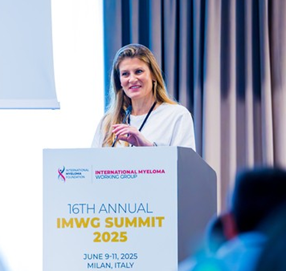
Dr. Jill Corre (The University Cancer Institute of Toulouse Oncopole — Toulouse, France) provided information on a New Myeloma Risk Stratification Update. She presented the new IMS/IMWG consensus genomic definition of high-risk multiple myeloma (HRMM), which marks a significant advancement in precision risk stratification. This new HRMM definition was recommended for all future clinical trials and routine clinical practice, estimating that ~20% of newly diagnosed patients will fall into this category. This consensus represents a vital step toward risk-adapted therapeutic strategies and aims to stimulate dedicated clinical trials for HRMM
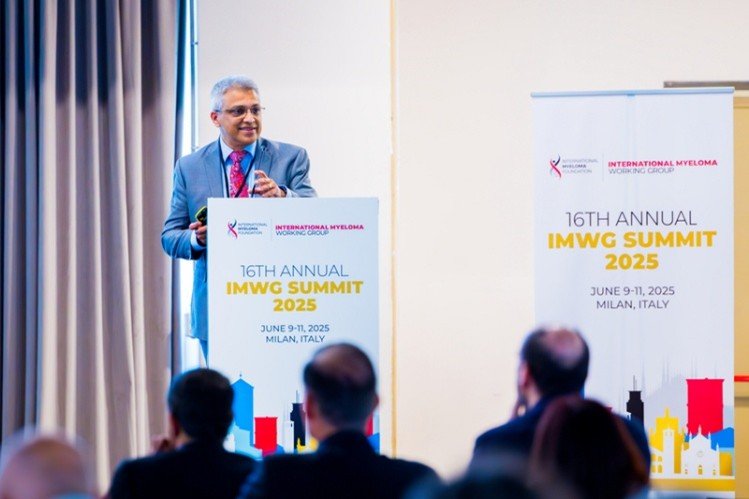
IMF Scientific Advisory Board Member Dr. Shaji Kumar (Mayo Clinic — Rochester, MN) presented on the new response criteria and risk stratification for myeloma, emphasizing the shift toward precision and consistency in disease assessment, especially as treatment options expand. He highlighted the critical importance of accurate response criteria, not only for guiding clinical care but also for ensuring fair comparison of therapies in trials and determining drug approvals.
The second session concluded with a panel discussion, with Dr. Munshi, Dr. Elena Zamagni (Bologna University — Bologna, Italy), and Dr. Joshua Richter (Tisch Cancer Institute, Mount Sinai — New York, NY) as panelists.
The third session focused on newly diagnosed myeloma therapy, with Dr. Moreau as the session chair.
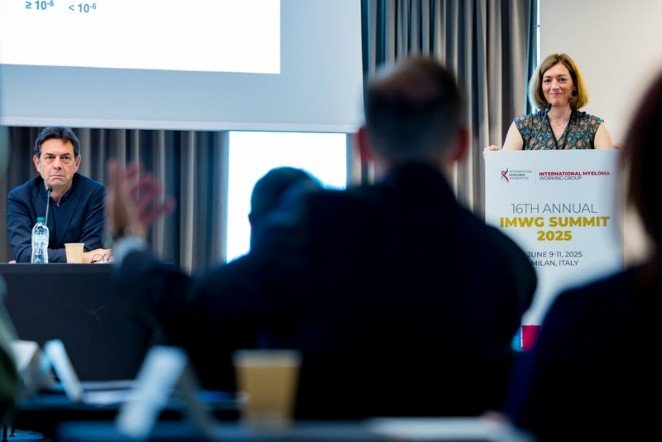
Dr. Aurora Perrot (University of Toulouse — Toulouse, France) presented on how MRD status is being integrated into treatment decisions for multiple myeloma across recent clinical trials. She reviewed three major trials: PERSEUS, MASTER, and MIDAS.
In PERSEUS, MRD-negative patients on daratumumab-based maintenance could stop therapy after two years, though questions remain about relapse risk post-discontinuation.
The MASTER trial showed that early treatment interruption based on MRD negativity is not advisable in high-risk cytogenetic patients, as outcomes were worse. The MIDAS trial stratified patients’ post-induction based on MRD status, suggesting that autologous stem cell transplant may be safely deferred in MRD-negative standard-risk patients, and tandem transplant likely offers no additional benefit.
During his presentation, IMF Scientific Board Advisory Member Dr. Sagar Lonial (Winship Cancer Institute, Emory University — Atlanta, GA) focused on applying and interpreting existing data in clinical practice, emphasizing key questions and treatment principles over a review of known evidence.
Dr. Lonial suggested that while individual trial differences exist, the most effective approach continues to be a combination of a CD38 monoclonal antibody (such as daratumumab), an IMiD (like lenalidomide), a proteasome inhibitor (such as bortezomib or carfilzomib), and dexamethasone. This quadruplet approach has demonstrated deep responses and improved progression-free survival. However, not every patient may have access to quads, so using the best available and optimized triplet remains a strong alternative to achieve meaningful outcomes.
Additionally, he underscored the need to reassess the definition and evaluation of frailty, and the importance of identifying which patients are truly transplant-ineligible. Frailty should not be defined by age alone. He encouraged more nuanced assessment tools to guide treatment intensity.
During the panel discussion after the third session, Dr. Marc Raab (Heidelberg Myeloma Center — Heidelberg, Germany) and Dr. Paul Richardson (Dana-Farber Cancer Institute — Boston, MA) served as panelists.
The fourth session on update on immunotherapy was chaired by Dr. San Miguel.
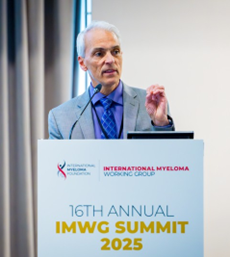
Dr. Tom Martin (University of California San Francisco — San Francisco, CA) provided an in-depth overview of the current landscape of CAR T-cell therapies and bispecific antibodies in myeloma emphasizing their transformative impact on treatment, particularly in the relapsed/refractory setting.
CAR T-cell therapy is currently the frontrunner among BCMA-targeted therapies for relapsed/refractory multiple myeloma, particularly in BCMA-naïve patients. While CAR T cells have demonstrated deep, durable responses in later-line settings, there is a critical need to move these therapies earlier in treatment to maximize their impact—both in terms of long-term disease control and potential cures.
The goal is to deliver the most effective therapy with the fewest side effects and the best quality of life for patients. Convenience, low treatment-related mortality, and minimal morbidity will be crucial differentiators. As bispecifics and CAR Ts continue to advance, frontline treatment represents the space with the greatest potential for meaningful, lasting impact, said Dr. Martin.
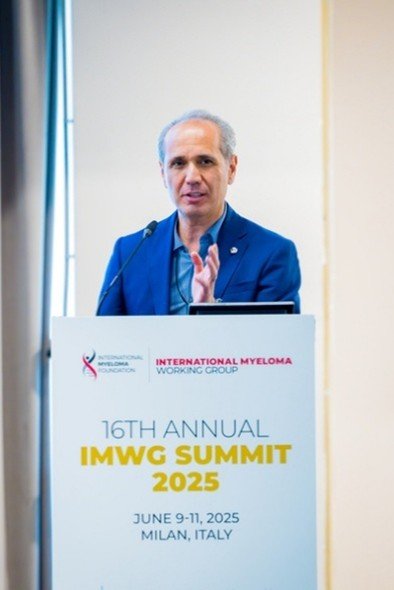
Dr. Nizar Bahlis (University of Calgary — Calgary, Canada) presented on sequencing immunotherapies in multiple myeloma, focusing on the biological underpinnings and clinical considerations for using bispecific antibodies and CAR T-cell therapies. Although both therapies induce the formation of immunological synapse, he wanted to understand what drives the cell killing with bispecific antibodies and found that cytolytic activity of bispecific antibodies is mediated by granzymes, whereas cytolytic activity of CAR T cells is mediated by granzymes as well and death receptor ligands.
According to Dr. Bahlis, bispecifics cause skewing in the CD4/CD8 ratio and reduce T-cell receptor diversity, which can impact subsequent immunotherapies. He stressed the importance of timing between therapies and recommended a ~6-month washout after bispecifics before CAR T-cell apheresis to allow for immune recovery. Additionally, he recommended confirming retained antigen expression via flow cytometry (FCM) or next-generation sequencing (NGS) before transitioning to subsequent therapies.
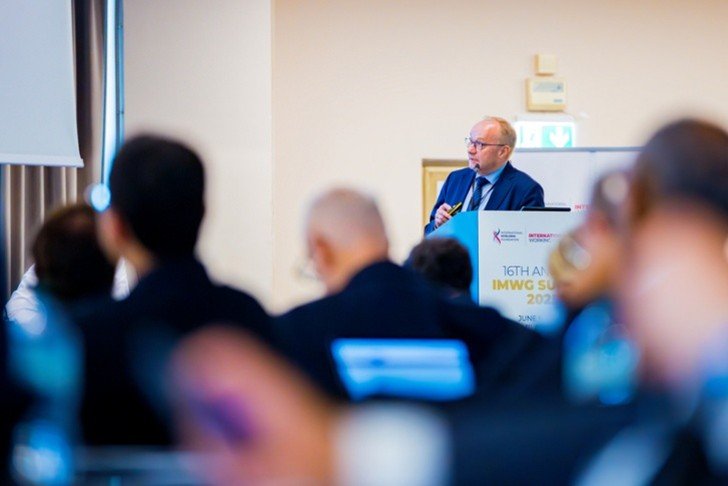
Dr. Herman Einsele (Würzburg University Hospital — Würzburg, Germany) presented on the need for novel constructs and strategies to address key limitations of current therapies. The goals include enhancing efficacy (overcoming T-cell exhaustion, antigen escape, and suppressive tumor microenvironments), reducing toxicities (such as CRS, ICANS, and CNP/MNT), and improving accessibility (by reducing long manufacturing times and high costs associated with autologous CAR T cells). Strategies under investigation include combining T-cell therapies with small molecules—such as dasatinib or other kinase inhibitors—to reduce toxicities and T-cell exhaustion and using IMiDs or CELMoDs to improve T-cell fitness and function.
Additionally, Dr. Einsele highlighted that the future of myeloma immunotherapy lies in combination approaches, novel targets and multitargeting to prevent antigen loss, and advances in manufacturing that enable broader, faster, and more cost-effective patient access.
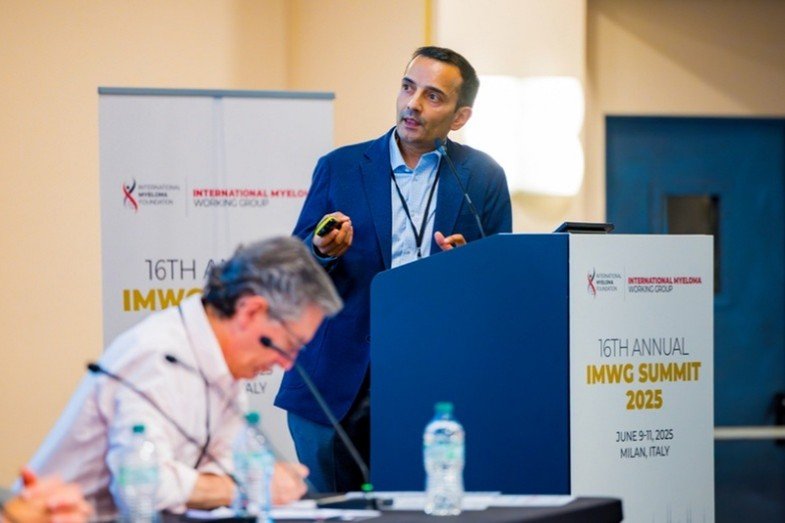
Dr. Ajai Chari (University of California San Francisco — San Francisco, CA) outlined four key categories contributing to resistance in T-cell–redirected immunotherapies: tumor-intrinsic mechanisms, T-cell health, microenvironmental factors, and treatment characteristics. He emphasized that while T-cell redirecting therapies like bispecific antibodies and CAR T cells have led to impressive response rates and improved progression-free survival, resistance remains a major challenge.
In summary, Dr. Chari explained that resistance to immunotherapy in myeloma is driven by a convergence of tumor-intrinsic mechanisms (including antigen loss and mutation), declining T-cell quality (exacerbated by late-line use), and an immunosuppressive microenvironment. Addressing these barriers through earlier intervention, functional immune profiling, combination strategies, and targeting resistance pathways may help overcome these challenges.
At the end of the fourth session, a panel discussion addressed various questions about CAR T, bispecifics, and other topics that were presented.
The final session of the IMWG Summit featured reports from all IMWG Committees. Updates and action plans were presented by committee chairs: the SMM Committee (Drs. Shaji Kumar and María-Victoria Mateos); the Bone Disease Committee (Drs. Evangelos Terpos and Jens Hillengass); the Immune Therapy Committee (Drs. Thomas Martin and Yi Lin); the Combined Mass Spectrometry and MRD Committee (Drs. Brian Durie and Maria Alice Willrich — Mass Spectrometry; Drs. Nikhil Munshi and Bruno Paiva — MRD); and the Quality of Life Committee (Drs. Surbhi Sidana and Sonja Zweegman).
The 16th Annual IMWG Summit was a unique, highly productive, exemplary experience of collaboration in myeloma research that we have come to expect from its outstanding membership. The IMF is proud to bring experts together from around the world, as part of the IMWG.