


Michael: Hi, everybody. My name is Michael Riatto. I live in Jamison, Pennsylvania, right outside of Philadelphia, and I'm super glad to be here today.
Anna: Awesome. Well, thank you for that great introduction, Michael. We'll now dive into the Miracles for Myeloma 5k run/walk. Could you share a bit about the event and what it means to you personally as well as to the myeloma community?
Michael: So the Miracles for Myeloma run walk, it's a really incredible place. It's at FDA Park in Philadelphia, right here, and it's a community event. It means an incredible amount to the myeloma community. You know, myeloma is an incurable blood cancer, and the Miracles for Myeloma is strictly a fun event. And, yes, there are some competitions out there too because it is a 5k, so you get a bib and you'll actually be tracked for your time if you so wish that. But the event is really to raise funds for research dollars for myeloma. As I said a second ago, it's incurable. There's no cure for it yet. There are lots of treatments, but it would be incredibly great. You know? Research is very, very expensive, and every dollar raised goes to research to find a cure. Some people in the myeloma world live pretty healthy, regular lives, and others, unfortunately, the myeloma is extremely aggressive. And, you know, they can die just a few short years after diagnosis. So we'd love to be able to find a cure one day for this. And the 5k walk/run is a super way to do that in a fun environment.
Anna: Awesome. Yeah. I want to talk more about the impact. How do the funds raised from this event help support the International Myeloma Foundation's work?
Michael: Yeah. The funds that we raise at this event go strictly for research and also education of myeloma patients. One of the things that the International Myeloma Foundation is really, really good at is research and funding that research. You know, we had the black swan initiative in Iceland, which is an incredible story in and of itself, which we probably don't have time to go into today. But those research dollars make a difference. You know? And sometimes that money goes to literally start-up research people that might have an idea that just don't have the funds to make it work, and that's probably where the cure is going to come from. Now you look back in our history, and there's different medicines that were developed just by chance or just by a small, you know, independent lab. And that's where some of this money goes to, and it's really, really important. The other part of the money goes to education. You know, also this weekend, as the patient and family seminar here in Philadelphia, which the IMF does multiple throughout the country, every year, along with their regional community workshops. Educating myeloma patients is also near and dear to the IMF's, you know, pillar of focus. And it’s knowledge is power. When you're able to know your disease and understand your disease, and you can talk to your doctor about what treatments you may want to have, it makes all the difference in the world. So that's where the funds will be going to.
Anna: Awesome. And for someone who's considering participating or donating but doesn't know much about myeloma, is there anything else you'd want them to know?
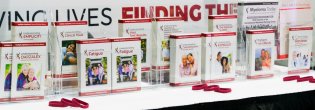
Michael: Well, that's a really good question, Anna. I would think that number one, it's really easy to register. You can register online. You can register in person at the event. Very, very simple to do. You can also just go to the website and actually pick a team or pick a person that you want to support, which is very easy to do also, or you can come down yourself and participate. You can also do it virtually. You know? There are some people that may not be able to actually get to and travel to FDR Park in Philadelphia for Saturday morning. So you can you can participate virtually. But I think it's important for folks to realize that it's simple and it's easy to do, and we certainly welcome everybody. Also, at the race walk, we'll have tons of information about the International Myeloma Foundation and myeloma. So if you're unfamiliar with myeloma, we'll have plenty of booklets and pamphlets and things that you'd be able to pick up and take with you, and also be able to talk to patients. I mean I mean, I'll be there. My other co-chairs will be there. Lots of patients would love to share their story about what they've gone through.
Anna: Awesome. And that's actually a perfect segue to my next question, which is, would you mind sharing a bit about your journey with multiple myeloma, and how it led you to become an advocate?
Michael: Oh, wow. How much time do we have? So I'll chuckle for a bit on that one. But, so I was diagnosed completely by accident, which happens in most cases within the myeloma world. I happened to be at the beach, and I got tumbled in a wave. And I hit my neck on the beach really, really bad. And I didn't know it at the time, but I knew it the next day after an X-ray that I actually fractured my neck. So myeloma affects your bones greatly. It has what they call lesions, and it kind of eats your bones. So in my case, it started in my spine, which it does in many myeloma people. I was diagnosed in July of 2011. Again, as I mentioned, by complete accident. Went through what we call induction therapy or a triple combination of chemotherapy drugs. And then I went through a stem cell transplant. I didn't have an easy stem cell transplant. It was very, very difficult. However, I was fine. I was on a maintenance drug therapy for nine years, along with some radiation and a few other things. In the last few years, I've been on a drug holiday. So, I'm actually very grateful and very blessed to be able to do what I'm doing today. How I got involved with advocacy, both self-advocacy and also what I call legislative advocacy, was simply the fact that one of the maintenance drugs I was on was outrageously expensive, and my co-pay was anywhere from a hundred to 11 hundred dollars a month. And another organization asked me to tell my story to our legislators in Harrisburg because we were trying to pass what we call an oral parity bill. And that's how I got started with advocacy. And then once I got the, shall we say, the bug, I realized that my story is impactful and powerful. And so I started to work more and more with other organizations, including the IMF, to share my story and to make a difference in patients' lives. You know, in the advocacy world, especially with the IMF, we talk about access, which is so important, affordability, and then also research dollars. We talk about the fact that if we have this great, wonderful, new therapy that just gets approved, the question is, can the patient get it? And that would be the access. And the next thing is, can the patient actually afford it? It doesn't do much good to have a terrific drug that works wonderfully at giving you a remission from myeloma if you can't access it or you can't afford it. One of those things, to give you an example, is CAR-T therapy. It's FDA-approved. There's two of them out there. But, yeah, there's only 76 medical centers in the entire country that can actually do it. So if you live in a rural part of a state, chances are you just can't get it. You have to go to a major metropolitan city to be able to do that. And most of those are centered on both coasts. If you live in the center of the country, you're travelling quite far for that. So that's one of the things we work on to get access and then also to be able to afford it. It makes all the difference in the world.
Anna: Absolutely. And building off of lack of access, what are some of the other biggest challenges people with multiple myeloma face, that you wish more people understood?
Michael: Wow. What do people face? They face this diagnosis. You know, it's one of those things that probably we wish we can avoid, and it's one of the things that our chief medical officer, Dr. Joe, is working on is to educate primary care physicians on what to do and what test to order if something pops up. Myeloma mimics so many other diseases, especially because it affects the older population. So many people would say, hey, I've got back pain, which is probably one of the number one signs. Well, most doctors will chalk that up to age or arthritis or something else. You know? And that's and that's unfortunate. And most of the time, they'll send somebody for PT, physical therapy, or they'll send them to a chiropractor or something like that because they don't realize that, actually, you know, the myeloma has started. So running simple blood tests, you know, and looking for a high protein or a high calcium and then having that primary care physician understand that, hey. We need to send you for some further tests. That would be probably one of the biggest challenges in the myeloma world.
I think the other thing that's critical is the affordability. Myeloma is a really, really expensive disease because you're on treatment all the time. Most people are on treatment all the time. Those treatments are very, very expensive. And to be able to afford it, I think, is one of the other challenges.
And then and then the biggest one that I think that that that that hits people on a personal level and each day, is the fatigue. Myeloma causes fatigue. And, you know, getting out to this walk run is just one of those things to fight that fatigue. You know? It's kind of counterintuitive. But the more active you are, the more walking you do, the more active you are in the gym, the better off your fatigue is, and it actually kind of goes away. So those are kinds of things that myeloma patients face every day.
Anna: That's great. Thank you so much for sharing that. I wanted to circle back to the Miracles for Myeloma 5k run/walk, happening this weekend. What are you most looking forward to at the event?
Michael: The camaraderie. You know? Being with fellow myeloma patients and care partners means the world to me. Just people coming out to support this cause is it just gives you an incredible, incredible feeling. It kind of fuels my fire, so to speak, that the people care. And being able to share other patients' stories with each other and what they're doing and how they're moving through life. That's what I'm looking forward to the most.
Anna: Awesome. And on a related note, how important is community events like this for people living with myeloma and their families?
Michael: I think that support in the myeloma world is really critical. Because, as I always call it, it's the cloud that's always over your head, you know, because there is no cure for this disease. So that's always in the back of your mind that when is it coming back, how fast is it coming back, what kind of treatment am I going to have? And I think having community events like this, where people can share the fact that we're raising money to work towards a cure, gives people great joy. And being able to be together as a myeloma community, I do believe, gives them great reward. The other thing that this will do is, you know, we don't talk about it often enough, but there's a huge mental aspect to myeloma too. Again, because, you know, there's no cure. It's always there. And sometimes, dealing with the mental aspect of that is almost harder than dealing with the physical aspect of having treatment all the time. One of the things that the International Myeloma Foundation is really, really good at is there are over 160 support groups right now throughout the country. You know, one right here in Philadelphia, the Philadelphia Multiple Myeloma Networking Group or PMMMG for short. We offer support for one another all the time. And I think that's one of the things that people love that that with the community feel and support groups.
Anna: That's great. And you mentioned or highlighted an important point, which is that right now, there is no cure for multiple myeloma. Looking ahead, what gives you the most hope when you think about the future of myeloma research and patient care?
Michael: Wow. I think that one of the things that I've seen in most recent weeks and months is the fact that the patient voice is being heard louder and louder, that there's patient advisory councils now, and then there's patient communication with those researchers and those clinical trials. And I think that's the most important thing. And also on the horizon, there are so many new therapies that are in pipelines right now that are they're in either clinical trials or being developed. You know, there's one out there that I saw, at ASH when I was at ASH last December, that has a 98% effective rate and almost zero side effects. That's an incredible thing in the myeloma world. You know, people often talk about, you know, life in general and myeloma. And, you know, but right now in the myeloma world, it’s terrible to get myeloma, but it's actually in a great state because there's so many therapies being developed for it. And I think we're going to work towards a cure. I think I think we're getting closer and closer every single day. You know, when I was diagnosed, there were only three drugs. There's almost 14 drugs in the past, you know, 14 years that have been developed. That's a huge accomplishment in the myeloma world, and I think there's huge hope. This is my favorite word, by the way. I think there's huge hope on the horizon that we will find a cure.
Anna: Absolutely. And if you could send one message to everyone attending or supporting this event, what would it be?
Michael: One message. I would say I'm going to go back to what I just said a second ago, and my favorite word is hope. And I think that having events like this this this walk, run, and this 5k for myeloma gives a community a sense of hope. And I think that someday, we really will have a cure for myeloma. So I would say one word, hope.
Anna: Awesome. I think that's a very powerful word, and really captures the heart of what this event is all about. Before we wrap up, I've got to ask, do you have any pre-race traditions or personal rituals before a big day like Saturday?
Michael: Try to get a good night's sleep is one. I'm a huge coffee drinker, so I'll probably have a cup of coffee before the race. And I'll probably have a protein bar or two, and that's probably about it. Nothing really special. And, yes, I will be jogging the course, not really fast, not really slow, somewhere in between. So I won't be the first finisher, but I won't be the last one either.
Anna: That's awesome. Well, thank you so much for sharing your story and insights with us today, Michael. Best of luck at the event, and we'll see you there.
Michael: Thank you. Appreciate it. I'll see you there too.

