Stem Cell Transplant for Multiple Myeloma Explained
What is a stem cell transplant, and why is it used to treat multiple myeloma?
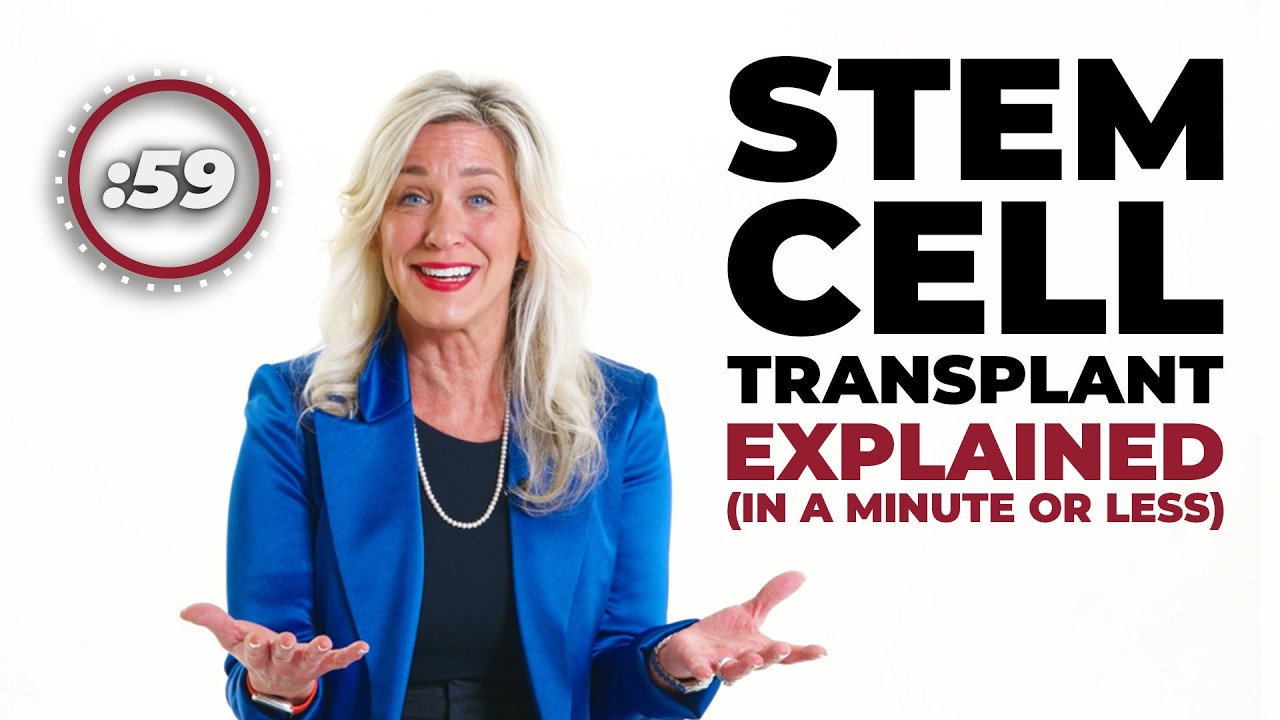
In this Myeloma in a Minute video, Beth Faiman, PhD, MSN, APN-BC, AOCN®, BMTCN®, FAAN, FAPO, explains how autologous stem cell transplant works, why it can help deepen remission, and how advances in supportive care have improved the transplant experience for many patients.
If your healthcare provider has recommended a stem cell transplant, learn what the procedure involves, why it remains an important treatment option for multiple myeloma, and what questions to ask your care team. For more information about stem cell transplant and multiple myeloma, visit myeloma.org and subscribe to the International Myeloma Foundation for trusted patient education.
Subscribe for weekly updates on myeloma research, treatment, and patient support. For more information about multiple myeloma resources, support groups, and education, visit myeloma.org.
Have a question that needs more personalized support? Call us! We’re here for you. The IMF’s InfoLine is available to answer your myeloma-related questions and concerns. Call us at 1-818-487-7455, email us at [email protected], or schedule your call at a time that works for you at: www.myeloma.org/infoline.
View the transcript
Beth Faiman:
So, if you have cancer, you might have heard the word stem cell transplant, but what does that look like in 2026?
Hi, I'm Beth Faiman. I'm with the International Myeloma Foundation's Nurse Leadership Board, and I'm here to talk to you about stem cell transplant in a minute or less.
So, stem cell transplant is a procedure that we've been using since the 1990s for many different cancers, including multiple myeloma. What we do with this procedure is we take out your own healthy stem cells out of your blood, out of a catheter, and we preserve them. After a high dose of chemotherapy, we rescue your bone marrow with those preserved stem cells so we can grow back the normal and natural, healthy, hematopoietic elements that make you you.
And this procedure hasn't changed a lot, but what has changed is the effect of supportive care, the getting you into remission, and then this will translate to a deeper remission in many recent studies.
So, it's important to learn about stem cell transplant. And if your provider is recommending this as a therapy, ask questions. "Why do you think this is right for me? And is this something I need to do now or I can do this down the road?" And as always, you can go to myeloma.org to learn more information about stem cell transplant.
Beth Faiman, PhD, MSN, APN-BC, AOCN®, BMTCN®, FAAN, FAPO
Cleveland Clinic Taussig Cancer Institute
IMF Nurse Leadership Board Member
Beth Faiman, PhD, MSN, APN-BC, AOCN®, BMTCN®, FAAN, FAPO, has become an exemplary leader in bringing critical knowledge of cancer nursing to clinical providers — locally, nationally, and internationally. As a founding member of the International Myeloma Foundation Nurse Leadership Board (NLB) and practicing clinician, she demonstrates enthusiasm for continuous learning by conducting innovative research and demonstrates the importance of using and integrating new medical knowledge within nursing practices. In 2023, Faiman was given the NP/PA Educator of Distinction Award in Multiple Myeloma and in 2022, Faiman was named the Top NP in Hematology/Oncology and inducted as an inaugural Fellow of Advanced Practice in Oncology (FAPO) awarded by the Advanced Practitioner Society for Hematology and Oncology (APSHO). Faiman is a Distinguished Fellow in the American Academy of Nursing (FAAN). She is the current Editor-in-Chief of Journal of the Advanced Practitioner in Oncology. She remains an active author, presenter, mentor, and educator on the topics of hematology, oncology and supportive cancer care.
Faiman received her Bachelor of Science in Nursing degree from Ursuline Academy (1996), a Master of Science in Nursing at Kent State University (2002), and a PhD in clinical research from Case Western Reserve University (2014). Faiman is an adult nurse practitioner in the Department of Hematology/Oncology at the Cleveland Clinic in Ohio, and a clinical member of the Case Comprehensive Cancer Center under the Cancer Prevention, Control and Population Research Program. She has edited several books and authored many chapters and papers, including Editor of the 3rd Edition of the Multiple Myeloma Textbook for Nurses (2021), and both Editions of the Blood and Marrow Certification Manual for Nurses (2017, 2023), by ONS publishing. She previously held appointments on the American Board of Internal Medicine and American Society of Hematology.