


Dr. Thierry Facon on Results of the MAIA Study
Background of the study:
The primary analyses of the phase III ALCYONE, MAIA, and CASSIOPEIA studies established the superior clinical efficacy of daratumumab (DARA) in combination with standard-of-care regimens versus standard of care alone for patients with newly diagnosed multiple myeloma (NDMM). In ALCYONE, after longer follow-up, an overall survival (OS) benefit was observed; adding DARA to bortezomib, melphalan, and prednisone significantly reduced the risk of death by 40%. In the primary analysis of MAIA, DARA plus lenalidomide and dexamethasone (D-Rd) reduced the risk of disease progression or death by 44% versus lenalidomide and dexamethasone (Rd).
In this video:
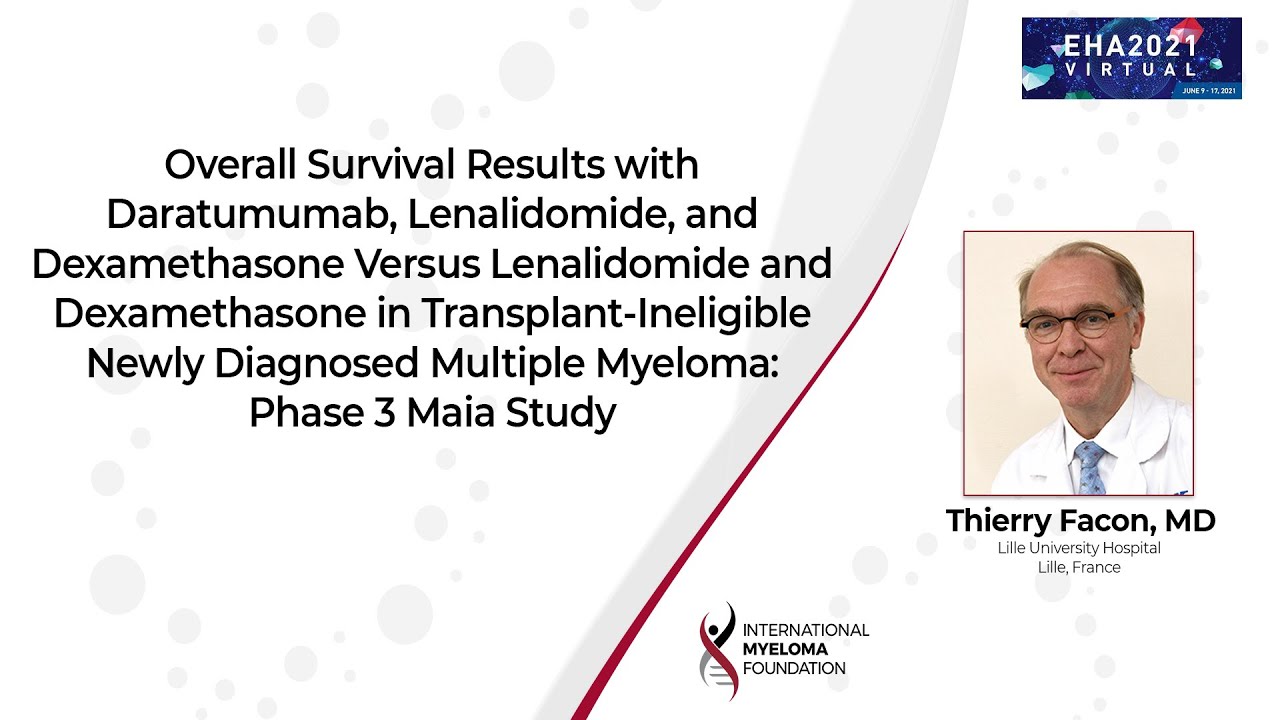
Dr. Thierry Facon (Lille University Hospital, Lille, France) discusses the results of the MAIA study which compared the overall survival results in transplant-ineligible newly diagnosed multiple myeloma patients using daratumumab, lenalidomide, and dexamethasone versus lenalidomide and dexamethasone.
Conclusions:
After almost five years of follow-up, a significant and clinically meaningful OS improvement was demonstrated with the use of D-Rd versus Rd in patients with NDMM who are transplant ineligible, representing a 32% reduction in the risk of death. The significant progression-free survival (PFS) benefit of D-Rd versus Rd from the primary analysis (median follow-up, 28 months) was maintained, with a 47% reduction in risk of disease progression or death and a median PFS for D-Rd NR. The favorable benefit-risk profile observed supports the use of D-Rd in transplant-ineligible patients with NDMM. These results, together with the OS benefit observed in ALCYONE, support the use of frontline DARA-based combination regimens to maximize PFS for optimal long-term outcomes.
