

Heather Cooper Ortner welcomed attendees and framed the purpose of the three meetings: ASCO for large Phase III practice-changing results; EHA for hematology-specific updates and European trial data; and the IMWG Summit as a private consensus-building forum. She introduced the three panelists and opened the moderated discussion.
Hosted by Heather Cooper Ortner (IMF President & CEO) with panelists Dr. S. Vincent Rajkumar (Mayo Clinic / IMWG Chair), Dr. Sagar Lonial (Emory University / Winship Cancer Institute), and Dr. Nikhil Munshi (Dana-Farber / Harvard Medical School). The webinar covered key data readouts from ASCO, EHA, and the IMWG Summit, followed by an extended patient and caregiver Q&A.
Workshop chapters Topics Covered in This Workshop
0:00
Introduction and Context
5:17
Frontline Therapy and the Curative Approach
Dr. Vincent Rajkumar outlined the current standard: quadruplet induction for most patients, transplant for eligible patients (especially high-risk), and risk-stratified maintenance (one drug for standard risk, two or more for high risk). PFS rates of approximately 80% at 4 years for transplant-eligible patients were cited. Dr. Munshi added that the regimen is broadly similar regardless of genomic risk, but high-risk patients receive more intensive transplant and maintenance strategies. Lonial noted that cure is now an active discussion and that transplant in first remission may benefit even standard-risk patients.
9:49
Bispecifics in Early Relapse: MONUMENTAL-3 and MAJESTEC-9
Dr. Lonial reviewed MONUMENTAL-3 (talquetamab combinations, 81% 2-year PFS) and MAJESTEC-9 (single-agent teclistamab in dara-exposed/refractory patients). He argued that first-relapse goals should mirror frontline goals: achieve deep, durable remissions. Bispecifics, CAR T, and CELMoDs are all potential tools, with choice depending on prior exposure, access, and patient factors.
12:41
CAR T vs. Bispecifics: Sequencing and Access
Dr. Nikhil Munshi addressed the sequencing question directly: CAR T is generally preferred as the first immunotherapy given higher single-agent response rates (90-95%). Teclistamab plus daratumumab now achieves 85-90%, narrowing the gap. The key principle is to use CAR T before BCMA bispecifics when possible, to preserve T-cell health and avoid BCMA mutations that reduce subsequent CAR T efficacy. Switching targets (BCMA to GPRC5D or vice versa) is a viable sequencing strategy.
15:50
Toxicity, Quality of Life, and Access
Dr. Rajkumar drew the analogy to bortezomib: initially considered prohibitively toxic, now used safely for years with schedule optimization. He predicted the same evolution for bispecifics, with reduced dosing frequency, prophylactic IVIG and tocilizumab, and growing familiarity with when to stop. Delayed CAR T neurotoxicities are under active investigation. On access, he noted that competing BCMA agents entering the market should drive down prices over time, as occurred with lenalidomide, pomalidomide, and daratumumab.
19:50
Smoldering Myeloma: Watch and Wait vs. Early Intervention
Dr. Rajkumar reviewed the AQUILA trial (daratumumab for high-risk SMM, now FDA and EMA approved), noting that early intervention can delay full myeloma therapy and improve OS, but individualization remains essential. ASCENT and CESAR trials are testing myeloma-intensity therapy as a potential functional cure for SMM; MRD data are promising but long-term follow-up is needed. Dr. Lonial emphasized confirming true high-risk status before treating, preferably with a second opinion. The myelomaRisk.com calculator was highlighted for precise individualized risk estimation.
22:27
Ultra-High-Risk Disease and Biology-Driven Treatment
Dr. Munshi described the ultra-high-risk subset (approximately 5-7% of all myeloma patients) as an evolving target: as treatments improve, the definition of high risk shifts. For ultra-high-risk patients, more intensive immunotherapy earlier (bispecifics, CAR T, or combinations) is being evaluated, but no definitive standard has emerged. Genomic research is ongoing to identify resistance mechanisms and define this population more precisely.
25:16
CELMoDs: Mezigdomide and Iberdomide
Dr. Lonial described mezigdomide and iberdomide as more potent next-generation IMiD-class agents with stronger immune-stimulating activity and a distinct adverse event profile. They will be used across multiple settings: as partners with bispecifics and CAR T, as pre-apheresis T-cell priming agents, and in maintenance for high-risk disease. Mezigdomide shows particular activity in extramedullary disease. Iberdomide appears less toxic than lenalidomide. A head-to-head iberdomide vs. lenalidomide maintenance trial has completed enrollment.
28:50
MRD Negativity: Purpose, Limits, and Clinical Use
All three panelists addressed MRD in depth. Dr. Rajkumar clarified the three uses of MRD: surrogate endpoint for drug approval (well accepted by FDA); prognostic marker (MRD-negative patients live longer); and potential surrogate for cure (sustained MRD negativity off all therapy). He cautioned against treating MRD as an absolute clinical directive before randomized trial evidence matures. Dr. Munshi added that 10-6 is the current depth target and that MRD negativity in high-risk patients narrows the gap with standard-risk outcomes. Dr. Lonial stressed that MRD interpretation is highly context-dependent: timing, depth, sustained vs. transient, risk category, and trajectory all matter. The IMF's I2TEAM effort to bring MRD to regulators was credited with enabling accelerated drug approvals.
37:30
Audience Q&A
A broad range of patient and caregiver questions were addressed.
Speakers:
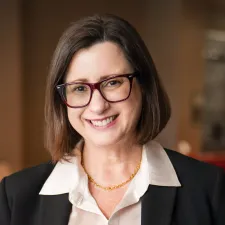
Heather Cooper Ortner
President & CEO, International Myeloma Foundation
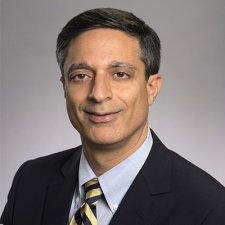
Sagar Lonial, MD, FACP, FASCO
Emory University School of Medicine

Nikhil Munshi, MD
Dana-Farber Cancer Institute & Harvard Medical School
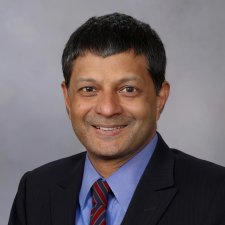
S. Vincent Rajkumar, MD
Mayo Clinic & Chair of the International Myeloma Foundation