KARMMA-3 Analysis: IDE-CEL vs Standard Regimens for High-Risk Myeloma
Analyzing the use of ide-cel in high-risk multiple myeloma patients
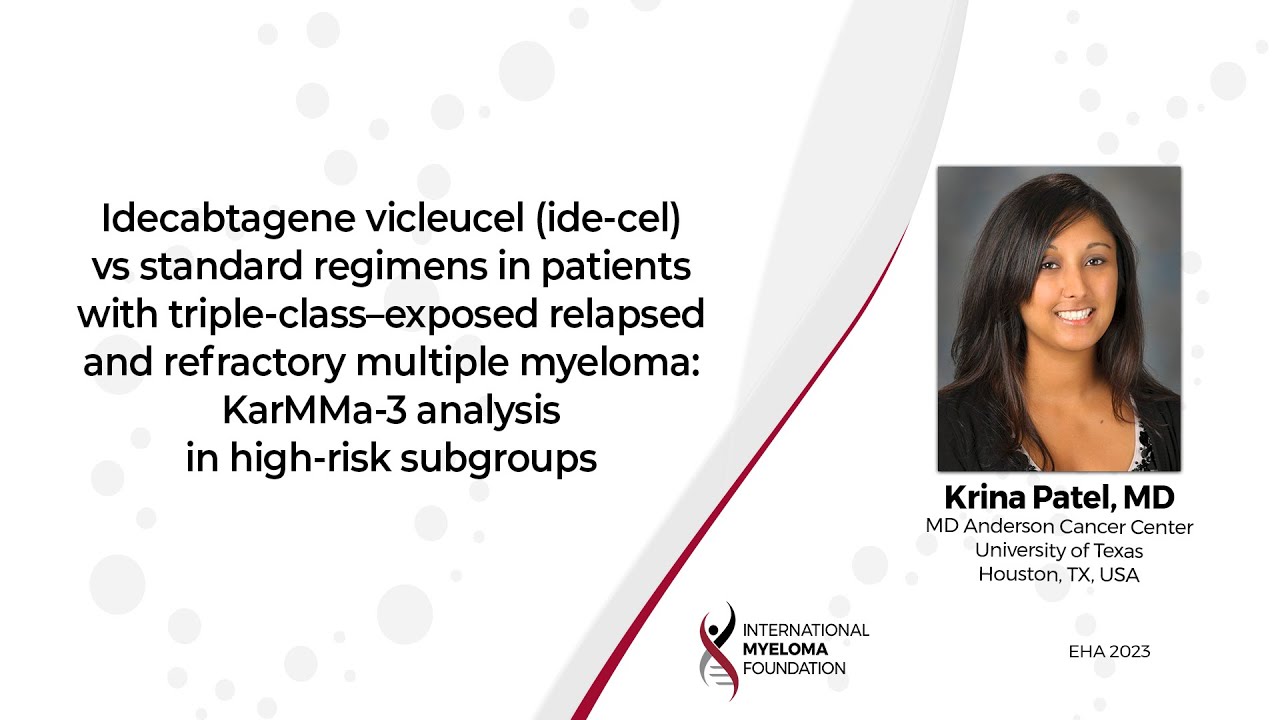
Dr. Krina Patel discusses the findings of the KarMMa-3 study, which focused on comparing the effectiveness of Idecabtagene vicleucel (ide-cel) versus standard regimens in patients with triple-class exposed relapsed/refractory multiple myeloma, particularly those with high-risk characteristics. The study showed that ide-cel treatment resulted in significant improvements in progression-free survival (PFS) and overall response rates compared to standard regimens across various high-risk subgroups. Additionally, soluble BCMA levels were lower in patients receiving ide-cel, indicating potential tumor clearance. The safety profile of ide-cel was manageable, with no reports of parkinsonism. The study highlights the potential benefits of CAR T-cell therapy in improving outcomes for high-risk multiple myeloma patients.
- The KarMMa-3 study compared Idecabtagene vicleucel (ide-cel) with standard regimens in patients with triple-class exposed relapsed/refractory multiple myeloma.
- Patients with high-risk disease characteristics, such as cytogenetic abnormalities, advanced disease stage, high tumor burden, extramedullary plasmacytomas, and triple-class refractory disease, were included in the study.
- Overall response rates were significantly higher for patients receiving ide-cell compared to standard regimens across various high-risk subgroups.
- Soluble BCMA levels were lower in patients treated with ide-cel, indicating potential tumor clearance.
- The safety profile of ide-cel was manageable, with no reports of parkinsonism.
- Long-term follow-up is still needed to assess secondary cancers and other potential risks.
- The study suggests that ide-cel therapy may provide benefits and improve access for high-risk multiple myeloma patients.
Authors:
Krina Patel, Paula Rodríguez-Otero, Salomon Manier, Rachid Baz, Marc S. Raab, Michele Cavo, Natalie Callander, Luciano Costa, Philippe Moreau, Scott Solomon, Christine Chen, Noopur Raje, Christof Scheid, Michel Delforge, Jeremy Larsen, Thomas Pabst, Kenshi Suzuki, Anna Truppel-Hartmann, Zhihong Yang, Julia Piasecki, Jasper Felten, Andrea Caia, Mark Cook, Sergio Giralt, Maria-Victoria Mateos
Doctor Bio:
Dr. Krina K. Patel is an associate professor in the Department of Lymphoma and Myeloma, Division of Cancer Medicine, and was previously in the Department of Stem Cell Transplantation, Division of Cancer Medicine at the University of Texas MD Anderson Cancer Center (UT MDACC), Houston. She earned her medical degree from the University of Texas Southwestern Medical Center, Dallas. Dr. Patel was later appointed chief fellow for resident education, and then chief fellow at MDACC. She currently serves as the Center Medical Director and Service Line Leader for her department.