


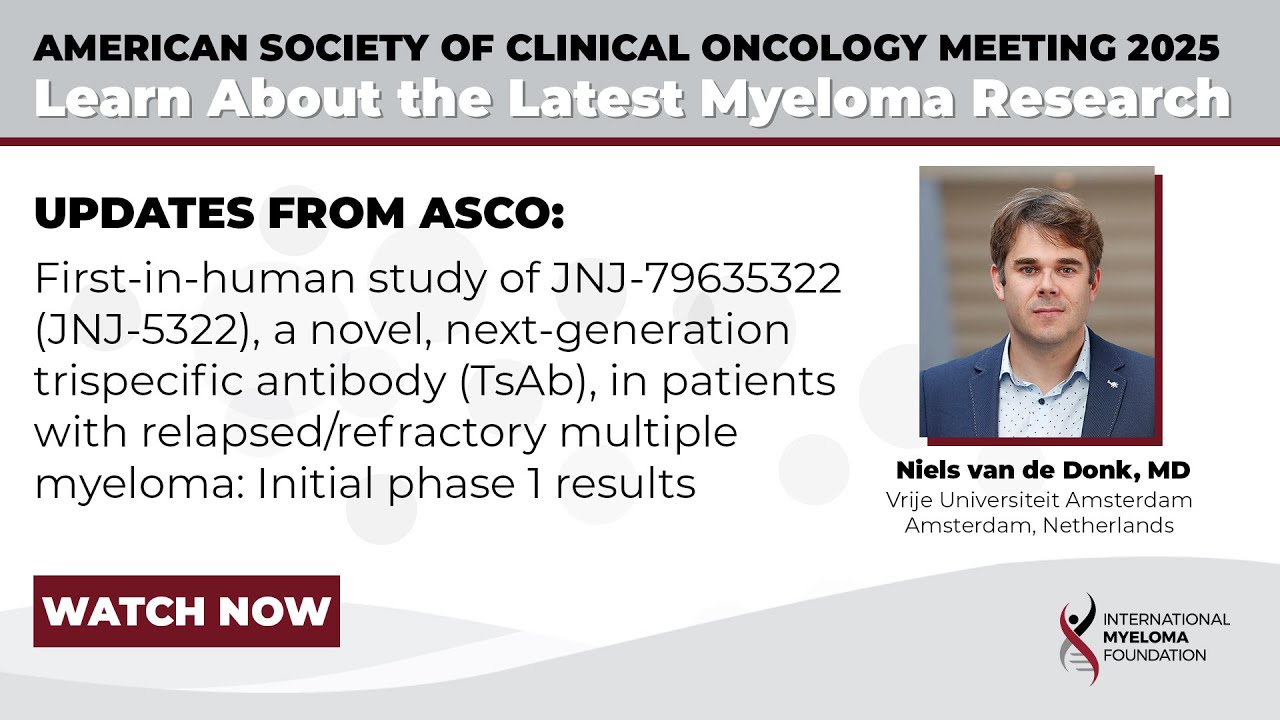
JNJ-5322, a next-generation bispecific antibody, targets BCMA and GPRC5D via T-cell redirection in patients with relapsed/refractory multiple myeloma. The phase 1 trial (NCT05652335) explored dose escalation up to 300 mg Q4W, identifying 100 mg Q4W as the recommended phase 2 dose. Results indicate a high overall response rate (ORR) of 86% at the recommended dose, with manageable safety profiles, including low-grade cytokine release syndrome (CRS) and infections.
Key Points:
- Research Problem/Question: What are the efficacy and safety profiles of JNJ-5322 in relapsed/refractory multiple myeloma patients?
- Methodology: Phase 1 trial (NCT05652335) with dose escalation and expansion cohorts, assessing various doses up to 300 mg Q4W, including 100 mg Q4W as the recommended phase 2 dose.
- Key Findings: High ORR of 86% at the recommended dose, with 75% achieving very good partial response (VGPR) or better; manageable safety profile with predominantly low-grade AEs including CRS and infections.
- Significance/Impact: JNJ-5322 demonstrates promising efficacy comparable to CAR-T therapies with potential advantages in outpatient administration and safety.
- Limitations/Future Work: Further studies needed to evaluate long-term outcomes, durability of responses, and optimal patient selection criteria.
Authors:
Niels van de Donk, Gala Vega, Aurore Perrot, Sébastien Anguille, Albert Oriol, Monique Minnema, Martin Kaiser, Hans Lee, Alfred Garfall, Jeffrey Matous, Larysa Sanchez, Azra Borogovac, Lionel Karlin, Saad Usmani, Joseph Weidman, Sangmin Lee, Maria-Victoria Mateos, Paula Rodríguez-Otero, Cyrille Touzeau, Rakesh Popat
Clinical Trial Registration Number: NCT05652335
DOI: 10.1200/JCO.2025.43.16_suppl.7505
Abstract# 7505

