



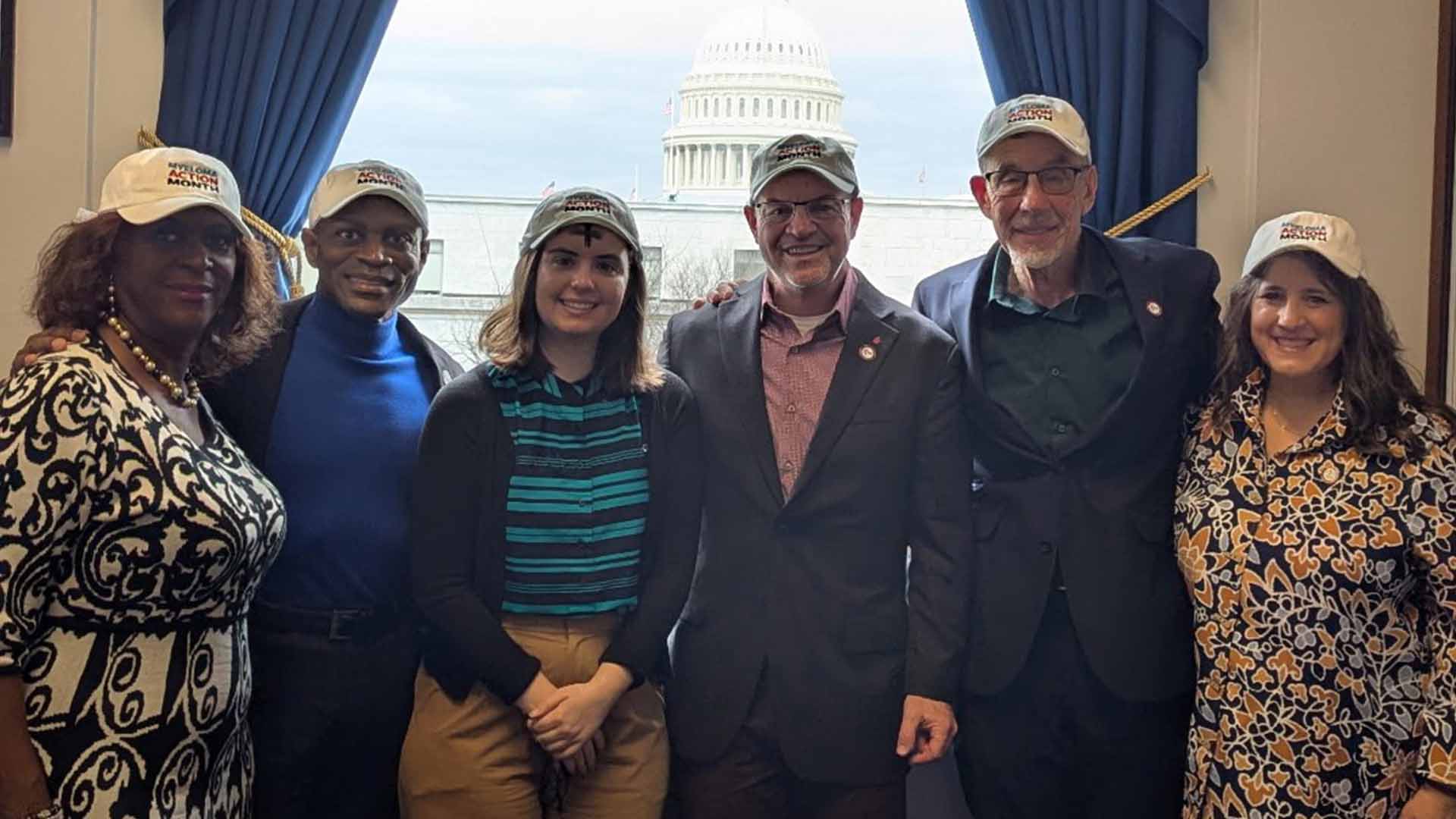
IMF Advocates on Capitol Hill
Grassroots myeloma advocates meet with U.S. lawmakers
By Danielle Doheny, IMF Director, Public Policy & Advocacy
In March 2025, five graduates of the International Myeloma Foundation (IMF) Legislative Advocacy Master Class (LAMC), in partnership with Patients Rising, traveled to Capitol Hill to share their personal stories on behalf of the myeloma community. Their goal was to raise awareness about the urgent need for increased cancer research funding, improved access to care, and more affordable treatment options.
Over the span of two days, IMF myeloma advocates met with nearly 30 members of Congress, discussing key policy issues and stressing the importance of bipartisan action. Each of the IMF advocates brought a unique perspective to the conversations.
- Michael Riotto (IMF Grassroots Advocacy Leader): Michael’s strategic relationships were instrumental in preparing the group of IMF advocates for their Congressional meetings.
- Tony Newberne (North Carolina): A seasoned IMF advocate with strong ties to the Congressional Black Caucus and his state’s delegation, Tony is a leader in advancing myeloma-related policy priorities.
- Lisa Hatfield (Idaho): A first-time advocate, Lisa explained how telehealth plays a key role in improving access to care.
- Aurlisa (Lisa) Isom (Louisiana): A first-time advocate, Lisa used her personal story to effectively highlight the daily challenges faced by patients with myeloma.
- Bryan Soronson (Maryland): A first-time advocate, Bryan has expertise in National Institutes of Health (NIH) funding, federal investment in cancer research, as well as extensive knowledge about managing clinical trials.
The IMF advocates met with lawmakers to discuss these priorities.
- Funding for the NIH, CDC, FDA, and ARPA-H: Past investments have led to groundbreaking treatments that improve outcomes for myeloma patients.
- Telehealth: The extension of telehealth provisions would enable myeloma patients to receive essential care remotely, especially in rural and underserved areas.
- Drug affordability and Pharmacy Benefit Managers (PBM) reform: PBM reform would reduce the rising prescription costs. There is a bipartisan interest to address this.
Lawmakers were receptive to the requests from IMF advocates and expressed support for maintaining and potentially increasing cancer research funding in the fiscal year (FY) 2026 budget. However, decisions regarding telehealth extensions and PBM reform will depend on future legislative actions.
The IMF’s advocacy day was made possible through participation in the One Voice Against Cancer (OVAC) coalition led by the American Cancer Society Cancer Action Network (ACSCAN). OVAC provided invaluable training and logistical support for IMF advocates who joined forces with others in the cancer community to amplify the message of myeloma patients while working toward shared goals, underscoring the collective commitment to improving outcomes for all cancer patients.
Each member of the IMF advocacy team expressed their appreciation for the opportunity to influence policy on Capitol Hill. As Lisa Isom put it, “I cannot wait to do it again.” Our special thanks to Tony Newberne for his mentorship of the IMF team and to Michael Riotto for his leadership; both were essential to the success of this advocacy push. The IMF recognizes the power of grassroots advocacy to drive policy changes that benefit patients with myeloma, and we invite you to join us by emailing [email protected]. MT
Visit advocacy.myeloma.org to learn more about our activities and subscribe to the IMF Advocacy Newsletter at subscribe.myeloma.org
(This article was first published in the 2025 Spring Edition of the IMF's quarterly publication, Myeloma Today. Read the full publication here.)