


IMF Advocates Move a Step Closer to Making Oral Chemotherapy Affordable in the U.S.
On September 15, 2026, the U.S. House Committee on Oversight and Government Reform’s Subcommittee on Health Care and Financial Services held a hearing on “Unequal Treatment: Addressing the Drivers of Unaffordability for Oral Chemotherapy.” The IMF’s Advocacy Team, led by IMF Director of Public Policy and Advocacy Danielle Hillwig Doheny, submitted a statement for the record in support of H.R. 4101, the Cancer Drug Parity Act.
The hearing marked an important milestone in a years-long effort by the cancer community to address unequal insurance coverage for oral and provider-administered cancer treatments. The IMF has helped lead this work through the Coalition to Improve Access to Cancer Care (CIACC), which it convenes, and through the sustained efforts of IMF patient advocates across the country.
The IMF’s statement brought the experiences of patients and care partners directly into the Congressional record, highlighting the difficult financial decisions families can face when the cost of a cancer treatment becomes unaffordable.
IMF advocates have brought the Cancer Drug Parity Act directly to Congressional offices through Capitol Hill Days, meetings with lawmakers in their home states and districts, action alerts, and other grassroots outreach. Most recently, advocates continued that work during the August Congressional recess, reaching out to their Members of Congress and urging them to support the legislation.
In the statement, the IMF wrote, “Through our work with the myeloma community, we hear about the difficult decisions families face when the cost of treatment becomes unaffordable. Patients may worry about whether they can afford the next refill, draw down savings, take on debt, or rely on family members to help cover the cost of treatment. Some may be forced to weigh the cost of their cancer medication against other household expenses such as housing, utilities, groceries, or transportation.”
After years of sustained advocacy across the cancer community, the Cancer Drug Parity Act has now reached an important milestone: a hearing in the U.S. House of Representatives.
Why This Matters
This hearing allows Members of Congress to hear directly from experts, patients, and other stakeholders, ask questions, and build a public record around an issue. Hearings help elevate an issue within Congress and are often an important early step toward moving legislation forward. A hearing does not guarantee that a bill will advance, but getting an issue formally before a Congressional committee is an important step in that process.
Watch a Video of the Hearing, “Unequal Treatment: Addressing the Drivers of Unaffordability for Oral Chemotherapy.”
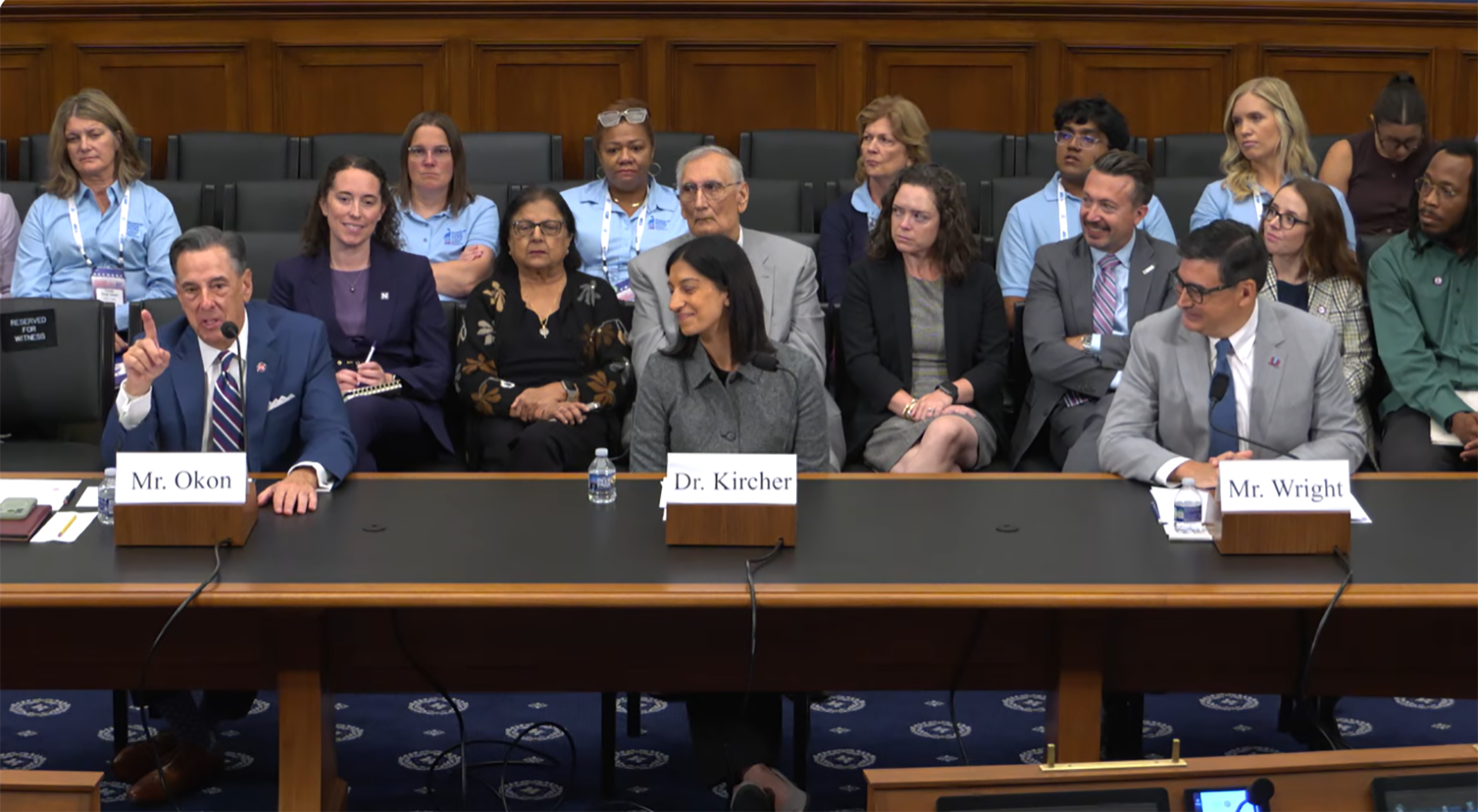
The hearing's witnesses included Ted Okon, Executive Director of the Community Oncology Alliance, Dr. Sheetal M. Kircher of Northwestern University, and Anthony E. Wright, Executive Director of Families USA. Together, they brought important perspectives on cancer care, affordability, insurance coverage, and access to treatment.
The hearing also touched on other barriers to accessing cancer treatment, including prior authorization, step therapy, and insurer/pharmacy benefit manager practices.
Subcommittee Chairman Glenn Grothman (R-Wis.) questioned how insurance rules have failed to keep pace with the development and distribution of oral anticancer treatments. Chairman Grothman also discussed how federal law limits the reach of state cancer drug parity protections, leaving a gap for patients enrolled in certain employer-sponsored health plans.
Chairman Grothman highlighted how H.R. 4101 would address this gap and asked witnesses what patients would experience differently at the pharmacy counter if the Cancer Drug Parity Act became law.
To this, Ted Okon responded, “Well, I think the beauty of it is, Mr. Chairman, is that now, on a federal level, you basically have parity for those self-funded plans. So it takes it and fills in the gap that you have with those 43 states that is just on the state law. So, I think it’s an absolute step in the right direction.”
The IMF continues to work to raise the patient voice in this matter through CIACC and alongside our dedicated patient advocates and partners across the cancer community. This hearing represents an important milestone in years of work to advance cancer drug parity, not only for people living with myeloma, but for cancer patients across the country.
.