


ASH 2025 Multiple Myeloma Breakthroughs: Key Trial Results
Scope and Methodology
This week’s blog summarizes breakthrough myeloma abstracts presented by IMF Scientific Advisory Board (SAB) and International Myeloma Working Group (IMWG) members at the 67th American Society of Hematology (ASH) Annual Meeting. Content was developed by the International Myeloma Foundation medical editorial team using ASH 2025 oral and poster abstracts on the latest results of ongoing clinical trials and real-world analysis. It is intended for patients, care partners, and oncology professionals. This blog article was medically reviewed by Joseph Mikhael, MD, MEd, FRCPC, FACP, FASCO, on January 7, 2026. The blog reflects medical guidance available at the time of review and is not routinely updated.
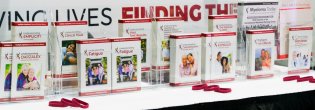
This year’s 67th American Society of Hematology (ASH) Annual Meeting & Exposition was bustling with frenetic activity. Researchers, clinicians, healthcare professionals, and patients alike gathered to discover and learn about significant advances in myeloma research, as well as exciting new results from ongoing clinical trials.
Members of the International Myeloma Foundation (IMF) Scientific Advisory Board (SAB) and International Myeloma Working Group (IMWG) were ubiquitous with their research and presentations all throughout the four-day conference, which was held at the Orange County Convention in Orlando, Florida from December 6-9, 2025.
IMF SAB Member and IMWG Member María-Victoria Mateos, MD, PhD: Late-breaking oral abstract on the MajesTEC-3 trial results
IMF SAB and IMWG Member Dr. María-Victoria Mateos is the Head of the Myeloma and Clinical Trials Unit at the Hematology Department and a Professor of Medicine at the University of Salamanca, in Salamanca, Spain. She is the coordinator of the Spanish Myeloma Group (Grupo Español de Mieloma, GEM), helping design and develop clinical trials, particularly for transplant-ineligible and smoldering myeloma patients. Dr. Mateos is also a member of the International Myeloma Society (IMS), and the European Hematology Association (EHA). She is the current president of the National Society of Hematology and has published over 400 papers in international journals.
At the Marquee Sessions, Dr. Mateos presented on LBA-6: Phase 3 randomized study of teclistamab plus daratumumab versus investigator’s choice of daratumumab and dexamethasone with either pomalidomide or Bortezomib (DPd/DVd) in patients (Pts) with relapsed refractory multiple myeloma (RRMM): Results of majestec-3.
What is the purpose of the study?
In relapsed or refractory multiple myeloma (RRMM), treatments often work less well over time. Using the most effective therapies earlier may improve outcomes. Teclistamab is a newer immune-based treatment that helps the body’s T cells kill myeloma cells.
Daratumumab is a standard myeloma drug that also improves immune function. This study tested whether combining these two drugs works better than current standard treatments.
The phase 3 MajesTEC-3 trial compared teclistamab + daratumumab with standard three-drug regimens in 587 patients with RRMM who had received 1–3 prior treatments. Patients were followed for almost 3 years on average.
Main results
• Disease control: Patients receiving teclistamab + daratumumab had much longer control of their disease. After 3 years, 83% were alive without disease worsening, compared with 30% on standard therapy.
• Survival: Overall survival was significantly better with the teclistamab combination (83% alive at 3 years vs 65%).
• Response to treatment:
- Deep responses (complete response or better): 82% vs 32%
- Any response: 89% vs 75%
- No detectable cancer by sensitive testing (MRD-negative): 58% vs 17%
• Benefits were seen across all patient groups, including older patients and those with high-risk disease.
Side effects and safety
• Serious side effects were common in both groups, as expected for any myeloma treatment.
• Infections occurred more often with teclistamab + daratumumab but became less frequent over time and were manageable with preventive care.
• Immune-related side effects such as cytokine release syndrome were mostly mild; serious nerve effects were rare.
• Few patients stopped treatment due to side effects.
What this means
The combination of teclistamab plus daratumumab greatly improved how long patients lived and how long their disease stayed under control, with manageable side effects. This “off-the-shelf” immune therapy may become a new standard treatment for RRMM, even as early as the first relapse.
Why this study matters
Because of the compelling results of the Phase 3 randomized MajesTEC-3 trial, the U.S. Food and Drug Administration has granted Breakthrough Therapy Designation for the TECVAYLI® (teclistamab-cqyv) plus DARZALEX FASPRO® (daratumumab and hyaluronidase-fihj) combination as well as a National Priority Voucher for its supplemental Biologics License Application (sBLA).
IMF Board Chairperson & SAB Member, and IMWG Chair S. Vincent Rajkumar, MD: Breakthrough updates from the AQUILA trial and High-Risk SMM
IMF Chairperson of the Board, IMWG Chair, and IMF SAB Member Dr. S. Vincent Rajkumar is a Professor of Medicine at Mayo Clinic in Rochester, Minnesota, and Chair of the Mayo Clinic Myeloma, Amyloidosis, and Dysproteinemia Group. He is also Chair of the Eastern Cooperative Oncology Group (ECOG) Myeloma Committee. He has published more than 230 peer-reviewed papers primarily in the field of multiple myeloma and related plasma cell disorders. Dr. Rajkumar is the Section Editor for multiple myeloma and related disorders for Leukemia and is an Associate Editor for the Mayo Clinic Proceedings.
At ASH 2025, Dr. Rajkumar presented on Abstract 372: Daratumumab monotherapy versus active monitoring in patients with high-risk smoldering multiple myeloma: Aquila outcomes based on mayo 2018/IMWG 2020 risk stratification, IMWG 2020 plus cytogenetic criteria, and age.
What is the purpose of the study?
Smoldering multiple myeloma (SMM) is an early, symptom-free stage of multiple myeloma. The usual approach is careful observation until the disease becomes active. However, people at high risk of progression may benefit from starting treatment earlier. The AQUILA study tested whether daratumumab, given alone, could delay or prevent progression compared with observation alone.
This phase 3 study included patients with high-risk SMM. Patients were randomly assigned to receive daratumumab or active monitoring (no treatment). This analysis looked at how well daratumumab worked in different risk groups, age groups, and whether early treatment affected future stem cell collection.
Main results
• Lower risk of progression: Daratumumab reduced the risk of progressing to active myeloma or death across all risk groups.
• Greatest benefit in high-risk patients: In the highest-risk group, far fewer patients progressed with daratumumab than with observation (about 38% vs 63%).
• Long-term benefit: After 5 years, 60% of high-risk patients treated with daratumumab had not progressed, compared with 24% with observation.
• Delayed need for myeloma treatment: Daratumumab helped patients go longer before needing standard myeloma therapy.
• Works at all ages: Benefits were similar in patients younger and older than 65 years.
Safety and stem cell collection
• Side effects were more common with daratumumab, as expected, but overall safety was acceptable and similar across age groups.
• Early treatment with daratumumab did not reduce the ability to collect stem cells later for transplant if needed.
What this means
For patients with high-risk smoldering multiple myeloma, early treatment with daratumumab can significantly delay progression to active disease, especially in those at highest risk, without harming future treatment options. These results support early intervention rather than observation alone for high-risk SMM.
Why this study matters
Because of the results of the AQUILA trial, the U.S. FDA has approved Darzalex Faspro® (daratumumab and hyaluronidase-fihj) specifically for the treatment of high-risk smoldering multiple myeloma.
IMF SAB and IMWG Member Saad Z. Usmani, MD, MBA: On Phase 1 KTX-1001 study and Phase 2 results from the RedirecTT-1 trial
IMF SAB and IMWG member Dr. Saad Usmani is professor and chief of Myeloma Service at the Memorial Sloan Kettering Cancer Center, New York, NY. He is also chair of the ALLIANCE Myeloma Committee, one of the three US Cooperative Groups. He has authored more than 350 peer-reviewed research manuscripts and has led the clinical development of several novel therapies — including anti-CD38 monoclonal antibodies, bispecific antibodies and CART cell therapies resulting in regulatory approvals in multiple myeloma. In translational research, Dr. Usmani’s work focuses on high-risk multiple myeloma. He champions bringing racial disparities in myeloma to the forefront.
At ASH 2025, Dr. Usmani presented on Abstract 250: Phase 1 study of ktx-1001, a first-in-class oral MMSET/NSD2 inhibitor, demonstrates clinical activity in relapsed/refractory multiple myeloma.
What is the purpose of the study?
Some people with multiple myeloma have a genetic change called t(4;14) that makes the disease more aggressive and harder to treat. KTX-1001 is a new oral drug designed to directly target this genetic driver by blocking MMSET, a protein that helps myeloma cells grow.
How was the study conducted?
This first-in-human phase 1 trial tested KTX-1001 alone in patients with relapsed or refractory multiple myeloma who had already received many treatments (including stem cell transplant, CAR-T therapy, and other advanced therapies). The main goals were to find a safe dose and see early signs of effectiveness.
Main results
• 40 heavily pre-treated patients were treated; they had received a median of 6–7 prior therapies.
• Treatment benefit: 16 patients (40%) had disease control, including:
- 1 very good partial response (lasting over 10 months)
- 1 partial response
- 2 minimal responses
- 12 patients with stable disease lasting up to 20+ months
- Responses were seen even in patients with high-risk features, including t(4;14).
Safety
• KTX-1001 was generally tolerable.
• The most common serious side effects were low blood counts (platelets, white cells, and red cells).
• Serious infections were uncommon.
• Most patients stopped treatment because their disease progressed, not because of side effects.
• About 30% of patients are still on treatment.
How KTX-1001 works
Tests confirmed that KTX-1001 hit its intended target, reducing cancer-related epigenetic signals in myeloma cells and slowing their growth, while allowing immune cells to recover in patients who benefited.
What this means for patients
KTX-1001 is the first drug designed to directly target the t(4;14) genetic abnormality in multiple myeloma. Early results show manageable side effects and promising activity in patients with very advanced disease. Studies are ongoing to test KTX-1001 in combination with other myeloma drugs, which may further improve outcomes.
Why is KTX-1001 different?
Most cancer drugs target the cancer cells indirectly. KTX-1001 targets the root cause of the gene abnormality itself. It turns off the activity of MMSET/NSD2, the protein that drives cancer growth in patients with the t(4;14) mutation.
This represents a new therapeutic approach in multiple myeloma: precision medicine that attacks the cancer at its molecular source.
What’s next for KTX-1001?
The study is now looking to expand testing KTX-1001 in combination with:
• Carfilzomib, a powerful proteasome inhibitor, or
• the investigational CELMoD™, mezigdomide, a next-generation immune modulator
Early combination results may help determine whether KTX-1001 can strengthen existing treatments and improve outcomes for patients with high-risk disease.
Dr. Usmani also presented on Abstract 698: Efficacy and safety of talquetamab + teclistamab in patients with Relapsed/Refractory multiple myeloma and extramedullary disease: Updated Phase 2 results from the redirectt-1 study with extended follow-up.
What is the purpose of the study?
People with extramedullary disease (EMD) have myeloma that has spread outside the bone marrow into soft tissues and usually respond poorly to standard treatments. Talquetamab and teclistamab are newer immune therapies that help the body’s T cells attack myeloma cells. This study looked at how well the combination of these two drugs works in patients with difficult-to-treat myeloma and true EMD.
How was the study conducted?
• 90 patients with heavily pre-treated, relapsed or refractory multiple myeloma and true EMD
• Many had aggressive disease, including tumors in lymph nodes, organs (often the liver), or soft tissues.
• Patients received talquetamab plus teclistamab and were followed for a median of about 16 months.
• Doctors measured how many patients responded, how long responses lasted, and side effects
Main results
• About 78% of patients responded to treatment
• Half achieved a complete response or better (no signs of active disease by standard tests)
• Responses were often long-lasting: more than half of patients were progression-free at 1 year.
• Patients with smaller total tumor volume had higher response rates than those with larger tumor burden.
• Overall survival at 1 year was about 74%
Safety
• Common side effects included fever related to immune activation, low white blood cell counts, taste changes, and skin or nail changes (mostly mild).
• Serious infections occurred in some patients; preventive antibody infusions (IVIG) were strongly recommended
• Severe brain-related side effects were uncommon
• About 11% stopped treatment due to side effects, and a small number of deaths were related to treatment complications, mainly infections
Why this study matters
For patients with advanced multiple myeloma and true EMD (a group with very limited treatment options) the combination of talquetamab and teclistamab showed high and durable response rates with a manageable safety profile. These results suggest this combination may offer meaningful benefit for a population with significant unmet medical needs.
The RedirecTT-1 results highlight the growing role of bispecific antibodies in treating advanced myeloma. Researchers are exploring how combinations of targeted immune therapies may help overcome drug resistance and treat aggressive forms of the disease. These findings also contribute to the International Myeloma Foundation’s broader work in improving care for patients with high-risk and refractory disease.
IMF SAB and IMWG Member Jesús San Miguel, MD, PhD, and IMWG Member Bruno Paiva, PhD: Important updates on BSRI’s GEM-CESAR CURE Trial
IMF SAB and IMWG Member Dr. Jesús San Miguel is a Professor of Medicine-Haematology and Head of Clinical and Translational Medicine at the University of Navarra in Pamplona, Spain. He is the Medical Director and Vice-Dean of Research at the Clinica Universidad de Navarra; CIMA Scientific Director; and a Scientific Committee Member of the International Myeloma Working Group (IMWG). He has had over 700 original papers published in international journals and has made significant contributions to myeloma cell biology and myeloma research in areas such as immunophenotyping, risk of progression from monoclonal gammopathy of undetermined significance (MGUS) or smoldering myeloma into active myeloma, and minimal residual disease (MRD). Dr. San Miguel has contributed important studies for new antimyeloma drugs at the preclinical and clinical levels, including proteasome inhibitors, immunomodulatory drugs, and histone deacetylases.
IMWG Member Dr. Bruno Paiva is a researcher in the Hematology and Hemotherapy Department at Clínica Universidad de Navarra. He is co-director of the Hemato-Oncology Program, and principal investigator of the Translational Immunomics in Hematologic Neoplasms group, as well as director of the Flow Cytometry Platform. Dr. Paiva’s primary focus is on multidimensional flow cytometry analysis of hematologic neoplasms.
Dr. Paiva presented new follow-up results from the Black Swan Research Initiative (BSRI)-funded GEM-CESAR Trial — Abstract 371: Early rescue intervention with daratumumab, pomalidomide and dexamethasone (DPd) in high-risk smoldering myeloma (HR-SMM) patients included in the GEM-CESAR treated with carfilzomib, lenalidomide and dexamethasone (KRd)- autologous stem cell transplantation (ASCT)-krd-rd.
What is the purpose of the study?
People with high-risk smoldering multiple myeloma (HR-SMM) can benefit from early treatment to delay or prevent progression to active myeloma. In the GEM-CESAR study, patients received intensive early therapy, including chemotherapy, stem cell transplant, and long-term maintenance. Many achieved deep responses, and long-term outcomes suggested this approach could be close to curative for some patients. This analysis focused on what happens when early signs of relapse appear and whether prompt “rescue” treatment can help.
How was the study conducted?
• 90 patients with HR-SMM received early intensive treatment
• Doctors closely monitored biochemical relapse (blood or marrow changes without symptoms) and minimal residual disease (MRD)
• Patients with early relapse could receive rescue therapy with daratumumab, pomalidomide, and dexamethasone (DPd)
Key findings
• 43 of 90 patients showed early signs of relapse after treatment, usually about 4–5 years later.
• Patients who did not achieve MRD negativity after transplant or maintenance were much more likely to relapse.
• 29 patients received early DPd rescue therapy
Effectiveness of rescue treatment (DPd)
• Nearly 90% responded to DPd
• Half achieved complete remission
• About 43% had no detectable disease (MRD-negative) after one year
• Patients whose relapse was detected only by very sensitive MRD testing did especially well—none have progressed to active myeloma so far.
Long-term outcomes after relapse
• About 74% had not progressed to active myeloma nearly 4 years after biochemical relapse
• Overall survival was 85% at 4 years
Safety
• Side effects were manageable
• Low white blood cell counts and infections were common but usually treatable
• No treatment-related deaths occurred
Conclusion
Achieving MRD negativity after early intensive treatment strongly predicts better long-term outcomes. When early relapse is detected, prompt rescue treatment with DPd can be effective and safe and may delay or prevent progression to active myeloma. More research is needed to determine who benefits most and when rescue treatment should begin.
Why this study matters
High-risk smoldering multiple myeloma can progress into active myeloma. Previous results from GEM-CESAR showed strong long-term outcomes. After nearly six years, 94 percent of participants had not progressed, and 92 percent were alive. Many reached minimal residual disease negativity, which is an important measure used in cure-focused research. These findings helped establish early treatment of high-risk smoldering myeloma as a meaningful path toward preventing cancer from developing.
What’s new with the GEM-CESAR trial?
The newest update looks at what happens after the initial early treatment. Some patients showed biochemical signs that their condition might be returning. These signals appear before symptoms and before organ damage. Instead of waiting, patients were offered an early rescue treatment using daratumumab, pomalidomide, and dexamethasone.
Nearly ninety percent of patients responded to the rescue therapy. Half reached complete remission. Several regained minimal residual disease negative status within a year. Patients whose relapse was only visible through ultrasensitive MRD testing have not progressed to active multiple myeloma.
The safety profile of rescue therapy was manageable. While some patients experienced low blood counts or infections, no treatment-related deaths were reported.
IMF SAB and IMWG Member Thomas Martin, MD: Multi-center real-world analysis evaluating stem cell boost therapy for prolonged low blood counts after CAR T-cell treatment in RRMM
IMF SAB and IMWG Member Dr. Martin is a clinical professor of medicine at the University of California San Francisco (UCSF), where he specializes in adult leukemia and bone marrow transplantation. He is the Associate Director of the Myeloma Program and Co-Leader of the Cancer Immunology & Immunotherapy Program at the Helen Diller Family Comprehensive Cancer Center, and Associate Chief of Adult Hematology, Blood and Marrow Transplantation, and Cell Therapy, as well as the Clinical Research Director for Hematologic Malignancies at UCSF. Board-certified in internal medicine and hematology, Dr. Martin is a member of the American Society for Blood and Marrow Transplantation (ASBMT) and the American Society of Clinical Oncology (ASCO). He leads the Immunotherapy Committee of the International Myeloma Working Group (IMWG) and directs the Transplant and Cell Therapy Clinical Program at UCSF. A prominent researcher in relapsed/refractory multiple myeloma, Dr. Martin is involved in clinical trials exploring innovative treatments like antibody drug conjugates and CAR T-cell therapy.
Co-author of the study, Cindy Varga, MD (Atrium Health Levine Cancer Institute, Hematology — Charlotte, NC) is board-certified in internal medicine and hematology, with a clinical interest in the diagnosis and treatment of blood cancers, particularly multiple myeloma. She presented on Abstract 1035: Outcomes of stem cell boost (SCB) versus supportive care alone for prolonged cytopenias after chimeric antigen receptor T cell therapy (CAR-T) in relapsed/refractory multiple myeloma (RRMM): A multi-center real-world analysis.
Background
Some patients who receive CAR-T therapy for relapsed or refractory multiple myeloma develop long-lasting low blood counts (low white cells, red cells, and platelets). This can lead to infections, bleeding, fatigue, and frequent hospital visits. Giving back a patient’s own stored stem cells (called autologous stem cell boost or SCB) may help the bone marrow recover.
How was the study conducted?
Researchers reviewed records from 18 medical centers and compared two groups of patients who had prolonged low blood counts more than 30 days after CAR-T therapy:
• 39 patients who received an SCB
• 52 similar patients who received standard supportive care only
Key findings
• Blood count recovery: Almost all patients who received SCB (97%) recovered their blood counts, usually within about 3–4 weeks.
• Safety: SCB did not cause new side effects. Serious infections occurred before the SCB, not after.
• Better blood counts: By 3 months after CAR-T, patients who received SCB had higher hemoglobin and platelet levels than those who did not.
• Disease control: Cancer response rates were similar in both groups.
• Survival: Patients who received SCB lived longer overall, and those treated with ide-cel showed a trend toward longer time without disease worsening, although the study was not designed to prove this definitively.
Conclusion
Using a patient’s own stem cells after CAR-T therapy appears to be a safe and effective way to help blood counts recover faster in patients with prolonged cytopenias. While survival benefits are not yet certain, SCB may reduce complications and improve recovery. Larger, future studies are needed to determine which patients benefit most and when SCB should be used.
Why this study matters
Until now, data on this approach has been limited. This multi-center study offers the most comprehensive look to date at how effective stem cell boost therapy may be for real-world patients with multiple myeloma.
What’s new with this multi-center, real-world analysis?
Nearly every patient who received a stem cell boost recovered their blood counts, typically within about three weeks. By Day 90, after CAR T-cell treatment, patients who received the boost had higher hemoglobin levels and significantly higher platelet counts compared with those who did not. Safety findings were manageable, and no new issues related to the stem cell boost were identified. Most infections in the boost group occurred before the boost was administered.
There were early signals that patients receiving a stem cell boost, particularly those treated with ide-cel, may experience longer periods without disease progression. While this observation requires further study, it highlights a possible link between faster marrow recovery and improved clinical outcomes.
This study shows that a stem cell boost can meaningfully improve blood count recovery in a real-world setting.
The International Myeloma Foundation medical and editorial content team
Comprised of leading medical researchers, hematologists, oncologists, oncology-certified nurses, medical editors, and medical journalists, our team has extensive knowledge of the multiple myeloma treatment and care landscape.
Additionally, the content on this page is medically reviewed by myeloma physicians and healthcare professionals.
Medically reviewed on January 7, 2026.
This blog reflects medical guidance available at the time of review and is not routinely updated.

