
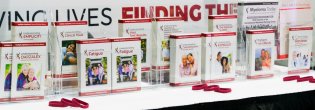


2025 Global Myeloma Action Network (GMAN) Summit Report
The Global Myeloma Action Network (GMAN) Summit
A summary report from the 2025 GMAN Annual Meeting, which took place in person from June 6-8, 2025, in Milan, Italy.
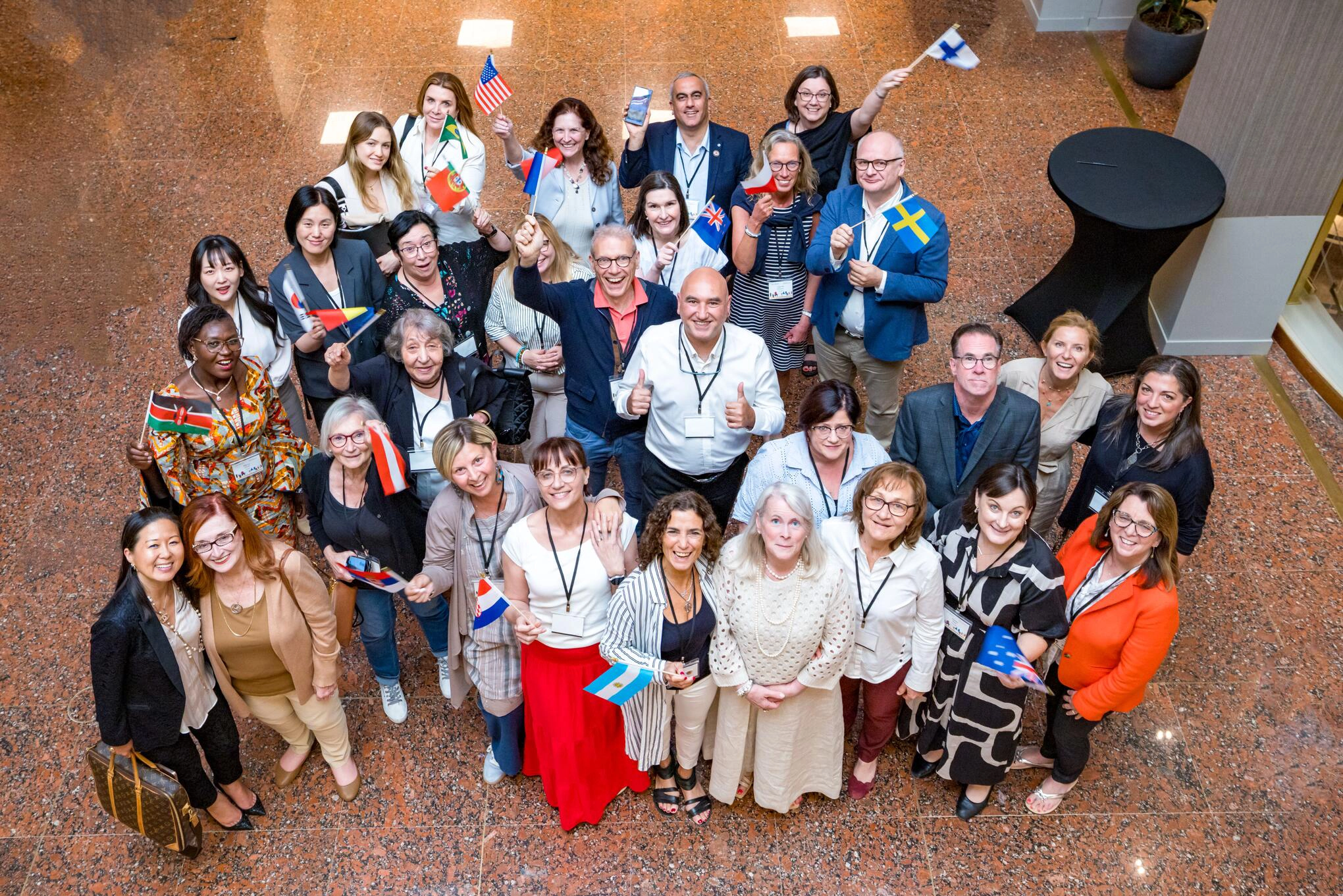
The Global Myeloma Action Network® (GMAN®) is a coalition of myeloma patient organizations from around the world. We share a deep commitment to the mission of improving the lives of myeloma patients, enhancing the capabilities of patient advocacy groups, building the capacity of local myeloma organizations, increasing global awareness of myeloma, and improving access to timely diagnosis and critical medicines.
As the international advocacy arm of the International Myeloma Foundation (IMF), GMAN collaborates with patient groups, healthcare professionals, industry leaders, and other global partners to raise awareness of myeloma, improve access to early diagnosis and essential medications, and strengthen the capabilities of its member organizations.
The 2025 GMAN Annual Summit was held from June 6-8, 2025, in Milan, Italy. The event brought together more than 50 advocacy leaders from 40 countries, facilitating the exchange of information, celebrating achievements, and coordinating efforts to advance our mission.
GMAN’s Revised Mission, 2026 Global Awareness Initiative, and Global Collaboration Plan for Myeloma Action Month 2026
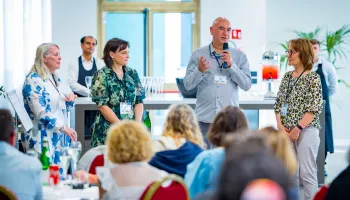
Serdar Erdogan (IMF Director of GMAN, Europe & Middle East Patient Programs) opened the 2025 Summit with a warm welcome to foster an engaging, collaborative atmosphere from the outset. Next, Martine Elias (Executive Director, Myeloma Canada) led the presentation of GMAN’s revised mission: building organizational capacity, raising global awareness, and improving access to care for myeloma patients.
Martine also introduced a flexible branding strategy designed to unify the global myeloma community while maintaining local personalization and relevance. As an additional project for the global collaboration plan during Myeloma Action Month 2026 activities, Martine proposed the launch of a global awareness initiative in 2026 – Myeloma Action Day – and participants brainstormed how to bring this vision to life in their countries and regions.
Highlights of the 2025 GMAN Annual Summit
Summit participants engaged in a series of workshops, panel discussions, and networking sessions designed to foster collaboration.
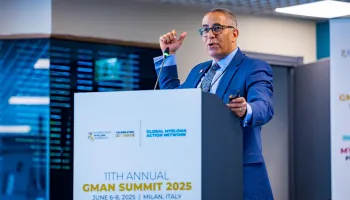
Dr. Joseph Mikhael (IMF Chief Medical Officer and Professor, City of Hope Cancer Center) and Dr. Francesca Gay (University of Torino) led separate presentations that comprehensively covered the broad range of key medical topics in myeloma.
Mira Armour (Mijelom CRO) moderated a lively panel discussion on the power of patient advocacy in influencing research, policy, and access to treatment. Panelists included Dr. Mikhael, Dr. Gay, Christine Battistini (President, IMF Latin America and President, Instituto Espaço de Vida), Jungsook Park (South Korea), and Martine Elias. Felice Bombaci (Gruppi AIL Pazienti) joined the meeting virtually from Lecce, Italy. Panelists agreed that while international collaboration is essential, solutions must be tailored to local realities.
Global access strategist, Neil Grubert, gave a presentation exploring disparities in access to innovative therapies, evolving health technology assessment (HTA) systems, and future-facing models for oncology and rare disease access. Drawing largely from the European experience, he emphasized that “HTA is becoming more complex and nuanced, with profound global implications,” while also pointing to international collaboration, real-world evidence, and managed entry agreements as critical levers for reform.
He highlighted the European Union (EU) Joint Clinical Assessment as the biggest development in international HTA history, and also spotlighted Germany’s AMNOG system as a global model for rapid access. In contrast, England’s NICE system acts as a gatekeeper with slower uptake, despite strong evaluation frameworks. On access disparities, Grubert cited a PhRMA study showing 85% of new drugs launched and reimbursed in the U.S. versus significant delays elsewhere that average 27 months across G20 countries and a further 19 months for public reimbursement. Time to access is even longer in Central and Eastern Europe.
Mimi Choon-Quinones (IMF Senior VP, Global Advocacy Access, Policy & Research) delivered an in-depth update on the integration of MRD into HTA and its alignment with the EU’s Critical Medicines Act (CMA). The Population, Intervention, Comparator(s), Outcome(s), and Settings/Study Design framework, with input from both patients and clinicians, aims to systematically define the key elements needed to evaluate MRD-guided interventions in myeloma through the lenses of clinical effectiveness, patient experience data, and health system impact.
Andreas Kouroumalis (Scientific Officer, European Medicines Agency) provided a comprehensive overview of the regulatory framework guiding the approval of myeloma therapies in the EU. The centralized procedure allows pharmaceutical companies to submit a single application for marketing authorization valid across all 27 EU member states plus Iceland, Liechtenstein, and Norway. This process leverages a network of experts to ensure consistent and rigorous evaluation. While the standard review timeline is approximately a year, accelerated pathways are available for products addressing high unmet medical needs, including in myeloma. Dr. Kouroumalis noted the importance of patient participation in regulatory decision-making.
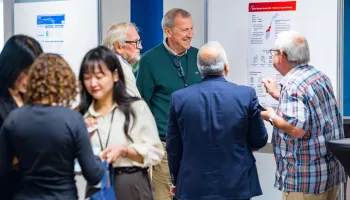
A poster session was part of the GMAN Summit for the first time, highlighting the unique unmet needs faced by myeloma communities in different countries. Each poster represented a country’s perspective, showcasing ongoing work, research, and advocacy efforts while fostering vibrant discussion among attendees. The session included posters from Canada, Croatia, Czechia, Denmark, Norway, and Portugal.
Hayley Beer (Lead, Stakeholder Engagement and Advocacy) reported on the success of a program developed by Myeloma Australia to train eligible patients and care partners to administer subcutaneous therapies. Myeloma is the most expensive cancer to treat in Australia, and this program proved to be effective at improving the patient experience while relieving pressure on healthcare resources.
Michelle Oana (Chief Mission Officer, Myeloma Canada) addressed longstanding barriers to clinical trial participation. In 2024, Myeloma Canada convened a forum that brought together patients, researchers, industry partners, nurses, regulators, and nonprofits to collaboratively identify solutions. The consensus outcome was the concept of a preclinical trial navigation service, later formalized as Phase 0. “There are a lot of services and resources that exist,” Oana noted, “but nobody knows where to find them.”
In a follow-up summit held in March 2025, participants were tasked with designing a viable, scalable, and sustainable version of the Phase 0 model, working within existing healthcare structures without altering trial protocols or locations. The proposed solution includes a pilot project in myeloma to launch in early 2026, externally managed and potentially funded through industry and other partners. The long-term goal is to institutionalize this service within Canada and create a model adaptable for international adoption.
Eric Battini (Association Française des Malades du Myélome Multiple, AF3M) presented Hemavie, a nurse-led telephone support program designed to assist patients with myeloma and care partners throughout the treatment journey. Launched in 2016 with support from Celgene, Hemavie is now backed by Bristol Myers Squibb, Menarini-Stemline, Pfizer, and Sanofi. Hemavie offers personalized, nurse-initiated support. The program was developed in response to a critical insight: “99% of the time, patients experience the disease at home,” where access to immediate reassurance, guidance, and psychological support is often lacking.
An external qualitative study found that patients who participated in Hemavie felt more confident, less anxious, and better prepared for clinical consultations, with one key takeaway being the importance of the nurse’s “kindness, confidence, support, and advice.” Over 600 patients and caregivers benefited from the program by the end of 2024. AF3M views Hemavie as a proven, scalable approach to empowering patients and fulfilling its mission to help them become “actors of their life with myeloma.”
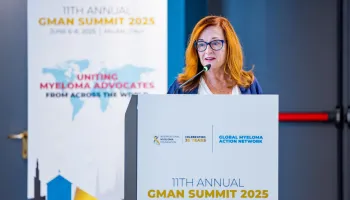
Diane Moran (IMF Interim CEO and Senior VP of Strategic Planning) gave the first presentation on Day 2 of the GMAN Summit, sharing heartfelt reflections on her nearly 20 years at the IMF. “I am incredibly humbled to be here with all of you – the most courageous of the courageous,” she said, recalling her emotional first experience at a Support Group Leaders Summit. “How could these people, who at that time didn’t have the kind of medications we have now, and were demonstrably ill – how could they give their energy to others? It was overwhelming.”
Diane provided a powerful overview of the IMF’s 35-year history and emphasized the IMF’s strategic priorities: creating a globally connected patient experience, expanding real-world data collection, and advancing impactful research. “GMAN is the cornerstone of how we create a global connected patient experience,” she said. Launched in 2013, GMAN now includes 50 organizations across 46 countries, working together to expand capacity, improve access, and strengthen advocacy. GMAN supports tangible, local impact. Diane’s presentation concluded by celebrating the power of global collaboration and reaffirming the shared commitment to expanding access to lifesaving treatments, fostering connection, and driving innovation in the fight against myeloma.
Another highlight of the GMAN Summit was a panel discussion focused on building effective partnerships between patient organizations and the pharmaceutical industry. This session was inspired by strong interest from the 2024 Summit, where many attendees expressed the need for practical guidance on collaborating with industry stakeholders. The conversation emphasized the importance of aligning goals early in the collaboration process. Ultimately, the session reinforced that successful partnerships between the pharmaceutical industry and patient communities are rooted in trust, transparency, and shared purpose.
The closing remarks by Mira Armour concluded with a powerful reminder of both the unprecedented progress in myeloma treatment and the stark disparities that remain across the globe. Mira’s remarks emphasized the importance of GMAN “uniting myeloma patient advocates and building on shared knowledge.” The themes of the 2025 GMAN Summit – awareness, access, and capacity building – were reflected in every session.
Uniting myeloma advocates from across the world, the IMF thanks all the 2025 GMAN Summit participants for traveling from near and far to join us in Italy, and we look forward to the 2026 GMAN Summit in Stockholm, Sweden.
2025 Susie Novis Durie Grants
The GMAN Susie Novis Durie (SND) Grants, which are awarded annually to patient advocacy organizations, help sustain projects that address the unique needs of myeloma patients in their respective countries, while also enhancing their capacity building efforts. At the Summit, the 2024 recipients reported on their projects in Croatia, Denmark, Israel, and Romania.
The 2025 SND grants were awarded to the following: the Armenian Hematology Association (Armenia); The Academic Model Providing Access to Healthcare (AMPATH, Kenya); the Carita Foundation (Poland); and the Association of Myeloma Patients Serbia (Serbia). Their GMAN peers look forward to hearing about their accomplishments at the 2026 GMAN Summit. For more details on the 2025 SND Educational Grant recipients, visit the SND Educational Grants page.