In Memoriam: Dr. Brian G.M. Durie’s Words of Wisdom (https://www.myeloma.org/blog/memoriam-dr-duries-words-wisdom)
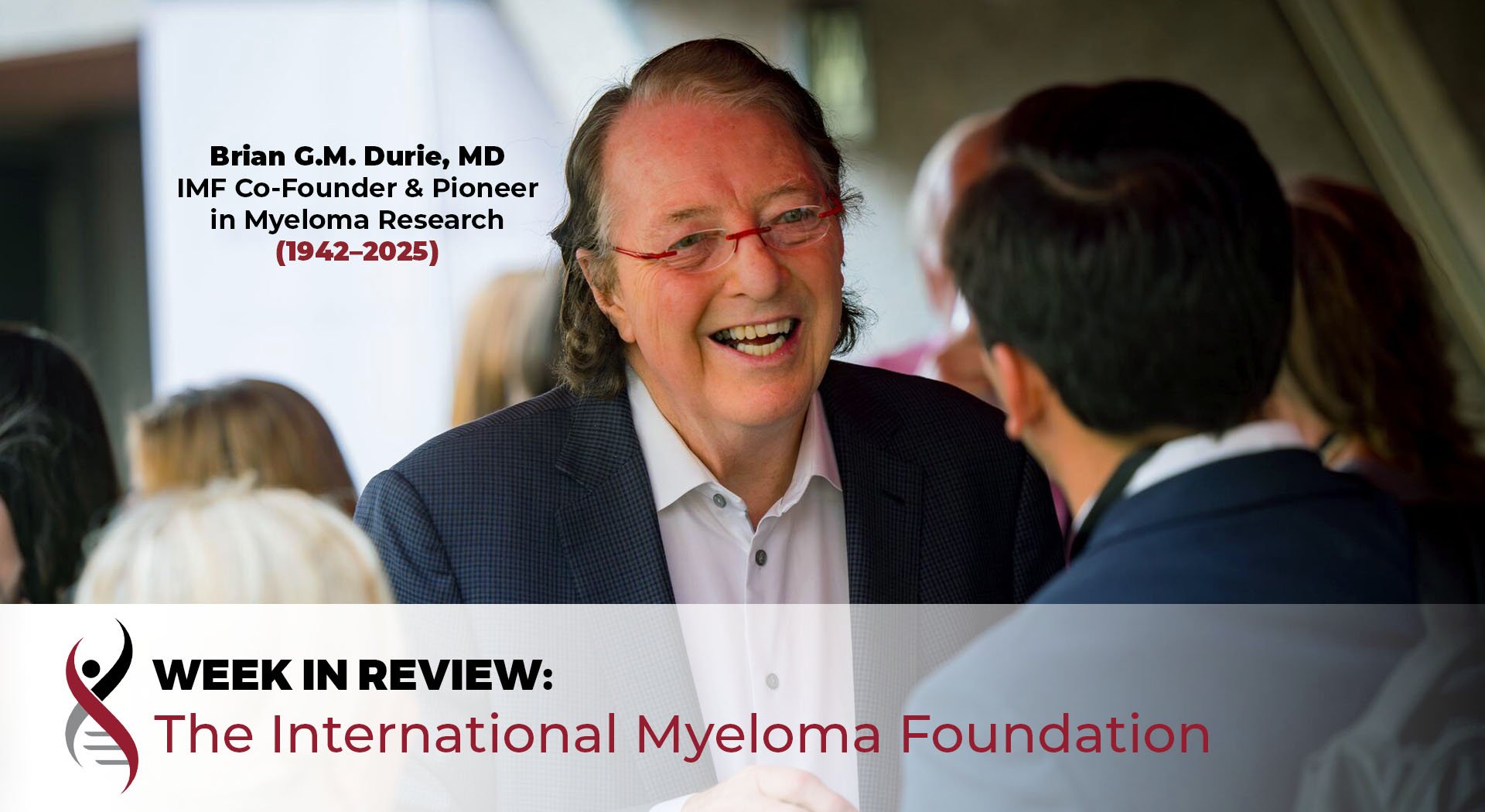
"The ongoing care for myeloma is a marathon, not a sprint. And all throughout, resilience will, undoubtedly, need to be enhanced." — IMF Co-Founder Dr. Brian G.M. Durie (1942-2025)
As a fitting tribute to Dr. Brian G.M. Durie — a highly-esteemed pioneer in myeloma research and co-founder of the International Myeloma Foundation — we have gathered a few excerpts from his Week in Review blogs, from 2011-2024.
Dr. Durie’s blogs have always reflected his steadfast commitment to patient care, and his unwavering dedication to finding a cure. Fueled by this passion, he explored innovative approaches through the IMF’s efforts in myeloma research, education, patient support, and advocacy.
He leaves behind a remarkable and enduring legacy for fellow researchers and clinicians to emulate, as the search for a cure continues.
We hope that Dr. Durie’s words will bring both wisdom and comfort to the global myeloma community, as we mourn his passing and honor his legacy.
[EDITOR'S NOTE: The International Myeloma Foundation is honoring Dr. Durie’s legacy through his Ask Dr. Durie videos and Week in Review blogs. We encourage you to visit this tribute page (https://www.myeloma.org/honoring-brian-gm-durie-md).]
July 24, 2011: My Search for a Cure (https://www.myeloma.org/blog/dr-duries/my-search-cure)
Recently, I was pondering the "Black Swan (https://en.wikipedia.org/wiki/The_Black_Swan:_The_Impact_of_the_Highly_Improbable)" approach to research, a term coined by philosopher and essayist, Nassim Taleb (https://en.wikipedia.org/wiki/Nassim_Nicholas_Taleb). This theory dictates that one must be open to the "highly improbable" in order to make significant advances. Taleb explains that at one point, it was mistakenly believed that all swans were white. This idea did not change until somebody traveled to Australia and discovered black swans by accident.
But what if someone had predicted the possibility of black swans prior to coming face to face with one? What if the hypothesis that black swans could exist had not been summarily dismissed based on lack of evidence or relevant data? The result would have been the same - they exist; but, instead of happening upon the truth by accident, it might have been sought out and discovered earlier.
I believe that this approach applies to cancer research as well. Each week I read about new ideas in medical journals, on the web, or in newspapers that make me take a pause and wonder "what if?"
What if these "out of the box" projects had enough funding to see them through? What if an idea without any scientific evidence or data to back it up, could actually lead to a cure? Would it be worth pursuing?
August 31, 2011: 9/11 and Myeloma (https://www.myeloma.org/blog/dr-duries/911-myeloma)
This Sunday marks the 10th anniversary of the 9/11 attacks on the World Trade Center towers in New York. Among the casualties sustained that day, were a number of first responders who, instead of running away from dangerous ash clouds that enveloped the streets of Manhattan, ran toward them in the hopes that they would be able to help save lives. This country owes a debt of gratitude to these heroes, who put their own lives on the line to help others.
But all the gratitude in the world isn't going to cover the high costs of fighting the battle against cancers like multiple myeloma. Apparently, neither is the U.S. Government, which despite having enacted the $4.3 billion James Zadroga 9/11 Health and Compensation Act (https://en.wikipedia.org/wiki/James_Zadroga), has denied claims that toxic exposure from 9/11 attacks has any correlation to the increased rates of cancer appearing in the men and women who were directly exposed to the toxic environment surrounding the fallen towers in the aftermath of the tragedy.
I respectfully disagree.
As Americans, we need to speak up on behalf of the brave men and women who heroically displayed the true American spirit by responding during a crisis a decade ago. I call upon not just the myeloma community, but also our entire nation, to demand justice for our men and women in civil service. We need to push for expanded coverage for cancer through the James Zadroga 9/11 Health and Compensation Act.
February 12, 2012: Caring Enough to Find and Sustain a Cure (https://www.myeloma.org/blog/dr-duries/caring-enough-find-sustain-cure)
10 Steps to Finding and Sustaining a Cure
- To find a cure, we must truly look for approaches that have a dramatic impact — do not just move the ball a little bit forward.
- This requires considering the unusual, the unexpected — the "Black Swan" or "Rainbow Toad" approach. We must be open to and foster creative thinking.
- Collaboration, not competition, is key. This is the central aspect of the IMF's International Myeloma Working Group (IMWG). We hold annual brainstorming meetings (summits), during which we prioritize the best ideas for action steps. Small teams form to get projects rolling. Multiple projects are central to the goal of leaving no stone unturned.
- Funding must be increased. The IMF has been blessed with many generous donors. To ensure that these innovative projects move forward rapidly, we will need to inspire like-minded individuals to increase their giving.
- The IMF limits overhead costs and protects both patient privacy and intellectual property rights.
- The IMF carefully considers the long-term financial implications of new treatments — for example, the potential for shared royalties.
- If an FDA-approved generic drug (like Methotrexate) can do the job, we must be prepared for that and come up with creative solutions with shared responsibility and reimbursement.
- If $100 million or more is required to make a new drug, let's plan ahead to achieve outcomes that are fair for all in the short term and long term. This is definitely the hardest part: to sustain investment and ultimately keep costs down.
- New drug approval is key. An open dialogue with the FDA can enhance the approval of drugs that we need right now to keep patients alive as well as drugs that can achieve a paradigm shift in outcomes.
- We must bring "health" and "caring" back into healthcare and work together to achieve it!
May 29, 2012: 10 Steps to Seeking a Second Opinion (https://www.myeloma.org/blog/dr-duries/10-steps-seeking-second-opinion)
Whether or not to seek a second opinion is a key question and a concern for all patients with myeloma. This 10-step summary attempts to answer the "ifs, when’s, and how’s" related to seeking a second opinion.
1. Should you consider a second opinion?
It is essential to realize that a second opinion is always an option- whether it be a telephone "consult" or a complete re-evaluation with testing and recommendations provided. The urgency varies, as does the ability to travel and absorb the added expense. If in doubt, call the IMF InfoLine to discuss options and potential help available.
2. Do you need a second opinion right now?
Crucial questions that frequently deserve and require a second opinion are:
- Do I have active myeloma needing immediate treatment? Or do I have MGUS or smoldering myeloma, for which observation is the answer?
- What is the best first treatment in my case?
- Am I really relapsing and do I need new therapy?
At the very least, these questions require careful discussion, if not input from a myeloma expert.
3. What should you do if treatment is planned?
In general, urgent issues should be treated immediately. However, if the recommendations include:
- Major surgery
- Delay in potentially crucial supportive care such as dialysis for kidney failure, IVIG for infection, kyphoplasty for severe pain/vertebral collapse, then reach out for help and advice.
Beyond urgent issues, there is usually time to assess treatment options for myeloma. This is an ideal time to get a second opinion.
4. What about your main treating doctor?
Even if your main doctor is experienced and expert in the diagnosis and treatment of myeloma, be aware that there are always differences in philosophy and opinion. The major difference is the "watch-and-wait approach" versus the "treat-aggressively-now" approach. Along the same line is the "control-versus-cure" controversy: does one aim for chronic disease control, or does one attempt to achieve a cure? If you and your own MD have the same philosophy, a single opinion can be fine. However, even then, it can be enlightening to hear and discuss the opposite philosophy before reaching a final decision.
5. Is getting a second opinion rude or inappropriate?
It is rare for a primary MD to object strongly to a patient seeking a second opinion. In fact, the willingness to support the search for available options often strengthens the relationship with the primary MD. Nonetheless, it is wise and polite to openly discuss the desire for a further opinion to avoid any misunderstandings. Couching the discussion in terms of "I think you are a great doctor..." (if true) or "we are concerned that you do not see that many myeloma patients" (if this is the case) "but/so, we would like to seek a second opinion" is helpful. You can proceed from there.
6. Which expert should I see?
This is a key question, and the IMF InfoLine staff are well-prepared to help you. For example, it is well known that certain centers are very well-equipped to do specialized testing to ensure a correct diagnosis and/or to ensure that baseline prognostic factors such as FISH results have been established. The choice of where to seek treatment may be influenced by such practical concerns as local convenience or the availability (or not) of reimbursement by your healthcare plan. Obviously, you may choose to pay out of pocket, if necessary.
7. What is expected from a second opinion consultation? Important considerations are:
- Do I just want advice, or do I plan to receive treatment there as well?
- Am I planning to go to a center for treatment such as transplant or to receive a new drug in a clinical trial setting?
- Will I continue to see my primary MD? This is typically the case. After advice is received or new treatment completed, it is most common for patients to return to their local MD's care.
- Will I plan to return for periodic review? Again, it is common practice to see the specialist to get follow-up advice for the local MD.
8. When is the best time for a second option?
In general, early in the disease course is an excellent time to make sure the diagnosis is confirmed, and initial treatment decisions are the best possible. However, later can also be very helpful, especially at the point of myeloma relapse when new drugs are needed.
9. How do I decide between one center versus another?
The best center for you depends upon the questions or needs, whether that be a one-time consult, or ongoing care, or the need for a transplant, or the need for a particular new drug available only in clinical trials. Right now, gaining access to pomalidomide, carfilzomib, and/or elotuzumab, for example, could be very important.
10. What about follow-up?
At the time of a second opinion, recommendations are made, and typically the "myeloma expert" will call your local MD and/or send a summary report. It may be possible to proceed with a new course of action, or no changes may be required, or perhaps additional testing is needed. Frequently, the initial consultation is followed by an ongoing relationship between the "myeloma expert" and your local MD. This is ideal. It may be that you have to work with both doctors to make the partnership run smoothly and to your advantage. It is worth the effort, and many times produces the best outcomes.
November 17, 2016: Successful iStopMM launch pioneers a new way to manage disease (https://www.myeloma.org/blog/dr-duries/successful-istopmm-launch-pioneers-new-way-manage-disease)
This week, the iStopMM team (https://www.myeloma.org/black-swan-research-initiative/istopmm) launched the ambitious screening, treatment, and prevention program for MGUS, SMM, and MM in Iceland. On Monday, a national TV program explained the project to the whole population of Iceland! Dr. Sigurdur Kristinsson, the Principal Investigator, introduced the project, while I appeared on camera, summarizing (in English, of course) the importance of the study for the IMF’s Black Swan Research Initiative® (BSRI®), (https://www.myeloma.org/black-swan-research-initiative) which is funding the study. As I have explained, early diagnosis provides the best opportunity for curative therapy.
Press conference with Iceland’s President
The launch continued with a press conference on Tuesday, featuring Dr. Kristinsson and Iceland President Guðni Jóhannesson, who signed a consent form to participate in the screening project since he is over 40 years old, as are the other approximately 140,000 targeted Icelandic participants.
This pioneering effort breaks new ground in a variety of ways. By being enormously successful, it illustrates how to conduct population screening. Awareness is key, and the iStopMM team has accomplished this in spades! Exposure on national TV, a press conference with the president, and an extensive social media/electronic follow-up has made the outreach fun and engaging, while generating true enthusiasm about participation, being involved, and “making a contribution to medical science.”
May 30, 2019: Prevention and the Search for a Cure Go Hand-in-Hand (https://www.myeloma.org/blog/dr-durie/prevention-search-cure-go-hand-hand)
Patients with active myeloma need the best treatment and, understandably, they are keenly interested in the search for a cure. But to prevent myeloma in the first place, we need a deep understanding of the disease. This understanding will lead to a world without myeloma by accelerating true disease eradication or cure.
The BSRI-supported iStopMM program is a good example of the parallel paths of research into myeloma prevention and cure. The project’s investigators plan to sequentially introduce strategies to both prevent MGUS (monoclonal gammopathy of undetermined significance), smoldering multiple myeloma, and myeloma, and reduce disease progression. Another area of investigation into prevention and cure are environmental factors that have been linked to cancer.
Prevention and the bigger picture
Avoiding toxic chemicals and eating real food can be part of a broader effort to produce a sustainable future. Avoiding myeloma and other illnesses will lead to the best future for our children and their children. Schoolchildren in Europe are protesting climate change, acting as the “adults in the room.” We adults should be thinking of their inheritance and their future, and working toward creating a healthy environment.
As best treatments for myeloma and other diseases get more and more complicated and expensive, it is worth focusing on prevention measures that might be had for manageable costs.
The bottom line
Myeloma prevention requires a multifaceted approach to understand the underlying risk factors and develop appropriate interventions. These will most likely help both those at risk for developing MGUS/SMM/MM and patients battling the disease.
February 3, 2022: Revisiting the Power of Vacation (https://www.myeloma.org/blog/revisiting-power-vacation)
Actions to increase resilience
Build new hope
Take action to build new hopes for the future. We cannot turn back the clock. New ideas and connections can move us forward. Seek other patients for advice. Try to consult with an expert and make your needs clear.
Be clear and avoid hesitation
It is OK to make less-than-perfect decisions. “Hesitation puts life on hold,” says Dr. Pauline Boss in her book, The Myth of Closure (https://wwnorton.com/books/9781324016816). Maybe you are concerned about the side effects of treatment. Often, the only way to find out is to try — start with a lower dose, if need be. My experience is that often, many possible side effects do not emerge, and treatment can work well. But you will never know until you take that first step or move on to an alternative approach.
Rebuild your life
Right now, we are all faced with the task of rebuilding our lives. So much has changed (or is still changing) and we need to re-calculate for the future! This is where that virtual vacation comes in. It takes time to ponder and reflect on personal priorities which could include major life decisions, such as moving your home or making new investments for the future. The future may involve gaining new friends or working on new projects to resolve worries or problems which have emerged.
Find meaning in life
For this, you really do need a vacation! Faced with so many challenges — ranging from climate change (as you struggle through the latest storm or fire) to general political upheaval — it can be rewarding to work for a cause that resonates with you.
This is where the time to think and relax is so important. For me, taking time to listen to music and/or to read a book is precious and can help put things in perspective.
August 4, 2022: Why Belonging to a Myeloma Community is Important (https://www.myeloma.org/imf-blogs/why-belonging-myeloma-community-important)
Reducing the risks of myeloma and staying healthy
Avoiding potential toxic exposure and being aware of its occurrence are very important. Staying healthy can also be remarkably challenging.
Unfortunately, the U.S. is considered as the unhealthiest country in the world (re: in 2022) due to a variety of factors including prevalence of obesity, diabetes, a range of chronic diseases, and poverty level.
So where are people healthier?
Blue Zones
I have written quite a bit about these Blue Zones (https://www.myeloma.org/blog/dr-duries/island-where-people-forget-die-eating-real-food-reason)—“places in the world where an unexpectedly high percentage of people live to be over 100 years old (or close),” wrote Blue Zones Founder, National Graphic Fellow, and New York Times best-selling author Dan Buettner in the October 28, 2012 issue of the New York Times Sunday Magazine.
Blue Zones tend to be smaller communities. The latest Blue Zones reported in 2021 include Ikaria Island in Greece; Barbagia region of Sardini in Italy; Nicoya Peninsula in Costa Rica; Okinawa, Japan; and Loma Linda, California.
Key aspects of Blue Zones certainly include lack of toxic exposure, very healthy diets, and plenty of exercise as part of their daily routine.
In Ikaria, Greece, stress is an alien concept—the island that “time forgot” because there are no clocks to be found in the island. It has also been noted that since families have owned homes and farms for many years, there are no mortgages there either!
Common features of Blue Zones are the Mediterranean-style diet and a relaxed lifestyle. However, for those living in the real “unhealthy” world, it is still possible to reap health benefits from diet improvements, increased daily exercise, and stress reduction.
Touch research and the impact of touch
Tiffany Field, a researcher at the University of Miami School of Medicine, has been studying the impact of touch for many years. In Field’s essay, she starts with newborns and children but has recently extended her research to include adults, the elderly, and the immunocompromised.
In a KCRW podcast (https://www.kcrw.com/shows/life-examined/stories/tiffany-field-touch-health), Jonathan Bastian spoke with Field “about the research, the science, and the wonder of human touch.”
“As someone who studies the value of touch, when this pandemic hit, did you think this period would be potentially quite harmful?” asked Bastian.
Field narrated how she and her students put together a survey where they discovered “that touch deprivation was highly correlated, highly related to anxiety symptoms, to depression symptoms, to sleep problems, to PTSD symptoms, to boredom, to loneliness.”
“Virtually every negative scale and rating scale and rating that we had on this survey was related to touch deprivation,” Field added.
Field explained that these responses are “very disconcerting” because people shouldn’t be “experiencing these psychological problems during a lockdown.”
“From our previous research, that suggests that their immune systems are going to be compromised. And this is at the very time when you need something like touch to keep your natural killer cells up to ward off the virus, you’re seeing that there is this touch deprivation, which is going to hurt the immune function,” she further noted.
As Field pointed out, even a simple touch is incredibly important in triggering the immune system, in healing, and in improving health.
Wanting to “return to normal” is an expression of our need to literally be in touch with others—to be able to safely meet, have meals together, and hug our family and friends. This is a very important step, in addition to the emotional need to connect in social settings—an act that we’ve done and have been doing for most of our lives.
October 13, 2022: Unwinding in the Time of COVID-19 (https://www.myeloma.org/blog/unwinding-covid-19)
This past week became the first true vacation I had since the start of the pandemic, which was almost three years ago.
It was amazing to finally be able to get away—re-experience traveling, visit my favorite places and restaurants, and reunite with so many old friends.
However, so much has changed because of COVID-19. Mixed with a deep desire to move forward to resume normal activities is a lingering anxiety because nothing is quite the same and the future remains uncertain.
As I compared notes with friends, I realized that there still exists a shared trauma within the group, brought about by the pandemic. As we coped with our own tragic loss, we honored the memory of those who are no longer with us.
While work and living continue, we are all dealing with unfamiliar patterns and frequent changes that we need to adapt to. We demonstrate our resilience by living with the “new normal”— virtually interacting through Zoom calls whilst trying to ward off the fatigue that comes with too much screen time.
Despite that, I am still thankful for the sheer joy brought about by renewed friendships and wonderful reunions, for being engaged with and encouraged by others to reconnect again soon as we collectively fight a still ongoing battle with COVID-19, and for the thrill of being able to appreciate the beauty of nature around us.
Even a brief getaway can be reinvigorating. After all, unwinding is an important part of treatment and should be done whenever feasible. Socializing and being able to hug your COVID-negative family members and friends really make a difference and can be lifesaving.
This is how we’ve been for most of our lives and striving to get back to that kind of “normal” is key. This is my heartfelt message while I’m on vacation.
March 30, 2023: Can Positive Thoughts Prevent Cancer Growth? (https://www.myeloma.org/blog/dr-duries/can-positive-thoughts-prevent-cancer-growth)
Does positive thinking make a difference?
I have often observed that myeloma patients doing unusually well have not only had excellent treatment, but also possess an optimistic attitude—they expect that they can and will do well.
It seems now that science is catching up and may be able to provide explanations for unusually good outcomes.
Dr. Linden references recent research made by Sebastien Talbot, PhD (https://pubmed.ncbi.nlm.nih.gov/36323780/), a tenured associate professor at the Department of Biomedical and Molecular Sciences at Queen’s University in Kingston, Ontario. Dr. Talbot’s laboratory noted that a chemical called calcitonin gene-related peptide (CGRP), which comes from nerve fibers, prevents immune cells from killing cancer.
“When these nerve fibers were silenced in melanoma-bearing mice, which stopped the secretion of CGRP, the spread and growth of melanoma was greatly reduced, leading up to a tripling of the mice’s survival rate. This means that blocking the electrical activity of these nerve fibers allowed the immune cells to help subdue the cancer,” writes Dr. Linden.
We certainly know that immune cells are very important in killing myeloma cells, as evidenced by the recent results of CAR T-cell therapy in which engineered T cells produced dramatic responses even in patients with progressive myeloma after multiple prior therapies.
However, it is still a bit of a stretch to conclude that positive thoughts can have an impact on this type of immune cell killing. Basically, Dr. Linden believes further studies are needed.
Considering stress experienced by myeloma patients
While we are on the discussion of positive thinking and its probable role in helping recover immune functions, it would be good to mention stress because it does the exact opposite—hampering immune response.
What are the main stressors that myeloma patients face? And how do they deal with it?
It is worth emphasizing that having a true and realistic positive attitude typically requires resilience in order to identify what the main problems are and to be able to find solutions. Obviously, adjusting to the initial diagnosis of myeloma is the key first step.
Even though outcomes have improved dramatically, getting a myeloma diagnosis is still life-changing, not just for the patient but for family members, friends, even workmates who need to adapt to this new reality.
Additionally, learning the myeloma lexicon takes time (those words you never heard of) as well as options and potential pitfalls along the way, as you embark on a hopeful journey to remission and the longest survival possible with the best quality of life.
Apart from which, you have to cope with the day-to-day logistics of juggling altered schedules and trips to the clinic, the expense of getting much-needed medicines, and then dealing with possible side effects—so many issues!
The bottom line
Even though more research is needed to understand how a positive attitude may possibly bring improved outcomes, I would still say that being optimistic is very important for myeloma patients.
It is definitely worth the effort to overcome as many day-to-day stressors as possible in order to achieve balance that will allow for a truly positive mental state of mind.
April 27, 2023: You Are What You Don’t Eat: The ‘Worst of the Worst’ Additives (https://www.myeloma.org/blog/dr-duries/you-are-what-you-dont-eat)
The Hazardous Five
1. Red Dye #3
We have heard about Red Dye #3 (https://www.ewg.org/foodscores/ingredients/19151-RED3/) for so long. It is included in over 3,000 food products. It causes cancer in animals, and the FDA has banned it from cosmetics in 1990. However, it is still being used in food products from maraschino cherries to cherry-flavored candies, icing, and shakes. The U.S. Food and Drug Administration’s (FDA) action (https://www.hfpappexternal.fda.gov/scripts/fdcc/index.cfm?set=ColorAdditives) to ban this additive has been pending for many years.
2. Titanium Dioxide
Titanium Dioxide (https://www.ewg.org/foodscores/ingredients/19149-TITANIUMDIOXIDE/) acts as a whitener and anti-caking agent in thousands of food items including ice cream, pizza, salad dressings, and frozen dairy products. Titanium dioxide damages DNA and the immune system and was banned in the EU in 2022, following an assessment by the European Food and Safety Authority in 2021. According to Britannica.com (https://www.britannica.com/science/titanium-dioxide), this additive has also been classified by the International Agency for Research on Cancer as a Group 2B carcinogen.
3. Brominated Vegetable Oil
Brominated Vegetable Oil (BVO) (https://www.ewg.org/foodscores/ingredients/7939-BrominatedVegetableOilBVO/)has “bromine added to it and is used in small amounts to keep the citrus flavoring from floating to the top in some beverages,” states the FDA. (https://www.fda.gov/food/food-additives-petitions/brominated-vegetable-oil-bvo#:~:text=Brominated%20vegetable%20oil%20(BVO)%20is,an%20ingredient%20on%20the%20label.) This additive is an emulsifier that is mostly found in fruit drinks and sodas. Major brands such as Coca-Cola and Pepsi recently stopped using this in their products.
4. Potassium Bromate
Potassium Bromate (https://www.ewg.org/foodscores/ingredients/8173-PotassiumBromate/) has been classified as “possibly carcinogenic to humans” by the International Agency for Research. It can be found in baked goods such as bread, cookies, and tortillas and acts as an oxidizing agent.
5.Propyl Paraben
Propyl Paraben (https://www.ewg.org/foodscores/ingredients/7716-PropylParaben/) is used as an antimicrobial preservative (https://pubmed.ncbi.nlm.nih.gov/11346481/#:~:text=Propyl%20paraben%20(CAS%20no.,the%20gastrointestinal%20tract%20and%20dermis.) and is used mostly in pastries and tortillas, as well as in cosmetics and personal care products. According to the EWG, there is “clear evidence of endocrine disruption in at least one animal study,” as well as “associated effects on male fertility.”
How to avoid dangerous additives
My best advice (as I have written so many times in the past) is to EAT RIGHT, EAT HEALTHY (https://www.myeloma.org/blog/health-tips-for-2023), and EAT REAL FOOD (https://www.myeloma.org/blog/real-food-critically-important-worlds-health).
Additionally, avoid eating processed food and read labels and ingredients of packaged food VERY CAREFULLY. I highly recommend opting for packaged food with a short list of ingredients and avoiding ones that have ingredients that you cannot even pronounce.
While many manufacturers have already voluntarily removed these hazardous ingredients from their products, exercising due diligence and doing a thorough check of ingredients are still strongly advised.
Admittedly, there are still several hazardous chemicals/additives that have not been mentioned here that are still of utmost concern, but hopefully, this will be the beginning of a trend to healthier and safer packaged/processed food for everyone.
June 1, 2023: Getting the Most Out of Chatbots: The Promise and Perils of Artificial Intelligence (https://www.myeloma.org/blog/dr-duries/chatbots-and-artificial-intelligence)
Chatbot: Addressing patient questions
One of the key concerns is whether AI chatbots are capable of adequately answering patient questions.
A cross-sectional study from the Journal of the American Medical Association (JAMA), “Comparing Physician and Artificial Intelligence Chatbot Responses to Patient Questions Posted to a Public Social Media Forum” (https://jamanetwork.com/journals/jamainternalmedicine/fullarticle/2804309) tackles this concern through an original investigation, where 195 “randomly drawn patient questions from a social media forum” were presented to physicians and to an AI chatbot assistant (ChatGPT) to see how both parties would respond.
According to the study’s findings,“The chatbot responses were preferred over physician responses and rated significantly higher for both quality and empathy.” (The chatbot had 3.6 times better or very good quality response; chatbot response was ranked as significantly more empathetic, amounting to 9.8 times higher prevalence of empathetic or very empathetic responses.)
While this may be a sobering result from a physician's standpoint, it also introduces the notion that chatbot response has the potential to become very useful in this setting. Obviously, much work still needs to be done, with types of patient questions requiring further study to be more effectively and efficiently answered.
Fact vs fiction
While chatbots can be a nifty tool, it is important to be aware of its limitations—chatbots consider all data to be usable information and cannot discern between fact or fiction.
Currently, there is no truth monitor nor moral compass to guide chatbots in formulating the most factual and accurate answers.
Be forewarned that chatbots are also capable of creating or making up their own facts—probably a great feature when you’re writing a fictitious script for a movie but NOT for finding factual answers.
The bottom line
With the introduction of AI technology, chatbots are definitely here to stay whilst requiring further refining and fine-tuning to enhance its capabilities over time. Meanwhile, it’s important to be aware of what these chatbots can and cannot do.
Being capable of accessing massive datasets is a huge resource and an advantage. As someone who has attempted to review every article written about myeloma in a given year, I understand the value of AI when it comes to streamlining and improving my work output. I am also cognizant of its potential to guide patients in the decision-making process.
I would suggest downloading ChatGPT3 (as it is the free version), just to gain some firsthand experience in using chatbots. Maybe ask simple questions first such as “What is multiple myeloma?” or some other simple question that you already know what the answer would be, and you can discern or assess whether the chatbot is delivering factual or inaccurate information. This is my advice to the myeloma community, so it can start tapping and exploring this new technology.
With that in mind, I foresee upcoming webinars, in-person classes and tutorials to help the myeloma community learn more about using chatbots and artificial intelligence to gather information.
In the meantime, check chatbot information with your treating doctor and healthcare team. Most likely, this will help speed up discussions focused on this technology.
January 11, 2024: AI 2024: Is a New Wave of Technology Coming? (https://www.myeloma.org/blog/dr-duries/is-a-new-wave-of-technology-coming)
Despite concerns about hallucinating computers and the risks of automatic killer drones operated by evil dictators, the many uses of AI are moving forward.
A recent book by Mustafa Suleyman, The Coming Wave: Technology, Power, and the Twenty-first Century's Greatest Dilemma (https://the-coming-wave.com/), beautifully highlights the central problem: how to maintain control over powerful technologies.
This is what Suleyman calls the containment problem—" the task of maintaining control over powerful technologies—as the essential challenge of our age.”
He describes a narrow path between automatic computer algorithms which can cause harm and potentially overbearing surveillance to guide the best uses of AI. It turns out that fundamental beliefs about what is right or wrong will make the difference. As I sat across from my family bible, I understood the key impact of messaging that I learned as a child. While reading the handwritten notes at the front (which date back to the 1800s), I learned that my father William had a younger brother (of the same name) who tragically died when he was struck by a runaway horse and cart.
My father, William Weir, was the second William. He grew up and learned to play the organ at church and drew me to help with his instrument and to listen each weekend to the music and the sermons.
Awareness of the role of faith and ethical guardrails early in life, at least, gave us some preparation for the dilemmas we now face as a species, as we deal with the complex impact of AI during these unprecedented times.
The establishment of ground rules for everything—from the use of a robotic personal assistant to quantum computers—will determine how dramatic changes ahead will affect all of us. The coming wave of technology requires careful oversight and introduction of checks and balances at the highest levels.
The positive impact of AI
There is no doubt that the multi-faceted use of AI will have an enormous impact on the medical industry.
We are already surrounded by applications which may be as simple as scheduling appointments or as complex as running imaging machines and helping with diagnoses and decision-making. I have mentioned a few uses related to myeloma in prior blogs. (https://www.myeloma.org/blog/dr-duries/chatbots-and-artificial-intelligence)
A simple algorithm can be used to indicate if a patient with a low monoclonal protein in the blood needs to have a bone marrow test or not (based on the iStopMM study published in Blood Cancer Journal on December 11, 2023: Immunophenotypic assessment of clonal plasma cells and B-cells in bone marrow and blood in the diagnostic classification of early stage monoclonal gammopathies: an iStopMM study) (https://www.nature.com/articles/s41408-023-00944-1).
This is appreciated by the patient and is helpful for the doctor and clinic to fine tune the use of bone marrow testing. Another algorithm can tell if a bone marrow sample is good or not, if planning for minimal residual disease (MRD) testing.
Some samples may be diluted with blood, cannot be relied upon, and must be rejected, as revealed by the results of the iStopMM study: Determining hemodilution in diagnostic bone marrow aspirated samples in plasma cell disorders by next-generation flow cytometry: Proposal for a bone marrow quality index (https://www.nature.com/articles/s41408-023-00951-2), which was recently published in Blood Cancer Journal.
In this case, a new sample will be required. Again, very helpful for everyone to know.
Another simple algorithm identifies patients who have what is called an MGUS-like phenotype (Journal of Clinical Oncology, March 17, 2023: Definition and Clinical Significance of the Monoclonal Gammopathy of Undetermined Significance–Like Phenotype in Patients With Monoclonal Gammopathies (https://ascopubs.org/doi/10.1200/JCO.22.01916)).
This means that a patient after treatment may have a low level of myeloma protein remaking in the blood. Is this okay or is further treatment required? If immune testing shows the presence of MGUS-like phenotype, then it is probable that the low level of protein will remain stable without further treatment … just like MGUS! Again, very good to know.
These examples illustrate a framework within which AI can be used, with feedback to the doctor and patient and without much risk of harm.
It is likely that this list of helpful uses of AI will grow—and with simple guideline oversight, will not be controversial. However, when suggested interventions or treatments are involved, a much thorough review will be essential.
The role of empathy
It is important to note that computers can be taught to respect patients’ feelings and wishes. A computer can be programmed to provide information on the most effective treatment (of a particular type)—one that has the fewest side effects and is logistically and financially feasible.
There can be an assessment of anxiety or fear related to a particular approach, with the type of treatment accepted or rejected on that basis. This brings into focus the absolute need for shared decision-making to fine tune and integrate new strategies in the most appropriate fashion.
Looping in the doctor ensures that obvious computer mistakes can be detected and rejected. Looping in on the patient respects the needs and wishes of the patient, family, and caregivers.
The bottom line
AI is here to stay. We will learn to appreciate the benefits, but we must also remain alert to uses thrust upon us and the ongoing concern about wrong or fake information.
It’s one more thing to worry about, but I do believe there will be many day-to-day benefits which will allow myeloma patients to access more precise and earlier diagnoses as well as carefully researched optimal treatment choices.
February 15, 2024: The Path to a Multiple Myeloma Cure: A Doctor’s Outlook (https://www.myeloma.org/blog/dr-duries/deeper-understanding-of-cure-in-myeloma)
For myeloma patients, “cure” is a magical word. It’s like a coveted pot of gold at the end of the rainbow that disappears like a mirage in the desert as you get closer. This is why it’s very important to have a clear understanding of what “cure” really means and how close we are to achieving this much-desired goal of all myeloma patients.
The basics
In order to achieve a cure, it’s a given that there should be no active myeloma and that the outcome or survival must be similar or equal to the survival of a matched individual where age, gender, and co-morbidities (i.e., other diseases or illnesses) are considered. Additionally, quality of life (QoL) is typically expected to be within the range of very good to excellent.
Key questions
When it comes to aspiring for a cure, there are some key questions that need to be addressed:
The First Step: Achieving Sustained MRD Negativity
1. Is there zero residual myeloma?
Is myeloma present anywhere in the body with sophisticated testing? Patients found to have no minimal residual disease or are MRD-negative in the bone marrow and have no detectable disease elsewhere after blood testing and imaging (such as whole-body PET/CT) are most likely qualified to aspire for a cure.
2. Is myeloma permanently gone?
If no myeloma is found, is it gone permanently? This is a frequent and major uncertainty in 2024. We rely mostly on predictors of longer complete remissions such as younger age, early disease at the beginning of treatment, lack of poor prognosis, chromosome/genetic factors, and achievement of early deep response. There is a need for AI algorithms to provide better prediction. There is also the ability to predict likely long survival or not.
Reality check
Studies on long-term survivors (20 years or longer) revealed that the bone marrow microenvironment remains abnormal. The source, which predisposed the early growth of myeloma, is still there. In addition, many patients, even with very long survival, are found to have tiny residual pockets of myeloma in areas where the myeloma first began—in areas of original, more bulky disease. In post-treatment MGUS, we can predict that patients will likely have these types of remaining pockets of residual disease.
The concept of ‘Functional Cure’
For the patient, there is no difference between MRD negative and the presence of a tiny amount of residual disease which is not active or growing. There is no impact on quality of life and comparatively, patients with true MRD negativity survive longer. This is, therefore, the ideal initial goal of therapy. However, not at the expense of major toxicities if the remaining disease is inactive.
Thus, functional cure (including patients with or without a tiny amount of inactive myeloma) is a reasonable goal and is currently being achieved for many patients. It is important to keep in mind that very late relapses can be managed with the very active and newer therapies that are currently available.
Additionally, functional cure can be a multi-step process, and dramatically effective relapse therapies can achieve deep responses and long-lasting benefits. A functional cure means the disease is controlled so deeply and durably that it causes no symptoms, no progression, and no loss of life expectancy—even if tiny traces may still exist. It’s like well-controlled diabetes: the condition is still there, but medication and healthy routines keep it so well managed that it doesn’t affect daytoday health or lifespan.
An achievable goal: The step-by-step process
When it comes to finding a cure for multiple myeloma, it seems that the “mirage in the desert” is now materializing and becoming a real oasis—with some riders and camels finding respite, as they continue their long journey to a seemingly elusive but nonetheless achievable goal.
February 22, 2024: ‘Caregivers Need Care Too’ (https://www.myeloma.org/blog/dr-duries/caregivers-need-care-too)
The basic needs of a myeloma patient
It takes time for the diagnosis of myeloma to sink in. Although excellent treatments are available and 5- to 10-year survival is highly likely in 2024, longer-term outcomes are less certain.
Being flooded with questions can be overwhelming: Will keeping a job be possible? Will I be able to maintain health insurance coverage? How well does Medicare work with a myeloma diagnosis? Will the treatment be effective in my case? Will my bone pain get better?
Both husband and wife or partners are wondering if they will be able to cope. Their lives will surely be changed forever.
Making a list: An indispensable strategy
In approaching how to manage the complex issues which emerge with a myeloma diagnosis, making a list of questions for each category would be an excellent strategy.
I would suggest making a list for each of these categories:
- What exactly is myeloma? Do I need to see or consult with an expert?
- What treatment options are available?
- Can my spouse or significant other take me on appointments and take notes?
- Who is going to keep track of all medications?
- Will I be able to manage symptoms and side effects?
- Will a nurse or professional be required to assist at home?
- Will I need assistance to take care of children or pets?
- What about cooking, household chores, shopping and running errands?
- What about insurance paperwork? Will I need assistance?
- Is medical leave an option?
- Can we survive financially?
- Do I need to set up an Advance Health Care Directive or a Power of Attorney?
- I am alone, so I will definitely need a support network. Which IMF Support Group should I reach out to?
Depending upon the situation, there may be more specific needs: a walker, a brace or wheelchair, or transportation assistance.
A primary care partner’s tasks
A myeloma diagnosis brings about a paradigm shift in one’s daily life. What used to be shared responsibilities may now become the primary care partner’s sole tasks.
Intimate relationships may not be possible for the time being. Dealing with required paperwork for health insurance, Medicare coverage, and finances may become an overwhelming challenge. It may involve including more decisionmakers such as trusted friends, your physician, and care partners. It may also involve reaching out to myeloma experts to ask specific questions.
The primary care partner may have to accompany the patient during doctor’s visits and may need to listen carefully, especially when the patient becomes anxious and less receptive to what the doctor says.
To avoid being overwhelmed, it’s important for the primary care partner to understand that while myeloma is currently still incurable, it is a highly treatable disease. The reality of a myeloma diagnosis may take a while to process, and future expectations may be radically altered: Will we still be able to visit our grandkids or go on vacations?
Why having a support care team is necessary
The daily status of a myeloma patient is very important. The primary care partner can detect and report changes such as increasing weakness or pain, for example. With new immune therapies such as CAR T and bispecifics, key toxicities need to be consistently monitored.
As an example, a patient getting CAR T therapy will need to have a primary care partner present before, during, and after treatment. The primary care partner’s role is especially crucial after an infusion and during the recovery phase, where signs and symptoms of side effects from the treatment need to be closely monitored. The primary care partner needs to have a deep understanding and knowledge of what signs and symptoms to watch out for.
Does the patient have a fever? Are there indications of cytokine release syndrome (CRS)? What type of side effects are manifesting? Are there changes to taste or sense of smell? Are skin, nails, or eyes exhibiting side effects?
If the patient is exhibiting any of these signs and symptoms, the primary care partner needs to notify the patient’s healthcare team immediately. Joint doctor appointments can provide specific plans on what to look out for and what next steps should be taken.
Additionally, when a patient is undergoing intensive immune regimen treatments, having a Support Care Team is a REQUIREMENT in the approval process, not an option.
Why team strategy makes sense
A primary care partner’s role is immensely important—the “quarterback” who will guide, direct, and work with a support care team. They are constantly around and in charge, but they are human too—they can become sick or unavailable. Therefore, it is of paramount importance to have back-up when this happens. This is what’s called a Team Strategy approach.
To cope with the demands and issues of caregiving over time, establishing a support network is essential. The primary care partner is a key member of the treatment support team, ensuring that the team functions to the best of its ability.
Family members, friends, and trained professionals can help with many things. The attending doctor, nurses, and clinic/ hospital team provide the core group for the working care team.
These are areas where having a treatment support team can help:
- Covering for a primary care partner who is sick or unavailable
- Running simple errands; shopping for essentials; and/or picking up prescriptions
- Preparing meals or making sure that they are available. Fortunately, food delivery options are now widely available, post-pandemic.
- Initiating wellness activities, such as walking or regular exercise
- Assisting with household chores, such as cleaning or doing laundry
- Providing childcare or taking care of pets
- Providing transportation to and from doctor appointments, clinic or hospital visits
- Having a trustworthy and reliable team of doctors, nurses, and staff at the clinic or hospital to assist with direct treatment and/or other medical needs. They can be a part of a shared decision-making team.
These are just examples. Many diverse needs can still emerge over time.
May 16, 2024: Why Resilience Matters for Myeloma Patients (https://www.myeloma.org/blog/dr-duries/why-resilience-matters-for-myeloma-patients)
Resilience, the ability to be strong in the face of adversity, is increasingly needed to deal with the many issues which emerge when faced with the diagnosis of myeloma.
As I have stated so many times before, the ongoing care for myeloma is a marathon, not a sprint. And all throughout, resilience will, undoubtedly, need to be enhanced.
Resilience in day-to-day living
In my 2020 Conversations with Dr. Durie podcast interview with Sue Dunnett (https://www.myeloma.org/audio/conversations-dr-durie-special-guest-sue-dunnett)—a senior lecturer in the business school at the University of Edinburgh in Scotland, I asked her what resilience meant to her and why she thinks it’s important for myeloma patients.
As a backgrounder, Sue worked for the International Myeloma Foundation (IMF) in the UK—her first job out of university and one that she loved. She helped set up several support groups in the UK and then went back to university to further her academic career, but knew that what she wanted to do “was to keep her connection to myeloma and to people living with myeloma.” Sue’s PhD was focused on “how people live with myeloma, and how support groups specifically allow those living with myeloma to navigate the healthcare market.”
“I did that research in the support groups of Wisconsin with a wonderful leader called Chuck Koval, who led the Madison support group in Wisconsin. So, although I did my Ph.D. here in Scotland, I’ve actually always researched and worked with the wonderful IMF community in the states and worked with support groups there,” she further narrated.
Going back to what resilience means to her, Sue recounted how she interviewed about twenty support group leaders from across the U.S. to ask them, “What keeps them going?”
“The support group leaders that I interviewed talked a lot about factors which I would have called resilient, but they were described as being quite normal, they would expect themselves to behave in this way, to keep going for other people, to use inner reserves to keep going. So, I explored resilience in leadership initially, so what kept them going specifically as people leading the group, initially. And then, so that was work that I presented at the Support Group Leaders Summit, which is an annual event where support groups come together. So, that allowed me to share insight on how I believe they were motivated and what barriers they face and so on. And then, I suppose the interest in resilience just continued,” said Sue.
She emphasized that resilience is not really about bouncing back— it’s about having proactive strategies to be able to adapt to problems which might arise. One must keep in mind that no one is fully resilient every day. The intent is to build up capabilities such that when problems do emerge, plans to deal with issues have been thought out ahead of time.
Resilience in nature
Resilience in nature is definitely an inspirational model. In my September 21, 2023 blog (https://www.myeloma.org/blog/dr-duries/in-the-news-extraordinary-resilience), I wrote about “A Tree of Extraordinary Resilience”—the 150-year-old banyan tree that was at the epicenter of the terrible fire in Lahaina, Hawaii yet miraculously survived and recovered despite being badly ravaged by the fire.
The much-treasured banyan tree became a true testament of resilience for the Lahaina townsfolk, sprouting new green shoots and giving hope to the community.
As of February 17, 2024, The Maui News reported (https://www.mauinews.com/news/local-news/2024/02/hopes-rise-by-survival-of-lahainas-banyan-tree/) that the famed banyan tree is doing well. Let’s hope that it continues to thrive.
Meanwhile, a recent story from the New York Times (https://www.nytimes.com/2024/04/12/science/tardigrades-moss-piglets.html) talked about tardigrades and why they are “nearly radiation proof.”
This reminded me of how widespread resilience is in nature. Dr. Anne De Cian, a molecular biologist, decided “to introduce her children to the hidden marvels of the animal kingdom” by “gathering bits of moss, soaking them in water, and placing them under a microscope.”
The children found themselves gazing at an eight-legged creature—the tardigrade. What’s interesting is that Dr. De Cian brought these tiny creatures to her laboratory at the French National Museum of Natural History and did some experiments on them with gamma rays that were “hundreds of times greater than the radiation required to kill a human being.” Yet, the tardigrades survived the blasts, unscathed.
The crazy thing about tardigrades is that they are nearly completely resistant to radiation or drought. Even if they dry out, they come back to life with a drop of water even after months or longer.
An important discovery is that tardigrades can produce proteins which allow them, for example, to repair DNA after radiation. They are truly resilient and prepared to handle stressors if, for example, the moss where they live completely dries out for a prolonged period of time.
In a book written by Robin Wal Kimmerer, Gathering Moss: A Natural and Cultural History of Mosses (2003) (https://www.amazon.com/Gathering-Moss-Natural-Cultural-History/dp/0870714996), the author devotes an entire chapter (“In the Forest of the Water Bear”) on the tardigrades. I found the introductory quote from American biologist and naturalist E.O Wilson quite compelling: “Mysterious and little-known organisms live within reach of where you sit. Splendor awaits in minute proportions.”
It's like a tiny world where the moss is a forest, and the tardigrades run around it like dinosaurs—a micro world where these microscopic creatures remain sturdy and resilient.
It makes one think: if resilience can naturally occur among these creatures, so should it among human beings. To achieve this kind of natural resilience found in nature, humans will need to work hard to build it.
The bottom line
As illustrated by the availability of new immune therapies, it is quite demanding and requires resilience to seek out both the best new therapy option, as well as understand and cope with potential toxicities from these new therapies.
June 27, 2024: Take Time to Celebrate Summer and Be Joyful on the 4th of July (https://www.myeloma.org/blog/dr-duries/celebrate-summer-and-the-4th-of-july)
As I've written about countless times before in my past blogs, a Blue Zone island in Greece, Ikaria (or Icaria) (https://www.bluezones.com/explorations/ikaria-greece/) is where people live to be over 100 years old while celebrating their daily lives. Living on this island comes with a great Mediterranean diet, active lives, and wonderful social gatherings.
The Panagiria—a series of traditional rituals connected with religious festivals— is celebrated in the summer with splendid local wine in a relaxed island location.
Dealing with hectic schedules, budgets, and stress on a day-to-day makes engaging in activities like this seem elusive, but this is what we need to strive for—at the very least, for the lazy days of summer.
Joyful, long lives
A striking quality among people in Ikaria is their relaxed way of living.
Yes, they have a great diet, but they also have less stress compared to other people—getting up late, having a relaxed lunch followed by a nap, maybe some herbal tea along the way. Then, they prepare for a long evening with the company of family and friends.
Older family members are revered and given special attention. Fortunately, many western diseases such as heart disease, cancer, and chronic health issues are quite rare.
Faced with daily challenges, it is hard for most of us to even envisage such an idyllic lifestyle. But doing our best with problem-solving, stress reduction, and maximizing our support network to enhance resilience can be steps toward a more positive direction. Knowing our goals and the need for joy in our lives can make all the difference.
Stories from Ikaria tell us that sometimes, change needs to happen to reduce stress and get on a better path forward. But first, take a break, relax, enjoy, and re-energize. Your problems can take a break as well! Solutions will come, just think positive.
Good news for myeloma patients
The bigger picture paints a brighter future for myeloma patients, with many very promising new treatments and longer remissions happening.
However, a patient’s day-to-day reality can still be challenging. Getting access to the treatment you need might be difficult, side effects (such as an infection) may require attention, and all other challenges may be quite disheartening at times.
When faced with these challenges, talking to your doctor, getting a second opinion, and participating in joint decision-making can be very helpful and can help alleviate stress.
Quality of life has increasingly become the focus, not just extending remission. Longer remissions are wonderful but make sure that treatment side effects are also acceptable and manageable. Take the time to discuss these matters with your doctor, family, and friends as needed.
Create your own stress-reducing bubble
Summer days provide space to re-energize and focus on thinking about the future—take a break to rebuild your strength and resilience. Whether problem-solving, adding joy to your life, or simply relaxing and dreaming—do what works best for you.
Ikaria teaches us that life is not just about schedules and budgets. Take some time to breathe, read a book, sit in the garden, get together with family and friends, or do whatever relaxes you. Everyone deserves a much-needed break to refocus on life.