iStopMM Headline Results and Redefining Light Chain Precursors: Author Insights Into New iStopMM Publications (https://www.myeloma.org/blog/istopmm-pubs-author-insights)
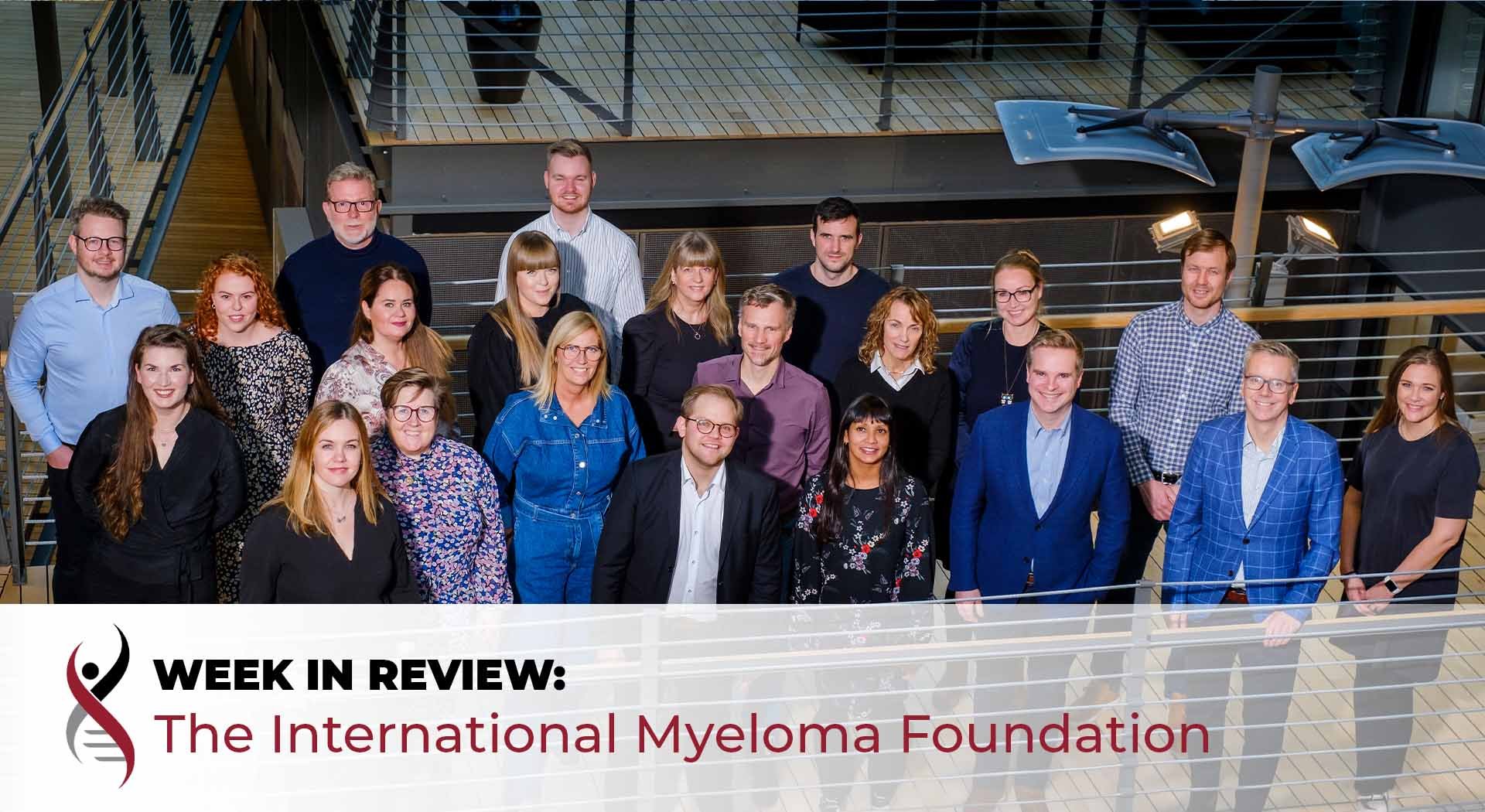
Author insights from iStopMM Project team members on the newest published results from the iStopMM study.
This year, iStopMM (Iceland Screens, Treats, or Prevents Multiple Myeloma) will be celebrating its 10th year since its start. The study has had a big impact on the field of myeloma precursors, and this July became a month of accomplishments for the iStopMM team — publishing three impactful papers.
iStopMM Project Principal Investigator Sigurður Yngvi Kristinsson, MD, PhD, along with iStopMM investigators: Sæmundur Rögnvaldsson, MD, PhD; Sigrún Thorsteinsdóttir, MD, PhD; and Cecilie Valso Maeng, MD, shared their valuable insights on the newest published results from the iStopMM study.
Current Headline Results of iStopMM Published in JCO
Published in Journal of Clinical Oncology, this study (https://ascopubs.org/doi/10.1200/JCO-25-02771) represents the first published headline results of the iStopMM study, a randomized clinical trial evaluating the benefits and possible harms of population-based screening for myeloma.
The iStopMM trial screened 75,422 adults and identified 3,541 people with MGUS. Participants were randomly assigned to no notification, standard guideline-based follow-up, or more intensive follow-up. This is one of the largest studies in myeloma to date.
After a median follow-up of 4.5 years, screening led to a 27-fold increase in the detection of smoldering multiple myeloma (SMM) (8.6% vs. 0.3%). People in the screening groups were diagnosed with active multiple myeloma (MM) and related blood cancers about one year earlier, were less likely to have symptoms, and were hospitalized less often at diagnosis. This shows that screening leads to earlier diagnosis when myeloma end organ damage has not established themselves.
Being informed of an MGUS diagnosis was not associated with worse psychological well-being. However, the overall rate of active myeloma did not differ between study groups during the follow-up period, with the possible exception of individuals aged between 40 and 70 where a sub-analysis showed a lower risk of developing active myeloma in those in active follow-up.
Overall, population-based screening increased detection of SMM and enabled earlier diagnosis of active MM and related blood cancers without evidence of psychological harm from MGUS notification. Longer follow-up is needed to determine whether screening improves survival or is cost-effective.
According to first author of the study, Dr. Rögnvaldsson: “These results show that screening enables early treatment in multiple myeloma. Screening appears to be necessary if early treatment is to be applied to a meaningful proportion of the myeloma patient population. However, whether this translates to meaningful benefits for screened individuals and whether the testing and follow-up required is justified for these benefits, remains to be seen.”
“This is one of the most important results from iStopMM so far. We have now shown in a randomized trial that screening for MGUS followed by clinical monitoring can change how multiple myeloma and related disorders are diagnosed. Importantly, we found no evidence of overall psychological harm which has always been our major concerns, even though more follow-up is needed to determine screening improved survival, this is the first step towards a new paradigm in myeloma care,” said Dr. Kristinsson.
Reference:
Sæmundur Rögnvaldsson et al. Clinical and Psychological Outcomes After Monoclonal Gammopathy Screening: A Population-Based Screening Study and Subsequent Randomized Trial of Follow-Up. J Clin Oncol 0, JCO-25-02771 DOI:10.1200/JCO-25-02771 (https://ascopubs.org/doi/10.1200/JCO-25-02771)
The iStopMM Group is Redefining Light Chain MGUS
Published in the European Journal of Haematology, this review (https://onlinelibrary.wiley.com/doi/10.1111/ejh.70258) explores current evidence on the diagnosis, risk stratification, clinical evaluation, and follow-up of light chain monoclonal gammopathy of undetermined significance (LC-MGUS).
The key objective is to improve diagnostic accuracy through revised serum free light chain (FLC) reference intervals. The review outlines a clinical approach that separately evaluates the risks of progression to light chain multiple myeloma (LC-MM) and AL amyloidosis.
According to the review, standard blood test ranges for free light chains (FLCs) may diagnose too many individuals with light-chain MGUS (LC-MGUS). This is because FLC levels can naturally be higher with aging, chronic kidney disease, or in people of African ancestry. New reference ranges that account for these differences reduced LC-MGUS diagnoses by 82%. People who no longer met the criteria for LC-MGUS with the updated ranges did not develop related disease during about 4.6 years of follow-up. These updated ranges have also been confirmed in several studies from different countries.
The authors recommend confirming the diagnosis using the most appropriate reference ranges for each person. They also recommend checking the risk of developing light-chain multiple myeloma (LC-MM) or AL amyloidosis separately. Most people do not need treatment and should have regular follow-ups. Treatment is only recommended if the condition progresses to smoldering myeloma, multiple myeloma, or AL amyloidosis.
Accurately diagnosing LC-MGUS depends on interpreting FLC blood test results using the right reference ranges for a person's age, kidney function, and, when appropriate, ancestry. Regular follow-up should check separately for signs of progression to LC-MM or AL amyloidosis because these conditions can develop in different ways. Treatment is not needed unless the disease progresses. Ongoing monitoring focuses on blood test results and looking for early signs that organs are being affected.
“The main goal of this work was to improve how we diagnose and manage light-chain MGUS. We have learned that the traditional free light chain reference intervals result in substantial overdiagnosis, particularly in older individuals and those with impaired kidney function. By using more appropriate reference intervals, we can avoid labeling many people with a precursor condition that they do not actually have,” said Dr. Kristinsson.
“One of the strengths of this work is that the new reference intervals were developed in a population-based setting and have subsequently been validated in several independent cohorts from different countries and with more diverse ethnic backgrounds. Clinically, this means fewer unnecessary investigations and less follow-up for individuals who are at extremely low risk, while allowing us to focus on those who truly have LC-MGUS and may be at risk of developing light-chain myeloma or AL amyloidosis,” said Dr. Thorsteinsdóttir.
Reference:
S. Y. Kristinsson, T. E. Long, and S. Thorsteinsdóttir, “Light Chain Monoclonal Gammopathy of Undetermined Significance: Diagnosis, Biology, and Clinical Management,” European Journal of Haematology (2026): 1–9, https://doi.org/10.1111/ejh.70258. (https://onlinelibrary.wiley.com/doi/10.1111/ejh.70258)
Redefining Light-Chain Smoldering Multiple Myeloma
Published in Leukemia, this study (https://www.nature.com/articles/s41375-026-03028-8) aimed to define and better understand light-chain smoldering multiple myeloma (light-chain SMM) using blood tests that measure free light chains (FLCs) and a bone marrow plasma cell (BMPC) assessment. The researchers also tested this proposed definition in a separate population-based study (DALY-CARE) and estimated the risk of the disease progressing to active multiple myeloma.
Researchers defined light-chain SMM as having abnormal serum free light chain levels and ratio, 10–59% plasma cells in the bone marrow, no detectable intact immunoglobulin (heavy chain) on serum protein electrophoresis (SPEP) or immunofixation, and no myeloma-defining events.
In the iStopMM study, about 19% of people with abnormal free light chain results met this definition, corresponding to a prevalence of 0.08% among people over 40 years of age.
Using this definition, the estimated risk of progressing to active multiple myeloma was about 6% per year. The risk increased to about 9% per year in people with at least one high-risk feature based on the Mayo Clinic 2/20/20 risk model. The proposed definition was developed using data from the iStopMM study and successfully validated in the independent, population-based DALY-CARE cohort.
“Light-chain smoldering multiple myeloma has been poorly defined. The previous definition relied on urine measurements and did not reflect how patients are evaluated in current clinical practice, where serum free light chains and bone marrow assessment are central. Our aim was therefore to develop a practical definition based on contemporary diagnostic methods, determine how common the condition is, and estimate the risk of progression to active multiple myeloma,” said Dr. Mæng.
“An important finding is that light-chain SMM is rare, with a prevalence of approximately 0.08% among individuals over 40 years of age, but the risk of progression is clinically significant at around 6% per year. We also found that the conventional 2/20/20 risk model performs well in light-chain SMM, with a progression risk of approximately 9% per year among patients with at least one high-risk feature,” according to Dr. Thorsteinsdóttir.
“This definition is aligned with current clinical practice and can be used together with an established risk-stratification model to identify patients who need closer follow-up. An important strength is that the proposed definition was validated in an independent population-based cohort, supporting its reproducibility beyond iStopMM,” said Dr. Kristinsson.
Reference:
Maeng, C.V., Thorsteinsdóttir, S., Óskarsson, J.Þ. et al. Redefining light-chain smoldering multiple myeloma: prevalence and progression risk. Leukemia (2026). https://doi.org/10.1038/s41375-026-03028-8 (https://www.nature.com/articles/s41375-026-03028-8)
In a previous blog article (https://www.myeloma.org/blog/deep-dive-imfs-istopmm-study), Dr. Kristinsson emphasized that “the iStopMM trial has one main goal — to evaluate the impact of screening for the multiple myeloma precursor, which is called monoclonal gammopathy of undetermined significance (MGUS).”
“The iStopMM study is the largest nationwide clinical trial of any cancer precursor ever performed in the world with the goal of diagnosing the individual at the MGUS phase to be able to treat them at the smoldering myeloma phase and prevent them from ever developing myeloma,” said Dr. Kristinsson.
iStopMM Project: Celebrating its 10th year in November 2026
Dr. Kristinsson shared his thoughts on the tenth anniversary of the IMF Black Swan Research Initiative-funded and first large-scale screening study in the field of myeloma.
“When we started iStopMM ten years ago, the main question was relatively simple: does screening for MGUS improve outcomes? To answer that question, more than 80,000 Icelanders participated and more than 75,000 were screened. What has happened since then has gone far beyond the original question.”
“iStopMM has allowed us to define the prevalence and natural history of MGUS and smoldering myeloma in an unselected population, develop new approaches to bone marrow assessment and free light chain interpretation, define light-chain precursor conditions more accurately, study the psychological consequences of screening, and now demonstrate in a randomized trial that earlier detection of multiple myeloma is possible.”
“For me, one of the most important achievements of iStopMM is that we are beginning to move from simply describing precursor conditions toward understanding how we can detect and follow them more accurately and, ultimately, determine whether screening and early intervention can prevent patients from developing symptomatic multiple myeloma,” said Dr. Kristinsson.
With the iStopMM Project celebrating a decade of major achievements, the International Myeloma Foundation looks forward to more breakthrough research and published studies from the iStopMM team in the not-so-distant future.
Learn more about the iStopMM Project (https://www.myeloma.org/black-swan-research-initiative/istopmm) and what it has accomplished for the past ten years.