Bone Disease (https://www.myeloma.org/bone-disease)
A Guide to Multiple Myeloma Bone Disease
Multiple myeloma (MM) is a cancer of the plasma cells. This medical condition causes an individual's bones to progressively break down. The cancerous plasma cells significantly impact bone balance, leading to bone disease in multiple myeloma (MM), also known as myeloma bone disease (MBD). Approximately 70-80% (https://pmc.ncbi.nlm.nih.gov/articles/PMC12249160/)of myeloma patients develop significant complications like bone disease, often causing significant pain and mobility issues.
When facing multiple myeloma, bone health quickly becomes one of the most important concerns for patients and their care partners. If you or a loved one has been diagnosed with multiple myeloma (https://www.myeloma.org/newly-diagnosed/do-you-have-myeloma), it's essential to understand how this cancer can affect the bones and learn strategies to protect bone health.
Why Myeloma Affects the Bones
In a healthy skeleton, there is a balance between the breakdown of old bone tissue and the building of new bone tissue. Two types of cells manage this process:
- Osteoclasts: Cells that break down old bone tissue.
- Osteoblasts: Cells that build new bone tissue.
Myeloma cells send signals to osteoclasts, causing them to break down much more bone than is required for normal skeletal health. Also, myeloma cells inhibit the formation of osteoblasts. This prevents the repair of bone loss.
Multiple myeloma bone disease occurs when cancer cells disrupt this balanced cycle by activating bone-destroying osteoclasts and inhibiting bone-building osteoblasts. As a result, the bones break down faster, and there is less new bone to replace them.
Bone disease can cause bones to become thinner and weaker, known as osteoporosis. It can also create osteolytic lesions, or weak spots and holes in the bone. The weakened bone is more likely to break due to minor pressures or fractures, even during normal daily activities. It can also create lytic lesions, or holes in the bone. The weakened bone is more likely to break due to minor pressures or injury, known as a pathologic fracture. The bones most commonly affected (https://www.academia.edu/105708732/Severe_Spine_Cord_Compression_By_Plasmacytoma_Multiple_Myeloma_Series_of_Cases) are the upper ends of the long bones of the arms and legs, as well as the axial skeleton, including:
- Spine
- Pelvis
- Ribs
- Skull
In addition to giving rise to bone disease, the process of accelerated bone breakdown releases calcium from the bones into the bloodstream. This results in a condition called hypercalcemia. Both myeloma bone disease and hypercalcemia can be treated with bone-modifying agents (BMAs).
Common Symptoms and Complications
It's important to note that myeloma can result in a range of medical conditions (https://www.myeloma.org/multiple-myeloma-complications) that affect the kidneys, blood, and immune system. However, the bones are affected the most often. Bone complications of multiple myeloma can manifest in several ways, including:
- Bone pain: Myeloma cells typically accumulate in the back, hips, and ribs. These are common areas for patients to report pain, especially with movement and at night.
- Spinal cord compression: Myeloma masses that grow near the spine can cause vertebrae to collapse, pressing against the spinal cord. This complication can cause numbness, muscle weakness, severe back pain, or difficulty controlling the bladder. It requires immediate medical attention.
- Fractures: Any of the affected bones can fracture easily, but vertebral compression fractures are common.
- Hypercalcemia: As bones deteriorate, calcium can leak into the bloodstream and lead to high blood calcium levels (https://www.ncbi.nlm.nih.gov/books/NBK430714/). Hypercalcemia is associated with symptoms like confusion, frequent urination, thirst, and fatigue.
Recognizing these symptoms is key to early intervention and improving quality of life.
How Doctors Diagnose Myeloma Bone Disease
Myeloma bone lesions can be difficult to detect in the early stages. Some patients may be diagnosed with smoldering multiple myeloma (SMM), an asymptomatic blood and bone marrow disorder that can progress to active myeloma. Fortunately, your doctor can use the international staging system (ISS) (https://www.myeloma.org/international-staging-system-iss-reivised-iss-r-iss) and revised ISS (R-ISS) to classify the disease. Healthcare professionals can also perform standard diagnostic imaging tests to help stage the disease and plan appropriate treatment strategies. For example:
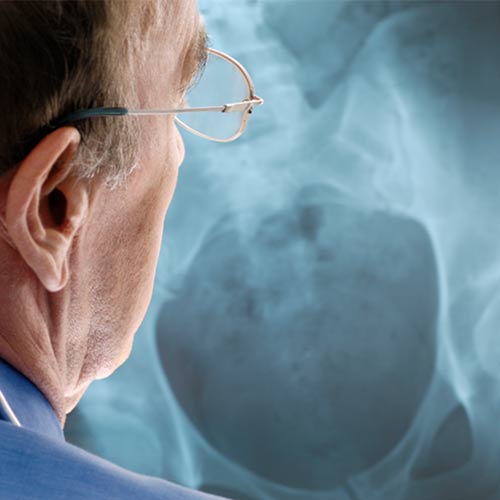
- X-rays: X-rays are one of the first tests performed to find fractures and advanced lesions, but they may not be as effective at detection until a significant amount of the bone has been lost.
- MRI: Magnetic resonance imaging (MRI) provides detailed images of bone marrow infiltration by myeloma cells before visible bone destruction occurs.
- CT/PET: Computed tomography (CT) and positron emission tomography (PET) offer more detailed, cross-sectional images that can detect small lesions and bone damage earlier than X-rays. PET/CT scans can also help distinguish between active and inactive disease.
Medical Treatments to Protect Your Bones
Various medical treatments are available to help protect and strengthen bones, addressing a range of conditions that can compromise bone health.
Treatment with a bisphosphonate
Bisphosphonates are small inorganic molecules that bind to a substance called hydroxyapatite on the surface of damaged bones. At the sites of bone damage, bisphosphonates inhibit and destroy osteoclasts. Since bone damage is caused by the increased numbers and activity of these osteoclasts, treatment with bisphosphonates reduces bone damage and, when the myeloma is well controlled, allows bone healing to occur.
- Bisphosphonates have several beneficial effects, including:
- Preventing further bone damage
- Reducing bone pain and the need for painkillers
- Correcting and preventing hypercalcemia
- Reducing the need for radiation therapy
- Reducing pathologic fractures due to myeloma (i.e., fracture at a site where myeloma has weakened the bone)
- Improving the chances of healing and recovering bone strength
- Improving quality of life
Bisphosphonates are not chemotherapy
Bisphosphonates are not a type of chemotherapy, which is used to attack myeloma cells. Bisphosphonates are not a treatment for myeloma. Several clinical trials have demonstrated that bisphosphonates have no anti-myeloma effect and do not prevent progression of early myeloma.
Bisphosphonates are used to treat several types of bone disease, including osteoporosis and the bone-thinning effects of steroid treatment. Bisphosphonates were first introduced more than 20 years ago as an additive to toothpaste to reduce dental decay.
Bisphosphonates are generally safe, but they do come with risks, which you must discuss with your doctor.
Myeloma patients can benefit from bisphosphonates
Bisphosphonates are recommended for all patients with myeloma-related bone disease. Bisphosphonates are particularly helpful for myeloma patients being treated with steroids, which reduce bone density. Bisphosphonate therapy improves the negative effects of steroids on bones.
In 2018, the American Society of Clinical Oncology (ASCO) published updated clinical practice guidelines on bone-modifying agents, recommending bisphosphonate therapy for patients with active symptomatic myeloma that requires systemic treatment with or without evidence of lytic lesions or vertebral compression fractures (VCFs) from osteopenia.
For more information about VCFs, read the IMF’s publication Understanding Treatment of Myeloma-Induced Vertebral Compression Fractures (https://www.myeloma.org/resource-library/understanding-treatment-myeloma-induced-vertebral-compression-fractures).
Bisphosphonates are NOT recommended for patients with monoclonal gammopathy of undetermined significance (MGUS) except in cases of osteopenia or osteoporosis.
Types of Bisphosphonates
Several bisphosphonates are approved by the U.S. Food and Drug Administration (FDA) to help achieve effective bone healing in patients with myeloma. Each has its own efficacy, methods of administration, and potential side effects. Learn more about each of these bisphosphonates:
- Aredia (https://www.myeloma.org/treatment/multiple-myeloma-medications/arediar-pamidronate-disodium)® (pamidronate disodium)
- Zometa (https://www.myeloma.org/treatment/multiple-myeloma-medications/zometa-zoledronic-acid)® (zoledronic acid)
- Xgeva (https://www.myeloma.org/xgeva-denosumab)® (denosumab)
Practical Ways to Support Your Bone Health
While cure-driven research is underway, there are plenty of other things you can do to improve myeloma bone health in the meantime:
- Nutrition and supplements: A balanced diet rich in vitamin D and calcium can help support good bone health. Try to incorporate leafy greens, dairy products, and whole foods into your diet. Be sure to consult with your healthcare provider before adjusting your calcium intake or taking new supplements.
- Safe physical activity: Low-impact activities like swimming or walking can help preserve bone density and muscle strength. A physical therapist can help develop an appropriate exercise program (https://www.myeloma.org/exercise-for-myeloma) tailored to your needs.
- Fall prevention: You can reduce your risk of fractures and injuries by adding modifications in your home, such as installing grab bars in bathrooms, ensuring good lighting, using assistive walking devices, and removing tripping hazards like loose rugs and clutter.
- Tips for care partners: Your loved ones can help support your bone health by offering emotional support, (https://www.myeloma.org/caregivers-or-care-partners-myeloma-patients) monitoring for new symptoms, assisting with home safety modifications, and attending medical appointments to communicate changes and understand treatment plans.
Other Approaches to Bone Care
Kyphoplasty provides a tool that may have an impact on bone care for myeloma patients. This procedure involves the injection of liquid cement using the balloon technique in an attempt to provide acute pain relief and to stabilize collapsed vertebrae or other damaged bones.
The results of the CAFE clinical trial, a randomized clinical trial of kyphoplasty versus non-surgical intervention, concluded that patients randomized to have kyphoplasty had improved pain relief, back function, and quality of life. For more information about kyphoplasty, read the IMF’s publication Understanding Treatment of Myeloma-Induced Vertebral Compression Fractures. (https://www.myeloma.org/resource-library/understanding-treatment-myeloma-induced-vertebral-compression-fractures)
Based on your doctor’s approval, suggestions to improve bone health include the following:
- Adequate pain control to allow for movement and exercise.
- Radiation therapy and/or orthopedic surgery to restore the structural integrity of bones and to recover full mobility. Since radiation therapy can impair local bone healing, it is used sparingly for acute problems such as spinal cord compression, severe refractory pain, and treatment or prevention of a pathologic fracture.
- Exercise, especially walking and/or swimming, to enhance bone strength, flexibility, and endurance.
- Avoidance of risky activities (e.g., bicycling, skiing, skating, climbing ladders), which can increase the likelihood of falls and/or fractures.
- Regular re-evaluation and follow-up testing to rule out new bone disease and assess the impact of treatment.
Solitary Plasmacytoma of Bone
Solitary plasmacytoma of bone (SPB) is a rare cancer of unknown origin, a single mass of monoclonal plasma cells in a bone or bone marrow. Fewer than 1,000 people in the U.S. are diagnosed with SPB each year. SPB is NOT myeloma. An SPB diagnosis requires the absence of systemic myeloma. Yet the majority of people with SPB are eventually diagnosed with myeloma.
Frequently Asked Questions
Have questions about multiple myeloma bone disease? Find answers to common questions below.
What causes lytic lesions in multiple myeloma?
Lytic lesions form when myeloma cells activate osteoclasts, the cells responsible for breaking down bone tissue. This overactivation creates an imbalance where bone destruction outpaces bone formation, resulting in lytic lesion development. These "punched-out" areas of bone loss weaken skeletal structure and increase fracture risk.
How are multiple myeloma bone lesions different from other bone problems?
Multiple myeloma bone lesions are lytic, meaning they involve bone destruction without new bone formation. Unlike osteoporosis, which causes general bone thinning, or bone metastases from solid tumors, myeloma bone lesions appear as distinct "holes" on imaging and result directly from plasma cell activity in the bone marrow.
Why does multiple myeloma back pain occur?
Multiple myeloma back pain occurs because the spine is one of the most commonly affected areas for bone lesions. As lytic lesions weaken vertebrae, patients experience pain from bone breakdown, potential compression fractures, or spinal cord pressure. Back pain often serves as an early warning sign requiring immediate medical evaluation.
Where do bone lesions typically develop?
Bone lesions most commonly develop in the spine, pelvis, ribs, skull, and long bones of the arms and legs. The spine experiences the highest frequency of lytic lesions, which explains why back pain is often the first symptom people living with myeloma notice.
Can bone lesions heal after treatment?
Bone lesions show limited healing even after successful myeloma treatment. Bone-strengthening medications prevent further damage and reduce fracture risk, but existing lytic lesions rarely fill in completely. Treatment focuses on stabilizing bone health, preventing new lesion formation, and managing pain to maintain quality of life.
Finding Answers and Support
Living with myeloma bone disease can be challenging, but treatment options continue to improve. At the International Myeloma Foundation, we understand the value of improving outcomes and quality of life for patients.
If you're looking for more answers regarding bone disease caused by myeloma, we encourage you to reach out to one of our specialists. Contact the International Myeloma Foundation's InfoLine online, (https://www.myeloma.org/infoline) or call us directly at 1-800-452-CURE (2873). Our team is here to provide confidential support for patients and their families.
Be sure to read the IMF publications Understanding Treatment of Myeloma Bone Disease (https://www.myeloma.org/resource-library/understanding-treatment-myeloma-bone-disease) and Understanding Treatment of Myeloma-Induced Vertebral Compression Fractures (https://www.myeloma.org/resource-library/understanding-treatment-myeloma-induced-vertebral-compression-fractures) listed under Related Content on this page.
Understanding how multiple myeloma bone lesions form helps people living with myeloma recognize symptoms early and work with their healthcare team to implement bone-strengthening treatments that reduce complications and preserve quality of life.
 (https://www.myeloma.org/resource-library/understanding-treatment-myeloma-bone-disease)
 (https://www.myeloma.org/resource-library/understanding-treatment-myeloma-induced-vertebral-compression-fractures)
 (https://www.myeloma.org/cjon-bone-health-pain-mobility-evidence-based-recommendations-patients-multiple-myeloma)
 (https://www.myeloma.org/videos/do-lytic-lesions-spine-ever-go-away)
 (https://www.myeloma.org/videos/should-myeloma-patients-start-bone-therapy-if-they-are-remission)
 (https://www.myeloma.org/videos/living-well-myeloma-improve-your-bone-health)
 (https://www.myeloma.org/videos/managing-myeloma-symptoms-infection-prevention-bone-health-kidney-care-side-effect)
 (https://www.myeloma.org/fatigue-depression-sexual-dysfunction)

The International Myeloma Foundation medical and editorial content team
Comprised of leading medical researchers, hematologists, oncologists, oncology-certified nurses, medical editors, and medical journalists, our team has extensive knowledge of the multiple myeloma treatment and care landscape.
Additionally, the content on this page is medically reviewed by myeloma physicians and healthcare professionals.
Last Medical Content Review: August 1, 2026