Day 1: Highlights of the 12th Annual IMF Global Myeloma Action Network Summit (https://www.myeloma.org/blog/day-1-highlights-12th-annual-imf-gman-summit)
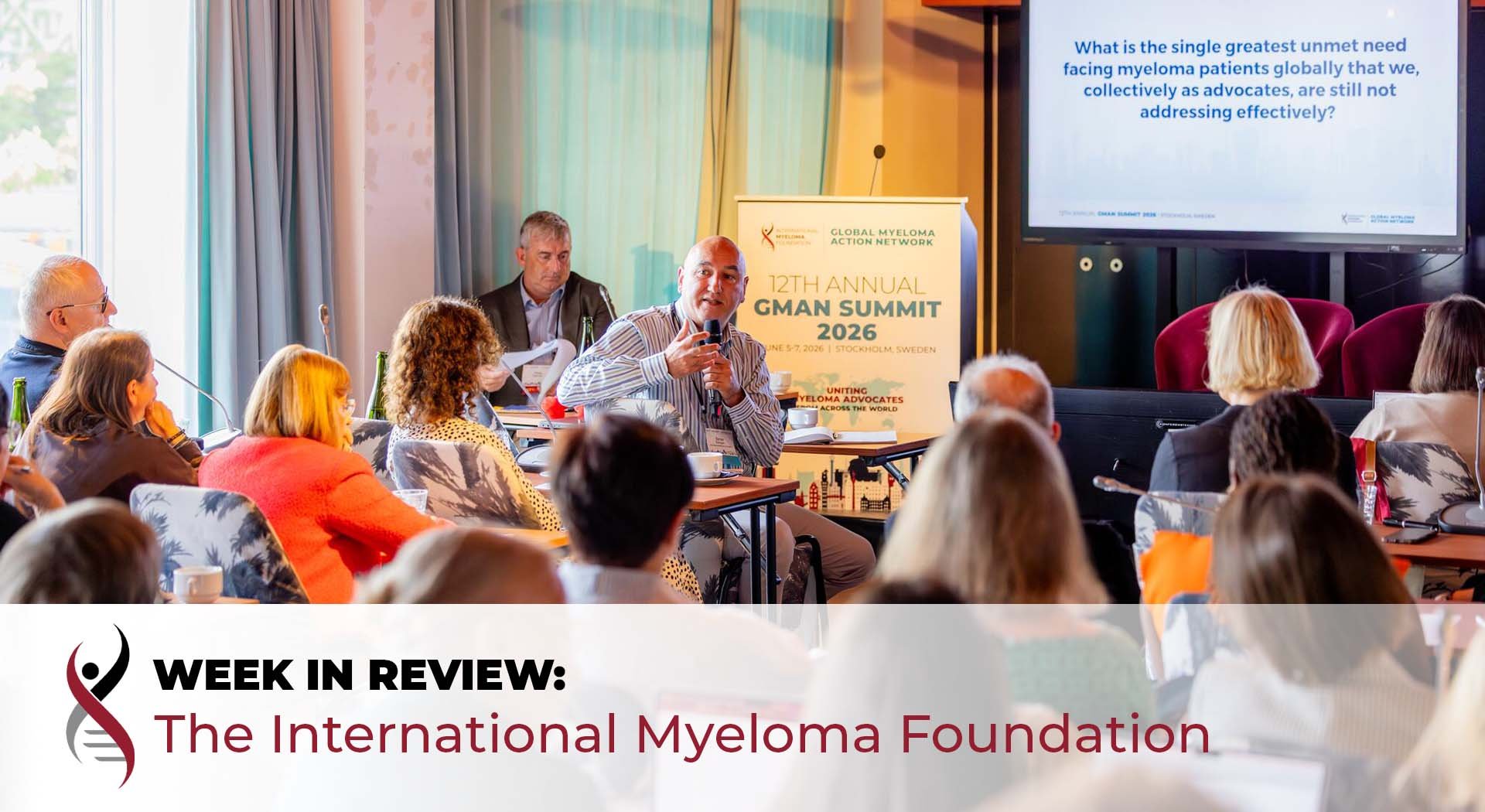
Top highlights from Day One of the 12th Annual Global Myeloma Action (GMAN) Summit held in Stockholm, Sweden.
The International Myeloma Foundation’s (IMF) 2026 Global Myeloma Action Network Summit took place from June 5-7, 2026, in Stockholm, Sweden — bringing together myeloma patient organizations that represent over 40 countries. The summit facilitated the exchange of information, celebrated achievements, and coordinated efforts to advance the IMF GMAN’s global mission.
The Global Myeloma Action Network® (GMAN®) is a global coalition of myeloma patient organizations representing over 40 countries. GMAN works in collaboration with patients, caregivers, physicians/key opinion leaders, policymakers, industry partners, and other global stakeholders.
The meeting brought together organizations from every continent, including several first-time participants and newly established advocacy groups from Greece and the Philippines, creating a dynamic forum for sharing experiences, exchanging successful approaches, and building partnerships to address common challenges.
Here are some of the highlights from Day 1 of the GMAN Summit. (EDITOR’S NOTE: Topics of discussion and speakers’ views have been edited for conciseness and clarity.)
A working community built on trust, shared learning, and collective ambition
Day 1 began with the Welcome and Kickoff by IMF President and CEO Heather Cooper Ortner, where she discussed the meeting’s objectives.
“What makes GMAN so special is that this is not simply a conference. It's a working community. One built on collaboration, trust, shared learning, and collective ambition. The organizations in this room bring together extraordinary expertise and lived experience from every corner of the world and the conversations we have genuinely shape how advocacy evolves globally. Over the next day and a half, we will focus not only on what is happening scientifically, but also on what it takes to ensure that progress reaches patients equitably and meaningfully,” said Heather.
“Scientific innovation means little if patients cannot access therapies, diagnostics, specialists, clinical trials, supportive care that already exists. Around the world, access challenges look different, but the underlying issue is universal. Whether the barrier is reimbursement, infrastructure, workforce limitations, delayed approvals, lack of awareness, racial or ethnic injustice or geographic inequity, we all face versions of the same challenge. How do we ensure that progress in myeloma research reaches every patient who needs it?” Heather continued.
Honoring the legacy of IMF co-founder Dr. Brian G.M. Durie
Heather brought to light this year’s GMAN Summit as the first, since the passing of IMF co-founder Dr. Brian G.M. Durie.
“For so many of us, it is difficult to imagine the global myeloma community without Dr. Durie's presence, vision and leadership. He helped transform myeloma, from a disease with very limited options, into one of the most innovative and rapidly advancing areas of hematologic oncology. But beyond the science, Dr. Durie believed deeply in patience and collaboration and in the importance of bringing the global community together. And GMAN here today reflects and continues to carry forward that vision.”
“Dr. Durie understood that progress could not happen in silos. He believed that researchers, clinicians and advocates and patient organizations all had essential roles to play, and that real advancement required partnership across borders and disciplines. His legacy is visible throughout this room. It is visible in the organizations represented here and the relationships that have been built through this network and the advocacy efforts that have strengthened because of collaboration and in the patients around the world who today have more options and more hope because of the work that he inspired,” said Heather.
“We feel deeply his absence. We also carry forward the values he championed, scientific rigor, urgency, compassion, curiosity, and collaboration. I think one of the best ways we can honor Dr. Durie is by continuing the work with the same sense of purpose and commitment that he brought to this community,” she added, then shared a short video honoring Dr. Durie's memory.
Global scientific update: The latest from ASCO 2026
Next on the agenda is a Global Scientific Update by IMF Medical Advisor Dr. Joseph Mikhael, who presented on the latest updates from the American Society of Clinical Oncology (ASCO) Annual Meeting, held from May 29 – June 2, 2026, in Chicago, IL.
Dr. Mikhael highlighted several studies that he believes could shape future care, emphasizing advances in smoldering myeloma, frontline treatment, and relapsed disease.
The ERASMM (EMN34) Trial: Elranatamab for high-risk SMM
Researchers continue to search for the optimal time to begin treatment for high-risk smoldering myeloma (SMM) before irreversible organ damage occurs. The phase 2 ERASMM (EMN34) study evaluated the BCMA-targeting bispecific antibody elranatamab — treating 50 patients for a planned two-year period and reporting a 92% overall response rate, with 90% of evaluable patients achieving measurable residual disease (MRD) negativity. After a relatively short follow-up, 96% of patients had not experienced disease progression. Although some patients developed peripheral neuropathy, Dr. Mikhael said the findings provide another encouraging strategy for delaying or preventing progression to active myeloma.
The DREAMM-9 Trial: Belantamab mafodotin for TI-NDMM
In transplant-ineligible newly diagnosed myeloma (TI-NDMM), results of the DREAMM-9 trial final analysis revealed that the combination of the antibody-drug conjugate belantamab mafodotin with standard VRd regimen bortezomib, lenalidomide and dexamethasone produced overall response rates exceeding 90% across treatment groups. Highest MRD negativity rates were observed among those given highest-dose intensity during the induction phase. Less frequent dosing (approximately every 8-12 weeks) has been identified as a potential "sweet spot" that maintains effectiveness while reducing eye-related side effects. Dr. Mikhael noted that longer dosing intervals could also lessen the travel and monitoring burden for patients.
The IDEAL Trial: Iberdomide as first CELMoD for NDMM
The IDEAL trial is a frontline study that evaluated the efficacy and safety of iberdomide in NDMM — a cereblon E3 ligase modulator (CELMoD) that can be tapped as a replacement for lenalidomide.The regimen achieved a 100% response rate in an early study and appeared to cause less diarrhea and fatigue than lenalidomide, suggesting that iberdomide may eventually become the first CELMoD to move into standard frontline treatment.
The CEPHEUS Trial: Benefits of quadruplet therapy in transplant-ineligible myeloma
Long-term follow-up from the CEPHEUS trial reinforced the benefit of four-drug induction therapy for transplant-ineligible patients. More than 60% of patients receiving daratumumab plus VRd (D-VRd) remained progression-free after 72 months, highlighting the durability of this treatment approach.
The MajesTEC-9 Trial: Teclistamab for early relapse
Dr. Mikhael emphasized the MajesTEC-9 trial as one of ASCO 2026’s most important presentations. The study evaluated the BCMA-directed bispecific antibody teclistamab as a single agent in early relapse compared with standard triplet regimens. At 18 months, 70% of patients treated with teclistamab remained in remission, supporting the growing trend of moving bispecific antibodies into earlier lines of therapy.
The MONVISO Trial: Etentamig for RRMM
The investigational BCMA-targeting bispecific antibody, etentamig demonstrated meaningful activity in RRMM, even in patients who were previously treated with other BCMA-directed therapies (including CAR T-cell therapy) — supporting greater flexibility in treatment sequencing. Additionally, the study incorporated simplified step-up dosing of preventive tocilizumab, which eliminated cytokine release syndrome (CRS) among initial patients. He noted that once-monthly outpatient administration could significantly expand access by reducing hospitalizations and simplifying treatment delivery.
The SUCCESSOR-2 Trial: CELMoD Mezigdomide for RRMM
The SUCCESSOR-2 study evaluated mezigdomide, a next-generation cereblon E3 ligase modulator (CELMoD), in combination with carfilzomib and dexamethasone for relapsed multiple myeloma.
The regimen significantly improved progression-free survival compared with carfilzomib and dexamethasone alone, highlighting the therapeutic promise of this emerging drug class. As Dr. Mikhael noted, CELMoDs bind cereblon more effectively than earlier IMiDs, which may contribute to their greater antimyeloma activity. In SUCCESSOR-2, the addition of mezigdomide approximately doubled progression-free survival, further supporting the potential role of CELMoDs as a treatment option in the relapsed setting.
The inMMyCAR Trial: In Vivo CAR T-cell Therapy
Perhaps the most futuristic advance came from Australian investigators studying in vivo CAR T-cell therapy. Unlike conventional CAR T-cell treatment, which requires collecting and engineering a patient's T cells outside the body, this experimental approach converts T cells into CAR T cells directly inside the patient.
Among the first 18 treated patients, nearly all achieved MRD negativity within one month, while experiencing fewer side effects such as cytokine release syndrome. Dr. Mikhael said the strategy could dramatically expand access to CAR T-cell therapy by eliminating the complex manufacturing process required for current treatments.
Together, advances in these clinical trials point toward more effective, longer-lasting, and increasingly patient-friendly treatment strategies for myeloma.
Panel discussion: Why is it important to discuss myeloma precursors?
A panel discussion on “Why is it important to discuss myeloma precursors?” was next on the agenda — moderated by Mira Armour of Mijelom CRO, with Dr. Sæmundur Rögnvaldsson and Dr. Sigrún Þorsteinsdóttir of the iStopMM (Iceland Screens Treats or Prevents Multiple Myeloma) Project, care partner Jelena Pravica, and myeloma patient Pernille Bro Skejø as panelists.
A patient’s personal journey with MGUS and SMM
Pernille shared her personal journey with the precursor stages of myeloma: monoclonal gammopathy of undetermined significance (MGUS) and smoldering multiple myeloma (SMM).
She described the uncertainty and challenges of long-term monitoring, raising key questions about when treatment should begin and whether earlier intervention could prevent progression to active disease.
Pernille was first diagnosed with MGUS in 2012, when blood tests performed during treatment for reactive arthritis revealed M-protein (M component). Comprehensive testing, including blood and urine analyses, bone marrow biopsy and skeletal imaging, revealed the precursor condition, associated with an approximately 1% annual risk of progression to multiple myeloma.
She remained symptom-free and underwent routine follow-up before monitoring was transferred to her general practitioner.
In 2020, persistent bone pain prompted Pernille to repeat investigations, leading to a diagnosis of SMM. Although her M-protein levels initially rose rapidly, she declined enrollment in an optional chemotherapy trial for high-risk SMM, preferring to delay treatment until it became necessary. Fortunately, the disease stabilized without therapy, allowing her to remain well for nearly two years.
However, despite not meeting criteria for active myeloma, her condition became increasingly concerning. She experienced frequent infections, recurring bone pain, multiple rib fractures from minimal physical strain, and declining kidney function.
Repeated evaluations ruled out osteoporosis, yet clinicians continued to attribute her fractures to other causes because SMM is traditionally considered asymptomatic.
She questioned whether these symptoms signaled disease instability despite relatively slow increases in M-protein levels. She also asked whether emerging evidence, including findings from the iStopMM study in Iceland, supports treating SMM earlier to prevent progression to treatment-dependent multiple myeloma.
Mira said Pernille's experience reflected the uncertainty faced by many patients living with precursor plasma cell disorders, particularly the difficult balance between continued observation and starting treatment.
Screening and risk-based care may reshape management of SMM
New findings from the iStopMM screening study and related Nordic research suggest that SMM is more common than previously recognized, carries measurable health risks even before progression, and may benefit from more personalized risk assessment and, in selected high-risk cases, early treatment.
Presenting the latest evidence, Dr. Sigrún Þorsteinsdóttir highlighted that SMM may not always be symptom-free—a point reinforced by Pernille, whose experience prompted researchers to reconsider how the condition is described and discussed with patients.
The iStopMM population screening study in Iceland, which screened over 75,000 adults aged 40 years and older, found SMM in 0.5% of participants. The condition was more common in men and became more frequent with increasing age.
Unlike hospital-based cohorts, the screening study minimizes detection bias, providing a clearer picture of the biological features of SMM.
Researchers also found that people with SMM have a higher risk of infections than healthy controls and individuals with MGUS. Although many patients had reduced levels of normal antibodies (immunoparesis), the increased infection risk persisted even after adjusting for immunoparesis, suggesting additional disease-related immune dysfunction.
Evidence also indicates that the risk of progression from SMM to myeloma or AL amyloidosis is lower today than historically reported.
Earlier estimates suggest that half of patients' progress within 5 years are likely outdated because of the introduction of SLiM-CRAB diagnostic criteria in 2014, and more sensitive imaging with CT and MRI, which now identify active myeloma earlier.
Danish data showed progressively lower progression rates in more recent patient cohorts, underscoring the importance of providing patients with updated risk information.
Researchers emphasized that risk stratification remains central to management. The widely validated 2/20/20 criteria.
Developed by the Mayo Clinic team and validated by the IMWG, the 2/20/20 criteria is a clinical risk stratification system consisting of three components: serum M-protein level greater than 2 grams per deciliter (g/dL); bone marrow plasma cells with 20% or more percentage; and free light chain (FLC) ratio (involved to uninvolved serum free light chains) greater than 20.
The 2/20/20 criteria continues to identify patients with approximately 50% risk of progression within two years, making it the preferred tool for defining high-risk SMM.
Recent results from the AQUILA trial showed that daratumumab monotherapy given for three years significantly improved progression-free survival and overall survival compared with active monitoring in patients classified as high risk.
The treatment has now been approved by the U.S. Food and Drug Administration (FDA) and the European Medicines Agency (EMA), although it is not yet available in Nordic countries.
However, Danish investigators cautioned that the trial's eligibility criteria identified a much broader group than the 2/20/20 model. Their analysis found that patients meeting the AQUILA criteria had only a 27% two-year progression risk, compared with 44% among those identified by the 2/20/20 model. The findings suggest that the trial criteria may not accurately define the patients at highest risk who are most likely to benefit from early treatment.
Dr. Þorsteinsdóttir concludes that active surveillance remains the standard of care for most patients with SMM, while daratumumab should be considered for carefully selected high-risk patients following informed discussions about potential benefits and risks.
Mira noted that the evolving evidence reflects the continuing uncertainty over the optimal management of SMM and highlighted the need to address clinicians' and patients' questions as new data emerge.
According to Dr. Rögnvaldsson, studying precursor conditions such as MGUS and SMM is essential for improving patient care, understanding myeloma biology, and identifying opportunities for earlier intervention. Echoing Pernille's perspective, he said the long-held description of these disorders as "asymptomatic" may not fully reflect patients lived experiences.
He presented evidence that people with MGUS and SMM have a 30% to 40% higher risk of fractures than the general population. Although fractures approximately doubled the short-term risk of progression, they were not associated with increased long-term progression, indicating that fractures often reflect bone fragility rather than undetected myeloma.
Similarly, persistent hypercalcemia was rarely caused by progression to myeloma, emphasizing the need to investigate alternative medical causes rather than attributing every new symptom to plasma cell disease.
He also highlighted the broader impact of the iStopMM screening. Screening increased SMM detection by nearly 28-fold, identified patients with myeloma about one year earlier, and reduced severe presentations such as advanced kidney failure and extensive bone disease requiring hospitalization.
Importantly, screening did not increase average levels of depression, anxiety, or dissatisfaction with life, although long-term survival outcomes are still being evaluated.
Finally, Dr. Rögnvaldsson discussed emerging evidence that obesity increases both the risk of developing MGUS and the likelihood of progression. Early observational data suggest that weight loss may slow increase in M-protein, offering patients a potential way to influence the disease course.
While dietary patterns showed little overall association with MGUS, researchers stressed that these findings remain preliminary and require further study.
Together, the presenters concluded that earlier detection, more accurate risk assessment, selective treatment of high-risk SMM, and potentially modifiable lifestyle factors could transform the future management of myeloma precursor conditions while improving outcomes for patients.
Poster Session: Peer-to-peer learning
This year's poster session expanded to feature nine advocacy organizations showcasing the unique challenges, innovative programs, and advocacy initiatives underway in their countries.
The session is designed to encourage peer-to-peer learning, and provided participants with an opportunity to exchange ideas, discuss common barriers, and identify solutions that could be adapted across regions. The posters generated lively discussion throughout the summit and reinforced the value of sharing local experiences to strengthen global myeloma advocacy.
The nine advocacy organizations included Myeloma Australia; Mijelom u BiH (Bosnia and Herzegovina); Myeloma Canada, Myelom CRO (Croatia); Af3m Association Française des Malades du Myélome Multiple (France); The AMPATH Multiple Myeloma Program AMMP (Kenya); APPL Associação Portuguesa de Leucemia e Linfoma (Portugal); Association of Myeloma Patients Serbia; and CEMMP: Comunidad Española de Pacientes con Mieloma Múltiple (Spain).
2026 Susie Novis Durie Grant recipients
Hosted by IMF President & CEO Heather Cooper Ortner and IMF Director of GMAN – EU/ME Patient Programs Serdar Erdogan, the Susie Novis Durie (SND) Grants program began with reports from 2025 SND recipients: Armenia, Kenya, Poland and Serbia.
This was followed by the announcement of the 2026 SND Grant Recipients, where four patient advocacy organizations were recognized for projects designed to improve the early diagnosis of multiple myeloma, expand patient education, and strengthen access to care.
Each initiative focuses on addressing gaps in myeloma diagnosis, patient awareness, or healthcare access with the goal of improving outcomes for people living with the disease.
Argentina – Fundacion Argentina de Mieloma
Fundación Argentina de Mieloma will establish a sustainable partnership with medical societies to make early diagnosis guidelines a standard part of clinical practice. The project (Myeloma on Radar: Early Diagnosis Training for MM) will train primary care physicians and orthopedic specialists, publish educational materials in medical journals, and deliver webinars for healthcare professionals. Its primary objective is to shorten the time to diagnosis, enabling earlier treatment and reducing bone and renal complications associated with delayed diagnosis.
Bosnia & Herzegovina – Mijelom u BiH
The SND grant will fund the creation of Mijelom u BiH’s patient-centered educational resources (Myeloma Patient Education Podcast Program) in the local language. The program will produce audiovisual materials featuring healthcare professionals, patient experiences, and expert discussions covering diagnosis, treatment pathways, and available support services. Organizers said the initiative is intended to help patients and caregivers make more informed decisions and improve quality of life.
Unable to attend in person, the organization shared a recorded message: "This support means a lot to our association and to patients with multiple myeloma in Bosnia and Herzegovina." The SND grant would help the organization "continue their work to help patients and raise awareness about multiple myeloma in their country."
Ireland – Myeloma Ireland
Myeloma Ireland received funding for a national awareness campaign (Rooted in Resilience - MM National Awareness Campaign) aimed at reducing late and missed diagnoses. The program combines public education with practical resources for healthcare professionals, including awareness materials, downloadable patient and caregiver toolkits, educational webinars, seminars, and reference guides for frontline clinicians.
In a video message, Executive Director Declan Watson reported that the campaign had already begun with a public exhibit at a major Irish festival attended by approximately 100,000 people. He said more than 9,000 visitors toured the organization's Rooted in Resilience garden during the event.
Over the coming months, the campaign will target general practitioners, chiropractors, physiotherapists, and nephrologists. Watson thanked the IMF and GMAN for supporting the initiative and said the organization looks forward to sharing results over the next year.
Philippines – MyeSPEAK
The fourth grant was awarded to MySpeak Philippines. The organization's project (Myeloma Policy Summit: Advancing Equitable Access to Care in the Philippines) calls for a coordinated, multi-sector effort to improve equitable access to myeloma diagnosis, treatment, and supportive care across the country.
Key goals include expanding timely and affordable care for underserved and geographically isolated populations, strengthening financial protection through broader health coverage, reducing out-of-pocket costs, and advancing implementation of the National Integrated Cancer Control Act.
At the closing of the ceremony, organizers congratulated all four recipients and expressed hope that the funded projects would generate meaningful results over the coming year and provide valuable lessons for the global myeloma community.
Key global access & policy trends: What advocates need to know in 2026
A discussion on “Key Global Access & Policy Trends — What Advocates Need to Know in 2026” was moderated by Neil Grubert, Independent Global Market Access Consultant.
Topics covered include diverging HTA decisions across regions, launch sequencing and access delays, as well as equity gaps in chronic disease.
This was followed by presentations by industry partners.
Open forum: Community perspectives: A myeloma leadership dialogue
An open forum on “Community Perspectives: A Myeloma Leadership Dialogue” addressed the following questions:
• What are we not talking about enough in the global community right now?
• What is the single greatest unmet need facing myeloma patients that we, collectively as advocates, are still not addressing effectively?
• What kinds of shared tools, resources, or infrastructure would be most valuable for GMAN organizations collectively?
The discussion came to one consistent, overarching challenge: the widening gap between scientific progress in myeloma and patients’ ability to access those advances.
Common concerns on inequitable access to treatment, affordability, regulatory barriers, and the need for stronger, more coordinated patient advocacy were shared by GMAN participants across Europe, Oceania, North America and other regions.
Proposed collective actions were generated, which include:
1. Developing a global minimum standard of care framework in partnership with the IMWG, defining the essential diagnostic, treatment, and supportive care elements that every myeloma patient should be able to access.
2. Creating a global or regional myeloma scorecard comparing countries on key access indicators, similar to public benchmarking models used in health sectors.
3. Producing practical policy advocacy resources to help organizations engage legislators, health ministries, and reimbursement agencies with clear, evidence-based messages and action pathways.
4. Strengthening focus on care partners, including documenting caregiver burden and developing shared projects and data collection initiatives across countries.
At the conclusion of the open forum, the session underscored that while healthcare systems differ dramatically across countries, the community shares a common goal: ensuring that every person with myeloma, regardless of where they live, has access to timely diagnosis, effective treatment, supportive care, and a meaningful quality of life.
Mindful Movement
A 30-minute discussion on “Mindful Movement” focused on movement for mental and physical well-being.
World Café
Presenters from Myeloma Canada (Canada), Mijelom CRO (Croatia), and MyeSPEAK (Philippines) shared some insights about their respective organizations.
• Karen Alparce-Villanueva of MyeSPEAK Philippines presented on “From Barriers to Solutions.”
• Mira Armour of Mijelom CRO presented on the “Fiscal Impact of Myeloma in Central and Eastern Europe.”
• Michelle Oana of Myeloma Canada presented on “MRD Implementation in Canada.”
Closing remarks
Day 1 of the 12th Annual GMAN Summit was officially adjourned by Hayley Beer of Myeloma Australia.