Shining a Light on Scientists' Vital Work in Multiple Myeloma Care (https://www.myeloma.org/blog/scientists-vital-work-multiple-myeloma)
Shining a Light on Scientists’ Vital Work in Multiple Myeloma Care
This blog was written by IMF Support Group Leader and multiple myeloma patient Terry Glassman.
I’ve been a multiple myeloma patient for almost three and a half years now. Myeloma is a complex and nuanced disease; because of that, we rely heavily on our myeloma specialists to guide our care and help educate us along the way. But those specialists don’t work in isolation; they rely on the scientists and researchers behind the scenes who are constantly generating knowledge, insights, and discoveries that help shape the decisions the myeloma specialists make in the lab.
How Multiple Myeloma Treatment Has Changed over 20 Years
Myeloma has undergone remarkable change over the past two decades. New medications and evolving treatment strategies have extended patients’ lives far beyond what was once typical, shifting survival from just one to three years for many patients to ten years or more today. In 2000, the average five-year survival rate was approximately 32%. Today, it’s closer to 62%.
That kind of transformation doesn’t happen by chance. It is built, step by step, discovery by discovery, through the persistent and often unseen work of scientists and researchers in the lab.
Behind the Scenes at Mount Sinai Health System’s Myeloma Center of Excellence
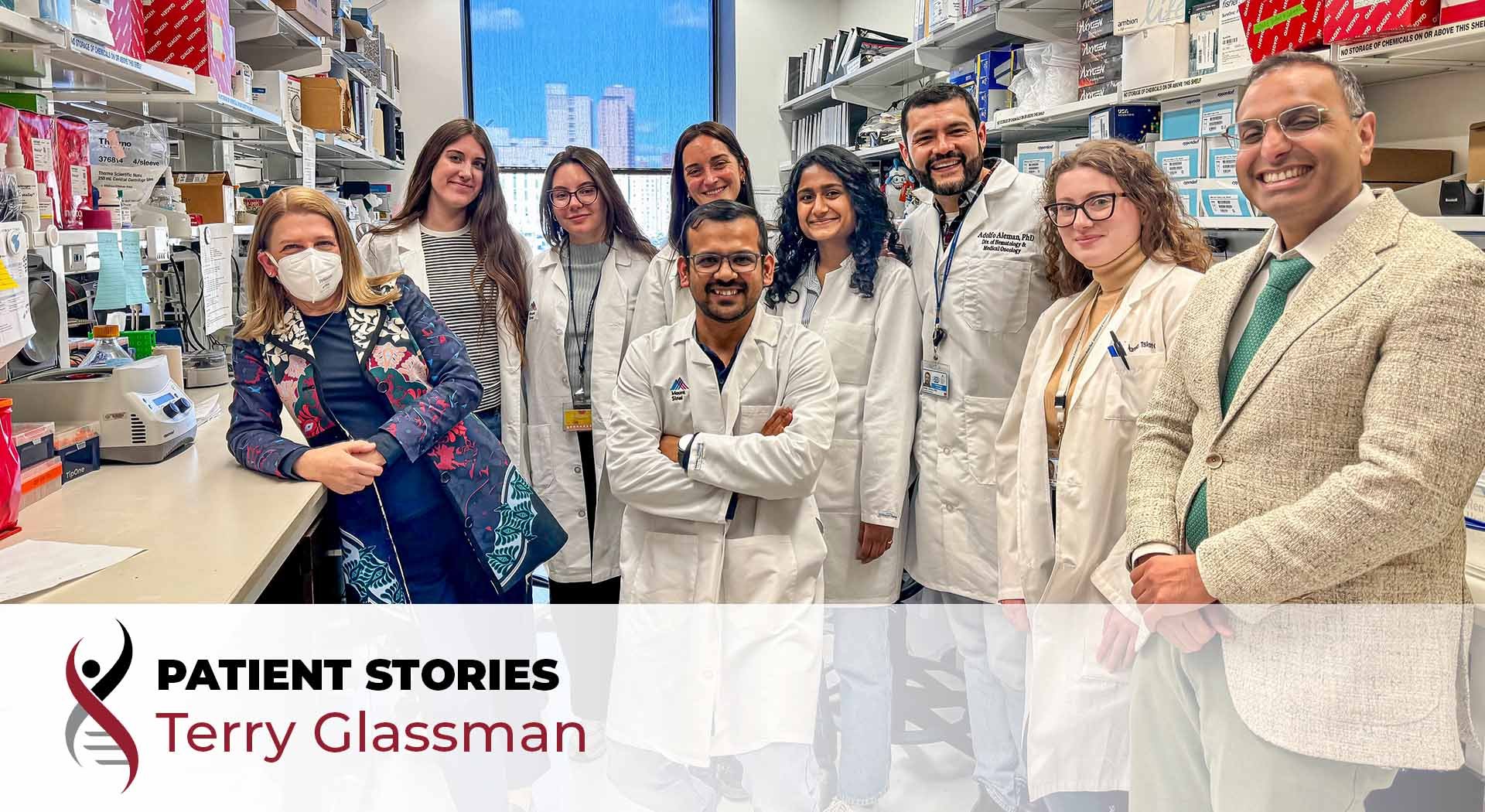
I recently spent a few hours at the Mount Sinai Health System, where I receive my care. They are a Center of Excellence for Multiple Myeloma. While there, I had the opportunity to tour the lab and meet some of these hidden heroes.
What struck me most during my time in the lab was that the work isn’t only about discovering the next breakthrough drug. Just as importantly, scientists are working to better understand the disease itself at a deeply personal level, right down to the genetic makeup of a patient’s myeloma cells.
The Role of Genomics and Precision Medicine in Multiple Myeloma Research
Every mutation, deletion, amplification, and variation is carefully studied, not only as a data point but also as a clue. A clue to how the disease behaves, how it responds to treatment, and sometimes, why it stops responding. Researchers are asking nuanced questions: Why did this therapy work so well for one patient but not another? What changed? What can we learn from that?
Through genomics, they are beginning to uncover those answers. They’re identifying patterns, understanding how resistance develops, and finding smarter ways to use the treatments we already have, choosing the right combinations, in the right order, for the right patient.
Overcoming Drug Resistance and Improving Existing Multiple Myeloma Therapies
In some cases, they are even learning how to help treatments that have stopped working become effective again by understanding why they stopped in the first place. At the same time, they continue to work tirelessly on developing new and better treatments for myeloma.
For patients, this is incredibly encouraging. It means that progress isn’t only about what’s new and coming next. It’s also happening right now, by making what we already have work better, last longer, and work more specifically for each of us.
The Quiet Impact of Myeloma Scientists on Patient Survival and Outcomes
It’s the quieter side of myeloma, less visible than the headline-making new drug discoveries, but behind each of those discoveries is a team much like this one, working in a lab. . . saving lives quietly but mightily!
A Message of Gratitude to Researchers Advancing Multiple Myeloma Care
So, the next time you’re at your treatment center, take a moment to think about, and maybe even thank, the scientists working behind the scenes in the lab.
Because their work is part of every bit of progress we’re seeing today.
THIS BLOG IS HOSTED BY THE INTERNATIONAL MYELOMA FOUNDATION (“IMF”) FOR PATIENT ADVOCATES TO SHARE THEIR STORIES. THE CONTENT APPEARING ON THIS WEBPAGE IS NOT CONTROLLED OR PROVIDED BY IMF, AND IMF NEITHER WARRANTS NOR GUARANTEES THE ACCURACY OF SUCH CONTENT. THE FOREGOING NOTWITHSTANDING, THE CONTENT IS NOT A SUBSTITUTE FOR ADVICE AND SERVICE PROVIDED BY QUALIFIED AND LICENSED MEDICAL PROFESSIONALS, AND SHOULD NOT BE RELIED ON WITH RESPECT TO ANY HEALTH MATTERS. ANY HEALTH-RELATED INFORMATION FOUND HEREIN IS ONLY MADE AVAILABLE AS PART OF A GENERAL EDUCATIONAL SERVICE.
Published on May 21, 2026.