A Patient's Perspective on Leading Abstracts from ASH 2025 (https://www.myeloma.org/blog/patient-perspective-ash-2025-abstracts)
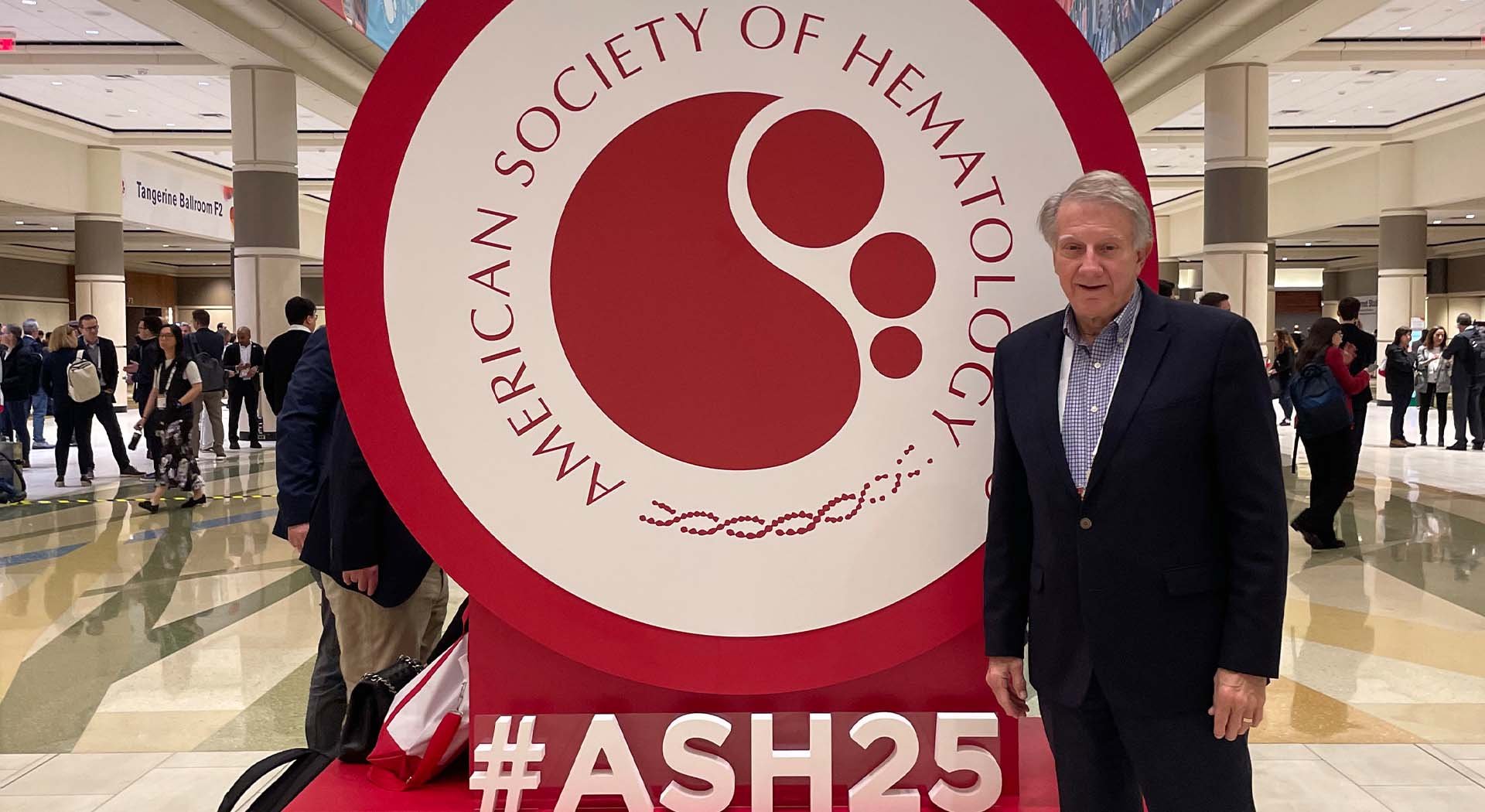
Multiple Myeloma Treatment Advances at ASH 2025: A Patient’s Take
By Jim Shoemaker
#1 Abstract Title: Enhanced efficacy of TRAIL or TRAIL-CD28 chimera armored anti-BCMA CAR T cells in multiple myeloma.
I want to begin by saying this plainly: I am not in the medical field. I’m a long-term multiple myeloma patient who has learned enough over the years to follow the conversation, ask better questions, and recognize when something truly matters. This study is one of those moments.
BCMA – targeted CAR-T cell therapy has shown promise in treating multiple myeloma, but most patients eventually relapse because the engineered T cells lose strength, become exhausted, or fail to persist. I attended an abstract presentation where the researchers observed that patients who experienced longer remissions had CAR-T cells with higher levels of two important molecules: TRAIL, which helps kill cancer cells, and CD28, which supports T cell survival. Based on this, they designed new “armored” CAR-T cells that included TRAIL or a TRAIL-CD28 fusion to make them stronger and longer-lasting. These enhanced CAR-T cells were tested against multiple myeloma cells, including resistant types, and under stressful conditions such as high tumor burden. The results showed that TRAIL-armored CAR-T cells killed cancer cells more effectively than standard CAR-T cells, even when the cancer was resistant to other treatments. Importantly, they did not harm healthy blood or bone marrow cells. While adding TRAIL sometimes caused mild self-killing among CAR-T cells, this effect was minimized when TRAIL was fused with CD28, which also gave the cells extra survival signals and helped them maintain a healthier, longer-lasting state.
This research demonstrates that boosting CAR-T cells with TRAIL and CD28 can significantly improve their ability to fight multiple myeloma, especially in resistant cases, while maintaining safety. These findings support the development of next-generation CAR-T therapies that are more durable, powerful, and capable of overcoming relapse.
#2 The ResisTec Study: Dissecting Immune Correlates of Resistance and Response to Teclistamab in Real-World Multiple Myeloma
I want to begin by saying this plainly: I am not in the medical field. I’m a long-term multiple myeloma patient who has learned enough over the years to follow the conversation, ask better questions, and recognize when something truly matters. This study is one of those moments.
Today, patients with multiple myeloma have access to treatments such as proteasome inhibitors, immunomodulatory drugs, and anti-CD38 antibodies that have helped many people live longer and better lives. Still, for most patients, the disease eventually returns, and treatment options can become more limited. Bispecific antibodies are a newer form of immunotherapy that help the body’s own immune system recognize and attack myeloma cells. Two of these therapies, teclistamab and elranatamab, have shown strong results in patients who have already received many prior treatments. However, not every patient responds the same way, and some lose benefit over time. Understanding why this happens is critical.
In this study, researchers examined blood and bone marrow samples from 100 patients with relapsed or refractory multiple myeloma treated with teclistamab in a real-world setting. Samples were collected before treatment and during the first months of therapy to observe how the immune system changed over time in patients who responded versus those who did not.
The study found that patients who did not respond well often had an immune environment in the bone marrow that made it harder for cancer-fighting T cells to work effectively. In contrast, patients who responded showed early positive immune changes in the blood, including stronger T cell activity and fewer immune cells that suppress responses. These changes occurred within the first month of treatment and were linked to better outcomes.
Overall, this research offers hope that doctors may one day better predict who will benefit most from teclistamab and improve treatment strategies for patients living with multiple myeloma.
#3 Abstract Title: Long-term progression-free survival benefit with ciltacabtagene autoleucel in standard-risk relapsed/refractory multiple myeloma
Category: 600s - Hematologic Malignancy
Review Category: 653. Multiple Myeloma: Clinical and Epidemiological
I want to begin by saying this plainly: I am not in the medical field. I’m a long-term multiple myeloma patient who has learned enough over the years to follow the conversation, ask better questions, and recognize when something truly matters. This study is one of those moments.
This study brings hope to people living with multiple myeloma, especially those with standard-risk disease whose cancer has returned or stopped responding to earlier treatments.
The treatment studied is called CAR-T therapy (cilta-cel). It uses a patient’s own immune cells, retrained to recognize and attack myeloma cells. After the cells are prepared, they are given back in a single infusion, with no need for ongoing chemotherapy or maintenance drugs afterward.
What makes these results so encouraging is how long-lasting the benefit appears to be. In this study, about 80% of patients were still doing well 2½ years after treatment, with no signs of disease progression and no additional myeloma therapy. That means many patients were able to return to life without the constant cycle of treatment, side effects, and uncertainty.
Even more hopeful, patients who achieved MRD-negative CR at 1 year, where even the most sensitive tests could not detect myeloma—had exceptional outcomes. Every patient who reached this level of response remained progression-free at 30 months. That kind of durability is rarely seen with traditional therapies.
When doctors compared these results to earlier studies where CAR-T was used later in the disease journey, outcomes were clearly better when the therapy was used earlier. This suggests that timing matters—and that receiving CAR-T sooner may allow the immune system to work more effectively.
While CAR-T is not yet considered a cure, this study shows that long, treatment-free remissions are now a realistic possibility for many patients with standard-risk myeloma. For those walking this road, these findings represent not just medical progress—but genuine reason for hope.
#4 Abstract Title: Minimal residual disease (MRD)-negative outcomes following a novel, in vivo gene therapy generating anti–B-cell maturation antigen (BCMA) chimeric antigen receptor (CAR)-T cells in patients with relapsed and refractory multiple myeloma (RRMM): Preliminary results from in MMyCAR, the first-in-human phase 1 study of KLN-1010
Category: 700s - Transplantation and Adoptive Cell Therapies
Review Category: 704. Cellular Immunotherapies: Early Phase Clinical Trials and Toxicities
I want to begin by saying this plainly: I am not in the medical field. I’m a long-term multiple myeloma patient who has learned enough over the years to follow the conversation, ask better questions, and recognize when something truly matters. This study is one of those moments.
When you’ve lived with multiple myeloma for 18 years, you learn to pay attention when something truly different comes along. This study caught my attention because it represents a completely new way of thinking about CAR-T therapy, and it may remove many of the barriers patients face today.
KLN-1010 is not the typical CAR-T process. Instead of collecting T cells, sending them to a lab, waiting weeks, and going through chemotherapy to prepare the body, this treatment is given through a simple IV infusion. The therapy goes to work inside the body, turning a patient’s own T cells into CAR-T cells on the spot. For patients who are already tired, heavily treated, or fragile, that difference matters.
All three patients (age 61-72) treated so far had relapsed and refractory disease, had been living with myeloma for nearly a decade, and had high-risk features. In the MM support that I have the opportunity to leas I see patients who often run out of good options. Yet this study shows that it is possible to safely generate CAR-T cells in vivo, without cell collection, manufacturing delays, or lymphodepleting chemotherapy. That alone is remarkable.
What stands out to me most is the potential impact on access. Many patients never receive CAR-T, not because it wouldn’t help, but because the process is too complex, too slow, or too demanding on the body. If this approach continues to work as hoped, it could open the door for many more patients to benefit earlier and more easily.
This is still very early—only three patients—and no one should confuse early promise with certainty. But every true breakthrough begins this way: with small, careful studies that prove something new is possible. And for this we say, “Thank YOU.”
For those of us living with multiple myeloma, studies like this don’t just represent data. They represent momentum—and a future where treatment may become simpler, faster, and kinder to the people receiving it.
#5 Abstract Title: Phase 3 randomized study of teclistamab plus daratumumab versus investigator’s choice of daratumumab and dexamethasone with either pomalidomide or Bortezomib (DPd/DVd) in patients (Pts) with relapsed refractory multiple myeloma (RRMM): Results of MajesTEC-3
Category: 600s - Hematologic Malignancy
Review Category: 654. Multiple Myeloma: Pharmacologic Therapies
I want to begin by saying this plainly: I am not in the medical field. I’m a long-term multiple myeloma patient who has learned enough over the years to follow the conversation, ask better questions, and recognize when something truly matters. This study is one of those moments.
It’s important to understand why this study matters to us as patients. For many of us living with relapsed or refractory multiple myeloma, one of the hardest realities is knowing that, over time, treatments often stop working. Even with good drugs like daratumumab, pomalidomide, or bortezomib, the disease usually finds a way back. That’s why the results from the Phase 3 MajesTEC-3 study, presented at ASH 2025, feel so important—and honestly, encouraging.
This study looked at patients who had already been through one to three prior lines of therapy, much like many of us. Researchers compared standard daratumumab-based combinations (DPd or DVd) with a newer approach: teclistamab plus daratumumab. Teclistamab is a bispecific antibody that helps a patient’s own T-cells recognize and attack myeloma cells more directly.
What stood out to me most was how durable the responses were. Patients receiving teclistamab plus daratumumab stayed in remission far longer than those on standard therapy. At three years, the majority of patients on the teclistamab combination were still progression-free, while far fewer were in the standard-treatment group. That kind of separation is rare in myeloma studies.
The depth of response was also remarkable. Many more patients achieved complete responses, and a high percentage became MRD-negative, meaning the disease was undetectable at very sensitive levels. For patients, that translates into something very real: more time, better quality of life, and fewer decisions about what comes next.
Yes, there were side effects, especially infections and early cytokine release, but these were largely manageable and improved over time.
For me, MajesTEC-3 doesn’t just represent another study. It represents real progress, and real hope, that powerful immune-based treatments may move earlier in the myeloma journey—where they can help more of us, for longer.
#6 Abstract Title: Efficacy and safety of talquetamab and teclistamab in patients with Relapsed/Refractory multiple myeloma and extramedullary disease: Updated Phase 2 results from the redirectt-1 study with extended follow-up.
Category: 600s - Hematologic Malignancy
Review Category: 654. Multiple Myeloma: Pharmacologic Therapies
I want to begin by saying this plainly: I am not in the medical field. I’m a long-term multiple myeloma patient who has learned enough over the years to follow the conversation, ask better questions, and recognize when something truly matters. This study is one of those moments.
The RedirecTT-1 Phase 2 study, presented with extended follow-up, looked at patients with relapsed or refractory multiple myeloma who also had extramedullary disease, a form of myeloma many of us know is especially difficult to treat. These are patients who have often run out of good options.
The treatment approach combined talquetamab and teclistamab, two bispecific antibodies designed to help the immune system recognize and attack myeloma cells in different ways. Talquetamab is special because I was on a trial for talquetamab. What stood out to me was not just that patients responded, but that many responded deeply and for meaningful periods of time, even with aggressive disease.
Responses were seen in a significant number of patients, including those whose myeloma had spread outside the bone marrow. Some patients achieved very strong responses, and with longer follow-up, many of those responses proved to be durable. For patients living with uncertainty, durability matters just as much as response.
There were side effects, including infections and immune-related reactions, and those risks are real. But the study showed that with experience and careful management, treatment could continue and benefit many patients.
I don’t read this study as a cure. I read it as evidence that the immune system is becoming a stronger ally, even in situations that once felt hopeless. For those of us living long-term with myeloma, that kind of progress brings something invaluable: reason to keep looking forward.
THIS BLOG IS HOSTED BY THE INTERNATIONAL MYELOMA FOUNDATION (“IMF”) FOR MULTIPLE MYELOMA SUPPORT GROUPS. THE CONTENT APPEARING ON THIS WEBPAGE IS NOT CONTROLLED OR PROVIDED BY IMF, AND IMF NEITHER WARRANTS NOR GUARANTEES THE ACCURACY OF SUCH CONTENT. THE FOREGOING NOTWITHSTANDING, THE CONTENT IS NOT A SUBSTITUTE FOR ADVICE AND SERVICE PROVIDED BY QUALIFIED AND LICENSED MEDICAL PROFESSIONALS, AND SHOULD NOT BE RELIED ON WITH RESPECT TO ANY HEALTH MATTERS. ANY HEALTH-RELATED INFORMATION FOUND HEREIN IS ONLY MADE AVAILABLE AS PART OF A GENERAL EDUCATIONAL SERVICE.
Published on December 23, 2025.