Progress in Asia Helps Myeloma Patients Everywhere (https://www.myeloma.org/blog/dr-duries/progress-in-asia-helps-myeloma-patients-globally)
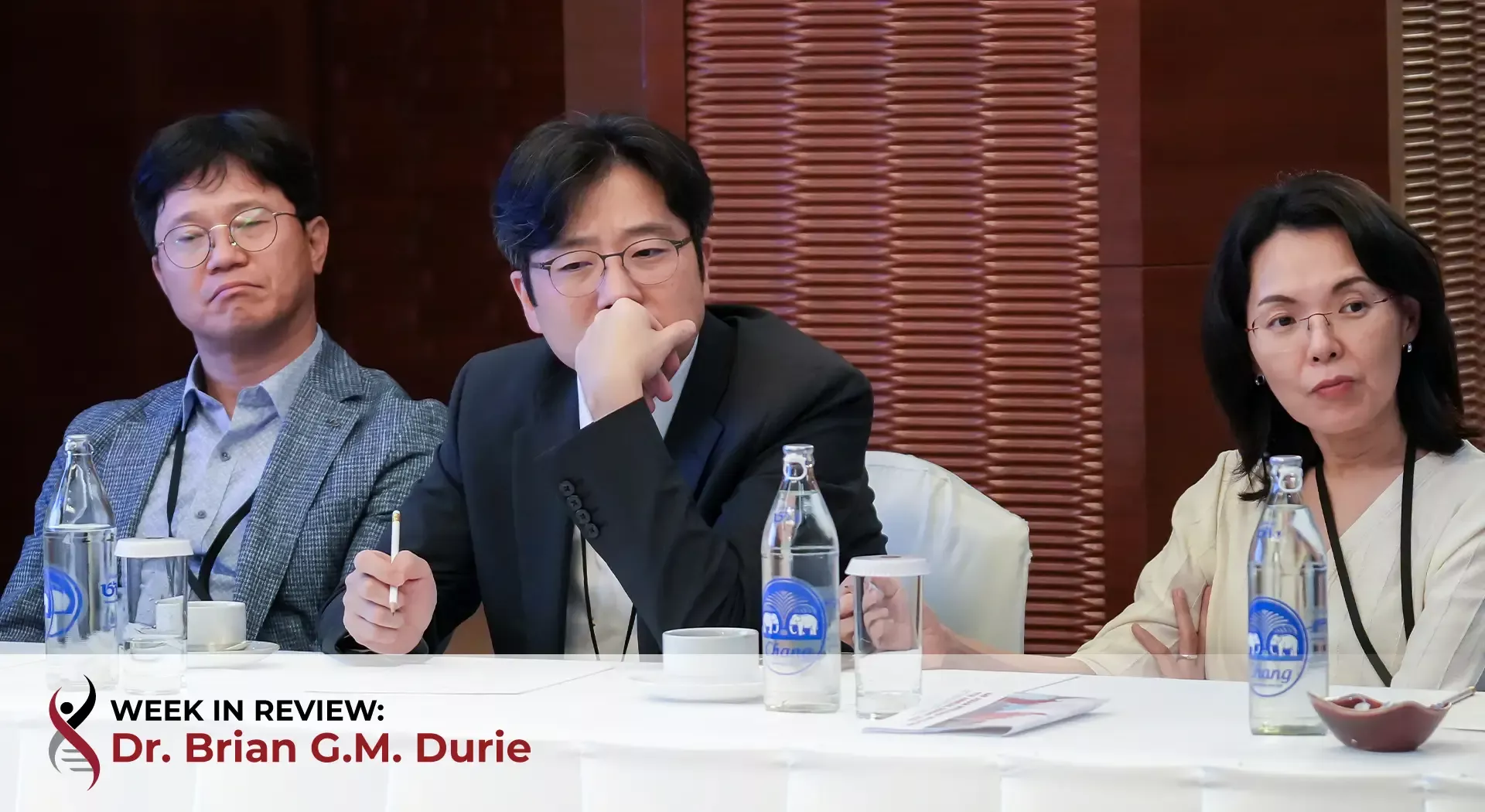
As the Asian Myeloma Network’s (AMN) 7th Annual Summit wrapped up in Bangkok on Sunday, October 22nd, I realized that what happens in Asia does not just affect or stay in Asia.
As I will summarize, there are wonderful benefits that came from the 3rd Doctor Masterclass Program, the 3rd Patient Forum, as well as the 7th Scientific Summit which focused on networking with myeloma experts from around Asia. The IMF staff that made this happen includes the AMN Executive Staff led by IMF Senior Vice President of Global Affairs Daniel Navid and Executive Vice President of Medical Affairs Lisa Paik, as well the entire IMF Meetings Team led by Senior Director of Program Operations & Chief of Staff Annabel Reardon. It truly takes a village to make a global event like the AMN Summit happen.
In addition, lessons learned apply more broadly for patients, experts, and healthcare professionals everywhere—no matter it be elsewhere in Asia, North America, Europe, the Middle East, or Latin America.
Finding a cure is a global moonshot—the lack of access to needed tests and treatments is a concern for all myeloma patients everywhere. Local progress can translate into global progress with appropriate reliance on IMF’s demonstrated commitment and broad reach plus the global technology research platform through the Black Swan Research Initiative (BSRI).
The 7th Annual Summit: Impacts That Make a Difference
The 7th Annual Summit began with a fantastic keynote lecture by Bruno Paiva, PharmD, PhD, who is co-director of the Flow Cytometry Platform and co-director of the Monoclonal Gammopathies Research Laboratory at the CIMA Universidad De Navarra in Pamplona, Spain with preferential dedication to multidimensional flow cytometry analysis of hematological malignancies. Dr. Paiva is also a key member of the i2TEAMM, which seeks U.S. Food and Drug Administration (FDA) and European Medicines Agency (EMA) approvals for MRD testing as a surrogate response endpoint in myeloma clinical trials.
Dr. Paiva’s Keynote Lecture: From Bench to Bedside
In his keynote, Dr. Paiva discussed Immunogenomic Research: From Bench to Bedside with a major focus on the practical monitoring of low-level disease (minimal residual disease or MRD) and the assessment of immune status throughout the course of the disease.
Dr. Paiva developed the BloodFlow method (measuring MRD levels in the blood) and Mass Spectrometry (the accurate measurement of low levels of myeloma protein in the blood). Both methods offer great potential as tools for precise assessment.
Of particular interest is this finding—the presence and number of circulating myeloma cells is prognostically very important, reflecting active disease and/or relapse. This led to discussions about the feasibility of such testing in Asia as well as around the world.
Open Session
For the remainder of this first morning session, the topics covered were discussions on Cure versus Control; Immune Therapies; a more detailed discussion on MRD; New Therapies in Development; Smoldering Myeloma and Lessons Learned from the Screening Project in Iceland: the iStopMM (Iceland Screens, Treats, or Prevents Multiple Myeloma) Project.
Several invited speakers from Asia as well as other parts of the world covered various topics during the open session. There was intense audience participation and engagement as questions emerged from members of all ten AMN member countries: China, Hong Kong, Japan, Malaysia, Philippines, Singapore, South Korea, Taiwan, Thailand, and Vietnam.
Notable key questions of this overview included: Is new testing and treatment available and feasible in Asia? What are the broad takeaways for future work by the AMN group?
Working Group Reports
Answers to these and many other questions emerged during the presentation and discussion of the Working Group Reports. The very encouraging step this year was not just the active participation, but the action items supplied by each group.
Groups this year were:
- Infection
- Bone Imaging
- Smoldering Myeloma
- Other Plasma Cell Disorders
Action items included establishing a Registry to track infections (especially with new immune therapies for example); creating imaging guidelines based upon technology available and considering cost factors; reviewing diagnostic criteria and potential treatment (or not) for smoldering myeloma in Asia; occurrence, diagnosis, and management of other conditions such as light chain amyloidosis.
In these sessions, issues on access and costs were strong discussion points. For example, if bispecific antibodies (e.g., teclistamab) become broadly available, can the costs of supportive care, such as use of IV gamma globulin be covered? Will CAR T-cell therapies become available in Asia?
Dr. Kazuyuki Shimizu: First Asian Myeloma Network (AMN) Distinguished Service Awardee
The International Myeloma Foundation (IMF) held its first-ever Asian Myeloma Network (AMN) awards ceremony on October 21 with yours truly presenting the first ever AMN Distinguished Service Award to Dr. Kazuyuki Shimizu— a hemato-oncologist; a member of the International Myeloma Working Group (IMWG) since 2000; and a former staff physician at Higashi Nagoya National Hospital.
“I am extremely grateful for being recognized by the IMF for my contribution to the study of myeloma biology and also for my relentless efforts to diagnose and treat myeloma patients,” said Dr. Shimizu.
The Asian Myeloma Network Distinguished Service Award was conceived to recognize and honor the lifelong achievements of deserving AMN myeloma specialists, who have made a considerable impact in the field of myeloma research, clinical trials, and patient support.
It was truly a wonderful and memorable night for Dr. Shimizu and for all of us at the AMN Summit.
Status of AMN Clinical Trials and New Research Projects
A very encouraging segment on trials and research was led by Prof. Wee Joo Chng, AMN Chairman Clinical Trials Group & Admin Center in Singapore and Vice President of Biomedical Sciences Research at the National University of Singapore. He is also a Yong Loo Lin Professor in Medical Oncology, Group Director of Research at the National University Health System, and the inaugural Executive Director of the Singapore Translational Cancer Consortium.
In his segment, Prof Chng reported that five trials have been completed and over five trials are in progress, with more in development. This represents a huge success for the new trials group.
In particular, it is a huge success for patients who have access to new treatments such as novel agents and immune therapies which are either not available, very expensive or non-reimbursable. For example, a new trial incorporating teclistamab will be starting soon.
More importantly, the AMN is also conducting the pilot study of the International Myeloma Working Group’s (IMWG) planned global Biobank (or Tissue Bank). Established in Singapore, the baseline set up details have now been put in place. It will be possible to share Biobank testing results online, allowing group wide collaboration for tissue testing. In addition, AMN members are also participating in the global Immune therapy Registry —a key tool to understanding benefits, toxicities, and sequencing of new and emerging immune therapies.
Separate Masterclass Program and Patient Forum
The Masterclass program was a very intense meeting, introducing young and in-training myeloma doctors to the basics of myeloma as well as myeloma care. The program was greatly appreciated by a broad range of participants from AMN member countries.
The Patient Forum became an opportunity for patient groups from across the region to come together and share experiences and learnings with one another. The session was ably led by Dr. Daryl Tan—a hematologist at Mount Elizabeth Novena Hospital in Singapore. He highlighted the status of drug access and care as well as support group activities for each country.
Representatives from each country presented their perspectives, plans, and challenges individually. This was a very rewarding session for all involved , serving as a baseline for ongoing and future activities.
Global Takeaways
The remarkable outcome from these 2023 AMN Summit Meetings was the robustness of the regional activities. AMN is now a well-established group with a strong presence and commitment to myeloma care. This recognition comes with expectations for ongoing success. As it turns out , the planned activities will now likely have a global impact.
Additionally, there are plans to explore monoclonal gammopathy of undetermined significance (MGUS) in Singapore and Thailand. These projects will mimic the iStopMM Project in Iceland.
Demonstrating the value of screening is key. For Asia, the potential ability to diagnose myeloma before traditional CRAB (elevated calcium, renal failure, anemia, and bone lesions/bone pain) features and symptoms emerge can be a gamechanger in reducing disease burden and costs, as well as dramatically improve outcomes.
The rest of the world will be watching and waiting to see if these projects get going and to find out when results will emerge.
Across the board, initiatives from the Working Groups, as well as feedback on the Masterclass program and Patient Forum can have lasting impact. Recommendations and guidelines can be widely applicable, especially in regions where access and costs can be challenging.
The Bottom Line
What is happening in Asia will not just stay in Asia but will have global impact. The lessons which are now increasingly going to be coming from Asia can be educational tools for the global myeloma community. We must all stay tuned.